激光核聚变

Search documents
锐科激光:LD直接泵浦近基模万瓦光纤激光器可广泛应用于汽车、新能源等领域
Mei Ri Jing Ji Xin Wen· 2025-11-18 03:41
Core Viewpoint - The company has developed a new LD direct pumping near-base mode 10,000-watt fiber laser, which is positioned to support the laser fusion field and has applications in various industries such as automotive, new energy, 3D printing, and long-distance laser applications [1] Summary by Relevant Categories - **Product Development** - The newly developed LD direct pumping near-base mode 10,000-watt fiber laser is a significant advancement for the company [1] - **Industry Applications** - The product is applicable in multiple sectors including automotive, new energy, 3D printing, and long-distance laser applications, indicating its versatility and potential market reach [1]

日经BP精选:日本验证3D打印机制造核聚变反应堆材料
日经中文网· 2025-11-18 03:05
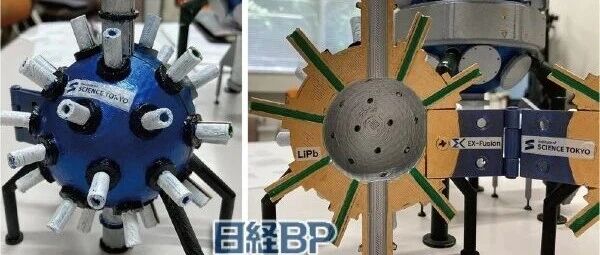
Core Viewpoint - The article discusses advancements in laser nuclear fusion technology, focusing on the development of materials for fusion reactors, particularly through the use of metal 3D printing to enhance durability and reduce production costs [3][4]. Group 1: Industry Developments - Tokyo University of Science is conducting durability tests on structural materials made from FeCrAl alloy, which consists of iron (Fe), chromium (Cr), and aluminum (Al), aimed at being used in laser nuclear fusion reactors [3]. - The goal is to achieve practical power generation by the 2030s, starting with small-scale reactors of 5 to 10 meters [3]. - If the durability of the alloy processed by metal 3D printing is validated, it is expected to shorten construction time and lower production costs for nuclear fusion reactors [3]. Group 2: Technological Innovations - The use of metal 3D printing for processing the FeCrAl alloy has shown promising results, with no detected defects such as voids, and the structure is similar to previously tested durable samples [4].

长光华芯(688048.SH):已经参与到国内外激光核聚变相关项目
Ge Long Hui· 2025-11-12 07:53
Core Viewpoint - Changguang Huaxin (688048.SH) is actively involved in domestic and international laser nuclear fusion projects, focusing on the development of high-efficiency and high-pulse power laser chips, as well as array modules with high power, high packaging density, high reliability, and superior beam quality [1] Group 1 - The company has participated in various laser nuclear fusion-related projects [1] - Development efforts include high-efficiency and high-pulse power laser chips [1] - The company is also working on array modules that feature high power, high packaging density, high reliability, and better beam quality [1]

先生|半生为国铸盾 他说:我们中国不能受别人的气
Yang Guang Wang· 2025-05-05 09:50
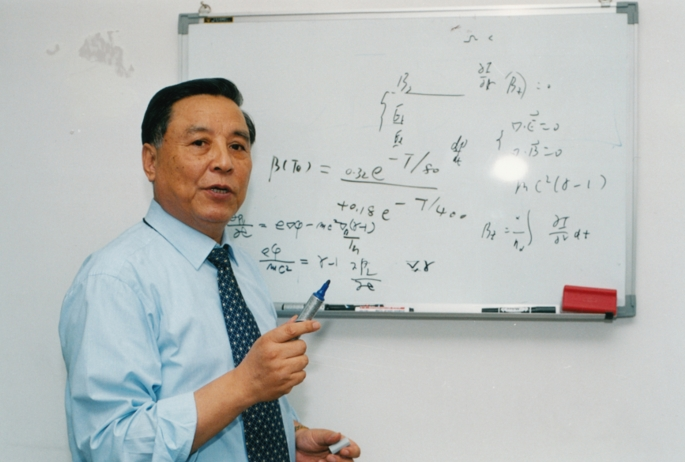
Core Viewpoint - The article highlights the life and contributions of He Xiantu, a prominent Chinese physicist known for his significant role in the development of China's nuclear weapons and fusion energy research, emphasizing his dedication to serving the nation and his pursuit of scientific excellence. Group 1: Personal Background and Achievements - He Xiantu, born in 1937 in Zhejiang, is an academician of the Chinese Academy of Sciences and a foreign academician of the Russian Academy of Sciences, recognized for his contributions to China's first atomic bomb and hydrogen bomb [2][5]. - He was instrumental in the successful detonation of China's first atomic bomb on October 16, 1964, which marked a significant milestone for the nation [5][6]. - He has received numerous accolades, including the Edward Teller Award, the highest honor in the field of fusion energy, and a minor planet named after him, 079286 He Xiantu [23][25]. Group 2: Scientific Contributions - He led research teams in the development of nuclear weapons, including the neutron bomb, emphasizing the importance of independent scientific advancement for national security [14][16]. - His work in controlled nuclear fusion aims to harness clean and abundant energy, with a focus on laser-driven inertial confinement fusion [18][20]. - He has been a key figure in promoting China's advancements in fusion energy research on international platforms, advocating for original and innovative scientific approaches [20][21]. Group 3: Philosophy and Vision - He expresses a strong belief in the need for China to assert its scientific capabilities and not be overshadowed by other nations, particularly in the field of fusion energy [21][23]. - He maintains a rigorous work ethic, dedicating 6 to 7 hours daily to research and mentoring younger scientists, reflecting his commitment to the advancement of science in China [21][22]. - His ultimate hope is for China to achieve significant breakthroughs in original scientific research, ensuring the nation's prominent position in the global scientific community [23].