激光雷达商业化

Search documents
Luminar破产与激光雷达“战争”:当“机器之眼”成为大国博弈新前线
机器人大讲堂· 2025-12-21 08:04
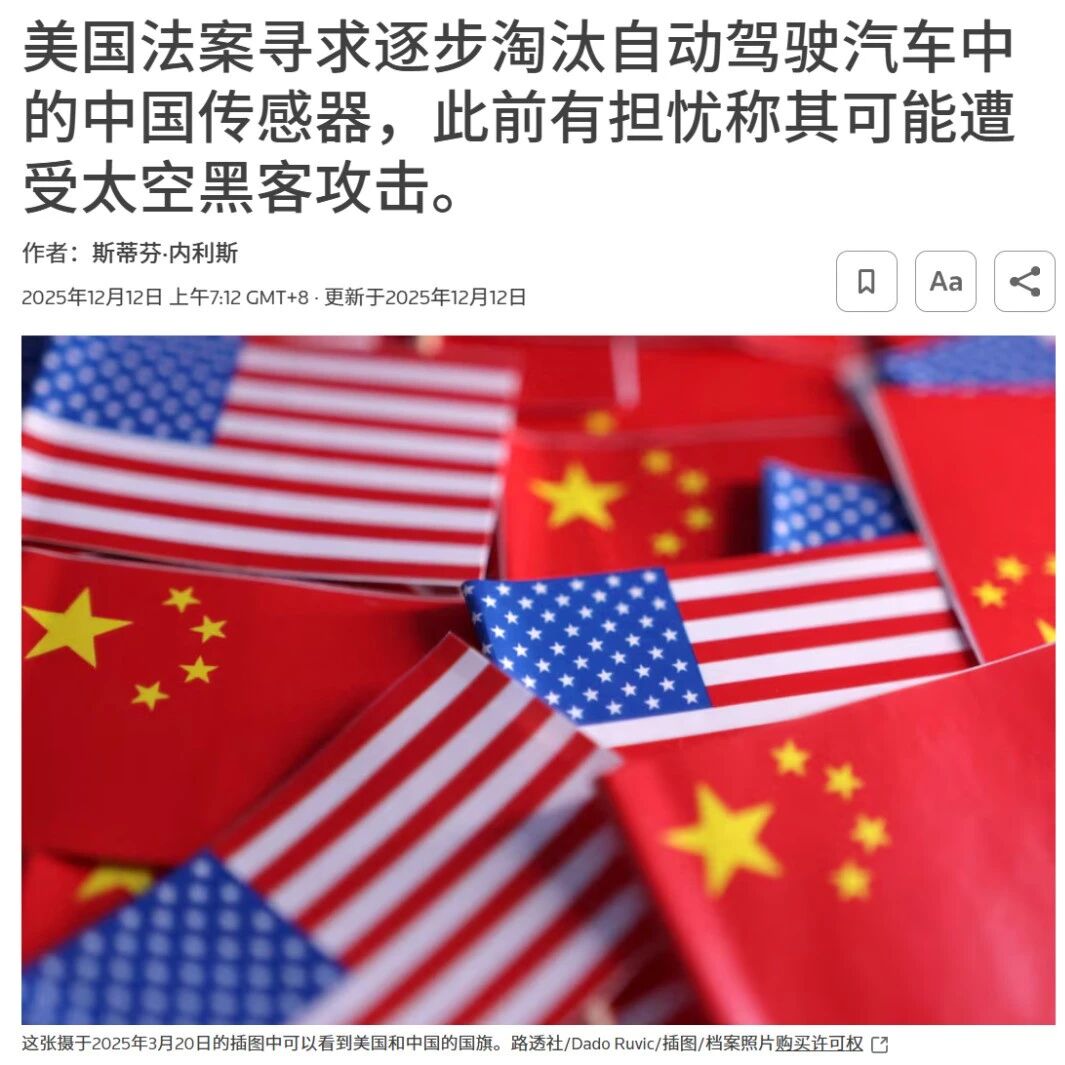
Core Viewpoint - The collapse of Luminar, a leading American lidar company, coincides with a legislative push in the U.S. to exclude Chinese sensors from critical infrastructure, highlighting the shift of lidar technology from a commercial competition to a geopolitical battleground [1][3]. Group 1: Legislative Actions and Market Impact - A new bill proposed by U.S. Congressman Raja Krishnamoorthi aims to phase out Chinese-made lidar sensors in autonomous vehicles and critical infrastructure under the guise of national security [3][4]. - The bill sets a timeline for banning new purchases within three years and replacing existing equipment within five years, citing concerns over potential cyberattacks during conflicts [4]. - Concurrently, Luminar Technologies filed for bankruptcy, reporting assets between $100 million and $500 million against liabilities of $500 million to $1 billion, marking a significant downturn for a company once partnered with major automakers [7]. Group 2: Luminar's Business Model and Challenges - Luminar's strategy focused on a superior 1550 nm lidar technology, which was initially seen as a path to advanced autonomous driving, leading to a peak market valuation of nearly $10 billion in 2020 [8][11]. - However, the high costs associated with 1550 nm technology, reliant on expensive materials, resulted in unsustainable pricing, with sales failing to cover manufacturing costs [11]. - In contrast, Chinese competitors like Hesai and RoboSense successfully reduced costs to around $200, integrating into major automotive supply chains, which Luminar could not match [11][13]. Group 3: Market Dynamics and Competitive Landscape - The global lidar market is dominated by Chinese firms, holding 93% of the passenger vehicle lidar market and 89% of the overall lidar market, with the "Big Four" Chinese companies capturing 88% of the market [13][15]. - The rapid decline in lidar costs and improvements in reliability have transformed lidar from a high-tech product to a mass-market component, driven by demand in robotics and industrial automation [16][18]. - The U.S. legislative response reflects a growing anxiety over supply chain security, as evidenced by the inclusion of Hesai in a list of entities linked to the Chinese military [19][20]. Group 4: Future Outlook and Competitive Strategies - The future of lidar technology will depend on the ability to provide comprehensive perception solutions that integrate hardware and software, rather than just competing on technical specifications [21]. - Companies that can navigate specific application scenarios and build strong ecosystem partnerships will likely establish a competitive edge in the evolving market landscape [21].

再裁1/4员工、CFO也跑了,激光雷达明星公司陷危机
汽车商业评论· 2025-11-04 03:25
Core Viewpoint - Luminar, a prominent player in the autonomous driving technology sector, is facing significant financial distress, with a cash reserve of approximately $72 million and total debt of $429 million, leading to potential operational challenges and workforce reductions [5][6][36]. Financial Situation - As of October 24, Luminar holds about $72 million in cash and securities, while its total debt stands at $429 million [5]. - The company may run out of cash by Q1 2026 if current spending continues, prompting a 25% workforce reduction [5][19]. - Luminar has missed loan interest payments due on October 15, with a grace period until November 6, raising concerns about potential default [22]. Management Changes - CFO Thomas Fennimore is set to leave on November 13, with the company stating his departure is not due to financial disagreements [5][23]. - Founder Austin Russell was removed as CEO in May due to an undisclosed ethical investigation but remains the largest shareholder and is reportedly seeking to buy back the company [24][27]. Business Challenges - Luminar's partnerships with major automakers like Volvo and Mercedes are under strain, with Volvo delaying the launch of models equipped with Luminar's sensors [13][14]. - The company is facing high R&D and manufacturing costs, selling sensors below production costs, and is in a price war to maintain customer relationships [16][34]. - The overall market for lidar technology is slowing, with projections for the global market size in 2025 revised down to $2 billion from $3.5 billion [38]. Industry Context - Luminar's struggles reflect broader challenges in the lidar industry, where companies are experiencing layoffs and stock price declines amid a shift in market dynamics [37][38]. - The automotive supply chain is reassessing risks, with some projects potentially facing delivery delays [39]. - Despite current challenges, Luminar retains some technological advantages, particularly in its 905 nm wavelength lidar performance [39].