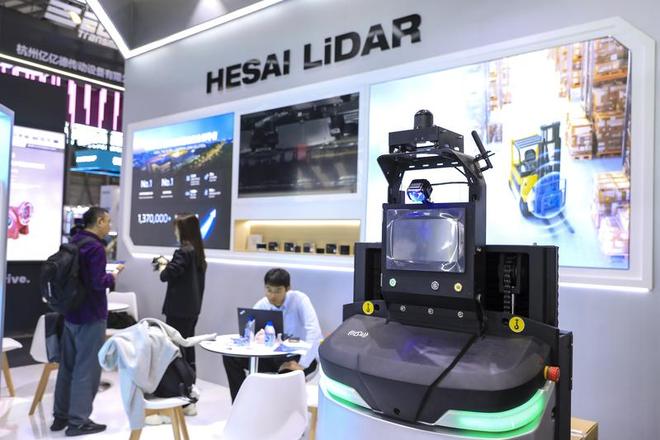
激光雷达传感器

Search documents
德国波鸿汽车研究所主任杜登霍夫接受《环球时报》专访:欧洲汽车可以从“中国效率”中学习很多
Huan Qiu Wang· 2026-01-26 22:51
Core Insights - The recent "soft landing" agreement between China and the EU regarding electric vehicles is expected to significantly boost market confidence and invigorate automotive trade and investment cooperation between the two regions [1] - Chinese electric vehicle manufacturers have seen a remarkable increase in sales in Europe, with a 127% year-on-year growth, surpassing 100,000 units sold for the first time in December [1][6] Group 1: Market Dynamics - The price disparity between Chinese electric vehicles in Germany and their domestic prices suggests that the EU's potential removal of tariffs and establishment of minimum pricing could benefit Chinese manufacturers [1] - The perception of Chinese manufacturers engaging in "dumping" in the European market is challenged by the relatively low sales volume and high marketing costs faced by these companies [1] Group 2: Technological Collaboration - Chinese investments in Europe, particularly in lithium-ion batteries, are crucial for the European electric vehicle industry, helping to bridge a 20-year technological gap [2] - Chinese companies are also contributing to advancements in antenna technology and laser radar sensors, providing significant support for the upgrade of European industries [2] Group 3: Challenges in European Automotive Industry - The reluctance of some German politicians to fully embrace electric vehicles could hinder the country's competitiveness against Chinese manufacturers, as indecision disrupts market expectations [3] - The EU's recent proposal to relax the 2035 ban on internal combustion engine vehicles is viewed as a setback for the electric vehicle transition [3] Group 4: Competitive Advantages - German automotive manufacturers excel in chassis design, interior materials, and product durability, while Chinese manufacturers lead in battery technology and digitalization [5] - The faster research and development cycles of Chinese companies, sometimes 50% shorter than their German counterparts, translate into cost advantages [5] Group 5: Consumer Preferences - The growth of Chinese electric vehicles in Southern Europe is attributed to their alignment with budget-conscious consumer preferences, contrasting with a more cautious approach in Germany [6] - To gain long-term acceptance in Europe, Chinese manufacturers must focus on brand value and marketing strategies that resonate with European consumers, who prioritize brand trust and vehicle longevity [6] Group 6: European Automakers in China - European automakers, including those from Germany, face challenges in the Chinese market and must improve in pricing, digitalization, and electrification to regain growth [7] - The "In China, For China" strategy adopted by companies like Volkswagen and Audi aims to address these challenges through collaboration with local tech firms [7]
镭神智能敲定2200万美元激光雷达业务买家
Xin Lang Cai Jing· 2026-01-12 16:05
Core Viewpoint - Lidar manufacturer Luminar Technologies has reached an agreement to sell its lidar business to a quantum computing company for $22 million, but the deal may change if a better offer is received before the deadline [1][3]. Group 1: Company Overview - Luminar Technologies filed for Chapter 11 bankruptcy protection in December last year and previously announced plans to sell its semiconductor subsidiary for $110 million to the same quantum computing company [1][3]. - The founder and former CEO, Austin Russell, has expressed interest in bidding for the lidar assets and had attempted to acquire the entire company before the bankruptcy filing [1][3]. Group 2: Financial Implications - The lead bid of $22 million indicates a significant decline in Luminar's valuation, which peaked at approximately $11 billion in 2021, based on expectations of widespread adoption of its lidar sensors by major automakers like Volvo [2][4]. - Volvo had planned to purchase over 1 million units of the lidar sensors but ultimately abandoned the deal in 2025, leading to the collapse of partnerships with other automakers like Mercedes-Benz and Polestar [2][4]. Group 3: Quantum Computing Company Background - The quantum computing company, established in 2001 and originally a ticketing company, shifted its focus to quantum computing and optical technology after a restructuring process [5]. - In 2025, the company raised over $700 million through stock issuance, but its revenue for the first three quarters of last year was only $384,000 [5].
花旗:英伟达的自动驾驶计划或将支持全球无人驾驶出租车增长
Xin Lang Cai Jing· 2026-01-06 06:25
Core Viewpoint - Citigroup analysts predict that NVIDIA's new AI platform, open models, and ecosystem will create demand for autonomous ride-hailing services and support global growth [1] Group 1: Market Growth Projections - The global autonomous taxi market is expected to grow from $4.43 billion in 2025 to $188.91 billion by 2034 [1] - The potential market for autonomous taxis in China is projected to increase from $39 million in 2025 to $67.59 billion by 2035 [1] Group 2: Beneficiaries of Growth - NVIDIA's initiatives may boost investor confidence and directly benefit companies like Pony.ai and WeRide from a software perspective [1] - Automotive manufacturers such as BYD, Geely, Great Wall Motors, SAIC Motor, and Xiaomi, as well as ride-hailing platform Didi, are likely to benefit from the growth of the autonomous taxi industry [1] - In the hardware sector, Chinese lidar sensor manufacturer Hesai Technology is expected to gain from this market expansion [1]

革命性的太赫兹传感器,正式亮相
半导体行业观察· 2026-01-06 01:42
Core Viewpoint - Teradar has launched its first flagship terahertz sensor, named Summit, which aims to fill the gap left by traditional radar and lidar sensors, offering high performance in all weather conditions [1][10]. Group 1: Product Features and Technology - The Summit sensor is designed to operate in the terahertz frequency range, which has not been fully utilized, and features a solid-state design with no moving parts [1][4]. - Teradar claims that its sensor can provide 20 times the resolution of traditional automotive radar and maintains performance in adverse weather conditions [11][12]. - The modular design of the sensor allows customization for specific Advanced Driver Assistance Systems (ADAS) or autonomous driving needs, with an expected price range in the hundreds of dollars [7][8]. Group 2: Market Context and Competition - The launch of Teradar's sensor comes at a time when automotive sensor suppliers are facing challenges, including the bankruptcy of Luminar after losing contracts with major automakers [2]. - Chinese companies are aggressively entering the lidar market, with plans to produce over 1 million lidar sensors by 2025, increasing competition for Teradar [2]. - Other U.S. companies in the lidar space are diversifying into robotics and smart infrastructure, indicating a shift in market focus [2]. Group 3: Partnerships and Future Prospects - Teradar has secured $150 million in Series B funding, with investments from Lockheed Martin's venture capital arm and VXI Capital, indicating strong interest in its technology [2][5]. - The company is collaborating with five major automotive manufacturers and three tier-one suppliers to validate its technology, with plans to begin shipping the Summit sensor in 2028 [1][10]. - Teradar's technology is positioned as a complementary or alternative solution to existing sensor suites, addressing the limitations of current sensor technologies [10][13].


Luminar破产与激光雷达“战争”:当“机器之眼”成为大国博弈新前线
机器人大讲堂· 2025-12-21 08:04
Core Viewpoint - The collapse of Luminar, a leading American lidar company, coincides with a legislative push in the U.S. to exclude Chinese sensors from critical infrastructure, highlighting the shift of lidar technology from a commercial competition to a geopolitical battleground [1][3]. Group 1: Legislative Actions and Market Impact - A new bill proposed by U.S. Congressman Raja Krishnamoorthi aims to phase out Chinese-made lidar sensors in autonomous vehicles and critical infrastructure under the guise of national security [3][4]. - The bill sets a timeline for banning new purchases within three years and replacing existing equipment within five years, citing concerns over potential cyberattacks during conflicts [4]. - Concurrently, Luminar Technologies filed for bankruptcy, reporting assets between $100 million and $500 million against liabilities of $500 million to $1 billion, marking a significant downturn for a company once partnered with major automakers [7]. Group 2: Luminar's Business Model and Challenges - Luminar's strategy focused on a superior 1550 nm lidar technology, which was initially seen as a path to advanced autonomous driving, leading to a peak market valuation of nearly $10 billion in 2020 [8][11]. - However, the high costs associated with 1550 nm technology, reliant on expensive materials, resulted in unsustainable pricing, with sales failing to cover manufacturing costs [11]. - In contrast, Chinese competitors like Hesai and RoboSense successfully reduced costs to around $200, integrating into major automotive supply chains, which Luminar could not match [11][13]. Group 3: Market Dynamics and Competitive Landscape - The global lidar market is dominated by Chinese firms, holding 93% of the passenger vehicle lidar market and 89% of the overall lidar market, with the "Big Four" Chinese companies capturing 88% of the market [13][15]. - The rapid decline in lidar costs and improvements in reliability have transformed lidar from a high-tech product to a mass-market component, driven by demand in robotics and industrial automation [16][18]. - The U.S. legislative response reflects a growing anxiety over supply chain security, as evidenced by the inclusion of Hesai in a list of entities linked to the Chinese military [19][20]. Group 4: Future Outlook and Competitive Strategies - The future of lidar technology will depend on the ability to provide comprehensive perception solutions that integrate hardware and software, rather than just competing on technical specifications [21]. - Companies that can navigate specific application scenarios and build strong ecosystem partnerships will likely establish a competitive edge in the evolving market landscape [21].
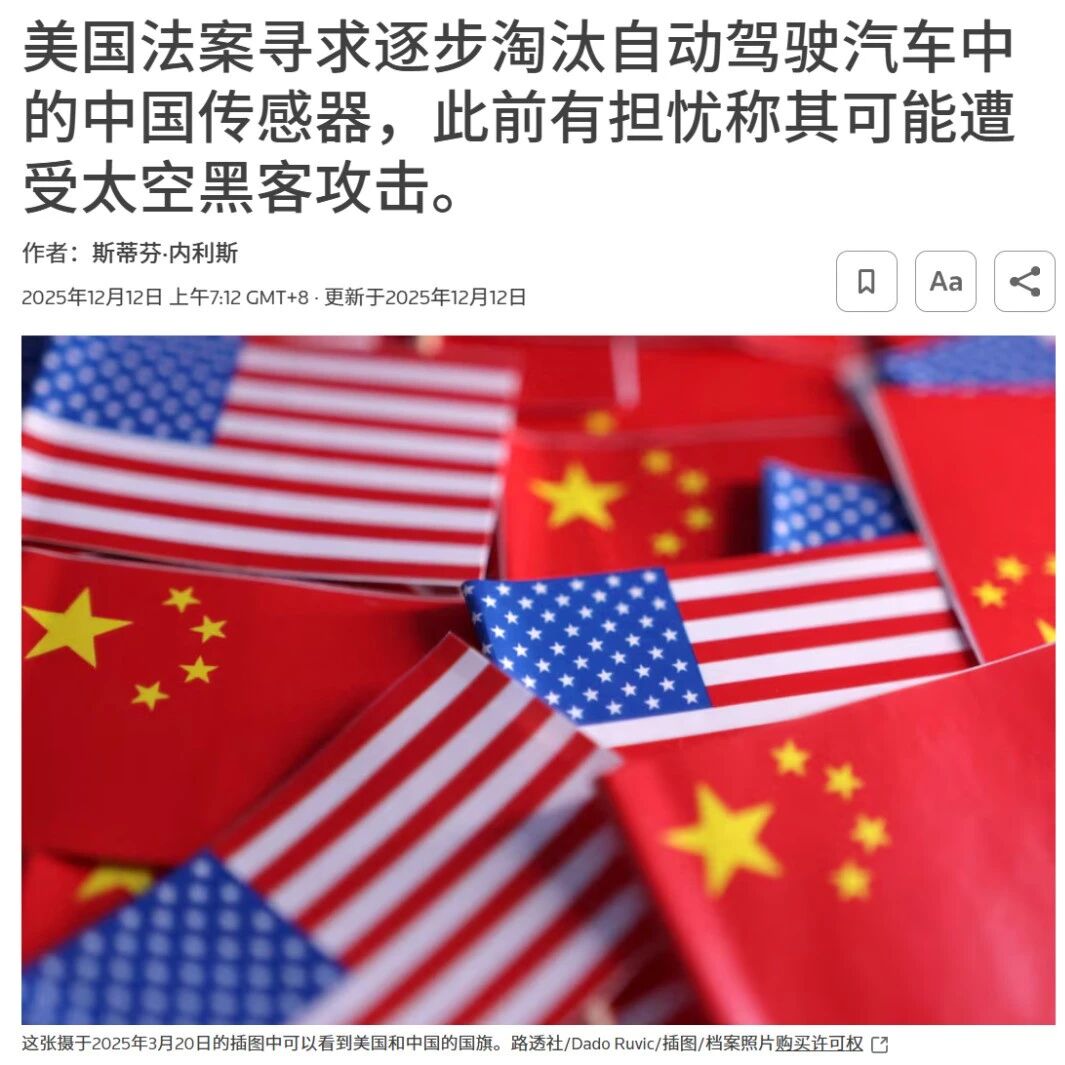
明星激光雷达公司破产!巅峰市值近千亿,奔驰沃尔沃曾是大客户
首席商业评论· 2025-12-18 05:12
Core Viewpoint - Luminar, a North American laser sensor startup, has filed for Chapter 11 bankruptcy protection, reflecting significant challenges in the lidar industry and the company's operational struggles [6][8][25]. Group 1: Company Overview - Luminar's assets are estimated between $100 million and $500 million, while liabilities range from $500 million to $1 billion [8]. - The company had a market valuation of approximately $11.9 billion at its peak in 2020, which has since declined to about $1.38 billion in 2023 [13]. - Luminar has secured a temporary agreement with creditors to access $25 million in cash to support operations during the bankruptcy process [13]. Group 2: Financial Performance - In Q3 2025, Luminar reported revenue of $18.87 million, with a gross loss of $8.1 million and a free cash flow of -$48.5 million [20]. - The company experienced a net loss of $571 million in 2023, with revenue of approximately $69.78 million [22]. - For 2024, Luminar's revenue slightly increased to $75.4 million, but it still faced a net loss of $273 million [22]. Group 3: Key Events Leading to Bankruptcy - The termination of a contract with Volvo, which accounted for 90% of Luminar's lidar sensor deliveries, was a critical factor leading to the bankruptcy filing [16][18]. - Disputes arose between Luminar and Volvo regarding contract obligations and technology alignment, contributing to the breakdown of their partnership [18]. - The departure of CEO Austin Russell in May 2025 due to an ethics investigation marked the beginning of a series of leadership changes that destabilized the company [24]. Group 4: Market Context - The lidar market in China is thriving, with projections indicating a market size of approximately 13.96 billion yuan in 2024, a significant increase from 7.59 billion yuan in 2023 [14]. - Major Chinese companies like Hesai Technology and RoboSense are capturing over 90% of the market share, contrasting sharply with Luminar's struggles [14]. - The challenges faced by Luminar highlight the structural issues within the lidar industry, including high R&D costs and a concentrated customer base [25].
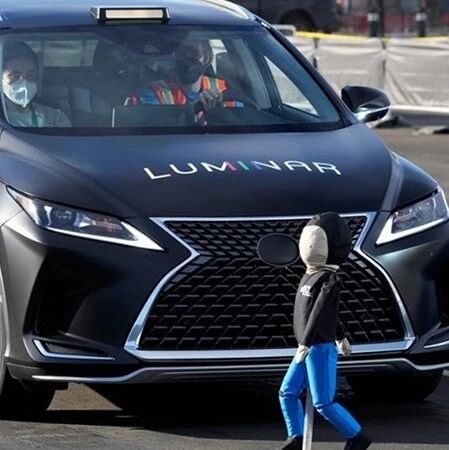
激光雷达传感器制造商Luminar申请破产保护,隔夜暴跌近61%
Jin Rong Jie· 2025-12-16 02:03
Core Viewpoint - Luminar Technologies, a US lidar sensor manufacturer, has filed for Chapter 11 bankruptcy protection, facing significant financial distress with assets between $100 million and $500 million and liabilities ranging from $500 million to $1 billion [1] Group 1: Financial Situation - Luminar has agreed to sell its subsidiary, Luminar Semiconductor, for $110 million in cash to a quantum computing company, pending court approval for better offers [1] - The company has experienced a drastic stock price drop, falling nearly 61% and then over 13% in after-hours trading, with shares priced at $0.306 [1] Group 2: Management and Operational Challenges - The founder, Austin Russell, resigned as CEO in May due to investigations into business conduct and ethical standards [1] - Luminar has undergone its second round of layoffs this year, totaling approximately 25% of its workforce, and has seen the departure of its CFO [1] Group 3: Client and Partnership Issues - The company faced a major setback when Volvo, a key early supporter and its largest customer this year, canceled a five-year partnership agreement in November [1]

美股异动丨激光雷达传感器制造商Luminar申请破产保护,隔夜暴跌近61%
Ge Long Hui· 2025-12-16 01:24
Core Viewpoint - Luminar Technologies, a US lidar sensor manufacturer, has filed for Chapter 11 bankruptcy protection, with assets between $100 million and $500 million and liabilities ranging from $500 million to $1 billion [1] Group 1: Financial Situation - Luminar has agreed to sell its subsidiary, Luminar Semiconductor, for $110 million in cash to a quantum computing company, pending court approval for better offers [1] - The company has experienced significant stock price decline, falling nearly 61% and then over 13% in after-hours trading, with shares priced at $0.306 [1] Group 2: Management and Operational Challenges - The founder, Austin Russell, resigned as CEO amid investigations into business conduct and ethical standards [1] - Luminar has conducted its second round of layoffs this year, totaling approximately 25% of its workforce, and has seen the departure of its CFO [1] Group 3: Client and Partnership Issues - The company faced a major setback when Volvo, a key early supporter and its largest customer this year, canceled a five-year partnership agreement [1] - Multiple loan defaults have occurred, and the SEC is investigating the company [1]
突发,美国计划禁用中国传感器!
是说芯语· 2025-12-12 03:58
Core Viewpoint - The article discusses a proposal by U.S. lawmakers to phase out Chinese-made sensors, particularly LiDAR technology, used in autonomous vehicles and critical infrastructure due to national security concerns, highlighting the dominance of Chinese companies in this market [1][2][3]. Group 1: Legislative Actions - U.S. Congressman Raja Krishnamoorthi introduced a bill to gradually eliminate the use of Chinese LiDAR sensors, with a ban on new purchases starting in three years, while allowing exemptions for scientific and cybersecurity research [2][3]. - The bill includes a five-year transition period for existing equipment used in critical infrastructure [2]. Group 2: Market Dominance - Chinese companies dominate the LiDAR market, holding 93% of the passenger vehicle market share and 89% of the overall LiDAR market, according to Yole Group [2][3]. - The report identifies four major Chinese LiDAR manufacturers—Hesai Technology, RoboSense, Huawei, and TuSimple—collectively referred to as the "Big Four," which control 88% of the market [3][6]. Group 3: National Security Concerns - National security organizations warn that Chinese LiDAR could pose hacking risks during conflicts, potentially disabling large areas of the U.S. infrastructure within seconds [3][9]. - The U.S. Department of Defense has listed major Chinese LiDAR manufacturers as entities that assist the Chinese military, indicating a strong governmental stance against these companies [3][8]. Group 4: Ongoing Investigations - In November 2023, a group of 20 U.S. lawmakers urged the Biden administration to investigate all Chinese LiDAR companies for potential sanctions [6]. - The Department of Defense updated its list of Chinese military-related companies, including Hesai Technology, further intensifying scrutiny on these firms [7][8].

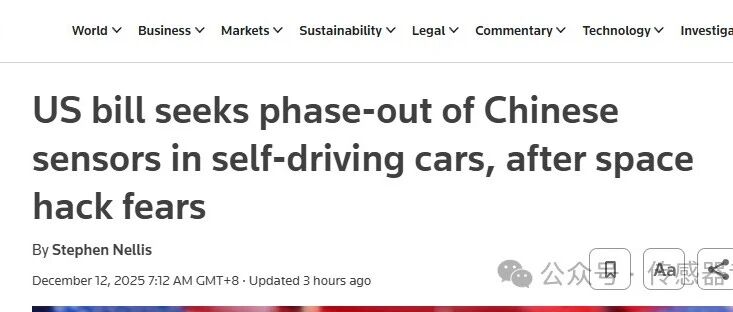
美议员加戏:别用中国的了,万一打起来…
Guan Cha Zhe Wang· 2025-12-12 01:47
Group 1 - The U.S. House of Representatives is targeting Chinese lidar sensors used in autonomous vehicles and critical infrastructure, proposing a bill to phase them out due to security concerns [1][3] - The bill mandates a ban on new procurement of Chinese lidar sensors after three years, with exemptions for research and cybersecurity, and a five-year transition period for existing equipment [1][3] - Chinese companies dominate the lidar market, holding 93% of the global passenger vehicle lidar market and 89% of the overall lidar market, according to Yole Group [1] Group 2 - The proposal is driven by fears that Chinese lidar technology could be exploited in conflicts, potentially leading to widespread system failures in the U.S. [3][4] - The U.S. Department of Defense has listed Hesai Technology, a major lidar manufacturer, on its military-related entity list, although the company denies any military sales [4] - The narrative of a "Chinese threat" has become a reflexive discourse in the West, reflecting an imbalance in the technological competition mindset [4][5]