
煤炭绿色低碳转型

Search documents
破局认知赋能绿色转型 协同融智驱动数智升级
Zhong Guo Neng Yuan Wang· 2026-01-19 10:40
Core Insights - The coal industry is undergoing a strategic transformation to align with energy security and carbon neutrality goals, emphasizing the need for innovative technologies and collaborative efforts in research and application [1][6]. Group 1: Industry Positioning and Transformation - The perception of coal resource depletion is challenged; the focus should be on identifying and utilizing existing coal resources that can be extracted in a green and low-carbon manner [3]. - China's coal resource endowment remains significant, and while renewable energy development is ongoing, coal will continue to play a crucial role in the short term [3]. - The strategic role of coal is being redefined, with an emphasis on increasing recovery rates of high-quality coal and transitioning from fuel to raw material and then to materials [3][6]. Group 2: Development Pathways - For resource-rich areas like Ordos, the development should align with national strategies for coal-to-oil and coal-to-gas, while also advancing modern coal chemical industries [3]. - This approach aims to enhance resource value and address the industry's challenges in deep coal utilization, transforming coal into various products [3]. Group 3: Technological Innovation and Collaboration - The establishment of a collaborative laboratory exemplifies the integration of academia, research institutions, and enterprises, aiming for a synergistic effect in advancing coal's green and efficient development [4]. - The most pressing technological challenge is the digitalization of geological conditions, which is essential for supporting unmanned mining operations [5]. - A focus on collaborative innovation mechanisms is necessary to achieve shared goals in green and digital mining [5]. Group 4: Talent Development and Future Outlook - The coal industry must prioritize the cultivation of young talent to address the challenges of green and low-carbon transitions, leveraging existing collaborative platforms [5][6]. - The establishment of the laboratory is intended to provide technical support and talent reserves for the coal industry's green development [6]. - The ongoing collaboration and technological advancements are expected to lead the coal industry into a new phase of high-quality, low-carbon, and efficient development [6].

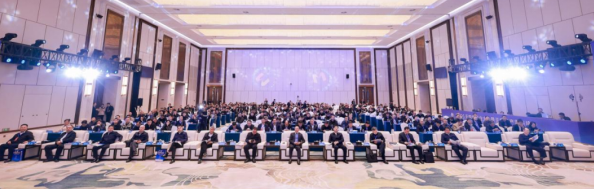
2025无烟煤产业大会暨无烟煤产需衔接会在山西晋城开幕
Jing Ji Wang· 2025-10-30 08:01
Core Viewpoint - The 2025 Smokeless Coal Industry Conference and Supply-Demand Connection Meeting was held in Jincheng, Shanxi Province, emphasizing the importance of technological innovation and green low-carbon development in the smokeless coal industry [4][5]. Group 1: Industry Insights - The smokeless coal market is undergoing profound changes, with future trends to be understood through consumption, production, imports, and prices [6]. - The power and steel industries remain the core support for demand, accounting for half and a quarter of consumption, respectively, with a projected national consumption growth rate of 0.9% from 2025 to 2026 [6]. - Emerging fields such as negative electrode materials present new opportunities for green transformation [6]. Group 2: Supply Dynamics - The supply side is showing a trend of "stable but weak, with increased concentration," as domestic production gradually concentrates in Shanxi and large enterprises [6]. - The production volume is expected to reach 395 million tons by 2026, with an additional 18 million tons imported, leading to a total supply of approximately 413 million tons [6]. - With consumption slightly rising to 408 million tons, the market is expected to enter a relatively balanced and slightly tightening state, with the price center for smokeless coal in 2026 likely to be higher than this year [6]. Group 3: Conference Highlights - The conference was hosted by the China Coal Transportation and Marketing Association, with the theme "Gathering Industry Confidence, Cooperating for a Win-Win Future" [6]. - The event included keynote speeches from industry experts and specialized promotional and exhibition activities [6].
煤炭大会释放转型信号:从规模扩张到质量优先,未来如何破局?
Zhong Guo Dian Li Bao· 2025-06-12 09:02
Core Viewpoint - The coal industry in China is shifting from "scale expansion" to "quality first," focusing on energy security, green transformation, technological innovation, and social equity [2][5]. Industry Trends - The proportion of coal consumption for power generation is expected to exceed 60% as coal consumption shows new characteristics, with a slight increase in coal usage for the power sector before reaching carbon peak by 2030 [2][10]. - By 2030, electricity is projected to account for 34% of total energy consumption, driven by the growth of new industries and advancements in information technology [4]. Coal and Power Integration - The coal and power sectors have a natural synergy, with coal remaining a cornerstone of electricity generation in the near future [7]. - The number of coal mines in China has decreased from approximately 15,000 in 2014 to around 4,300 by the end of 2024, with large modern coal mines producing 80% of the total output [7][8]. Technological and Structural Adjustments - The coal industry is undergoing structural optimization, with significant investments in modern and intelligent coal mines, totaling about 4.5 trillion yuan over the past decade [7][9]. - Recommendations include establishing flexible production mechanisms, enhancing coal transportation infrastructure, and promoting green and efficient coal utilization [8][9]. Market Dynamics - The coal market is experiencing a decline in prices due to oversupply in late 2024 and increased production in early 2025, with a forecast of fluctuating consumption growth [10].