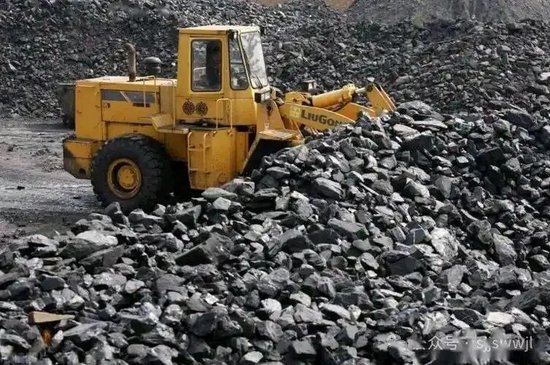
煤矿智能化改造

Search documents
供需偏紧格局延续,煤价稳步上涨
Datong Securities· 2026-03-30 23:31
Investment Rating - The industry investment rating is optimistic [1] Core Viewpoints - The supply-demand tightness continues, leading to a steady increase in coal prices [1] - Domestic thermal coal prices are stable and rising, with the Qinhuangdao port price for Shanxi-produced thermal coal (Q5500) at 760 RMB/ton, up 25 RMB/ton week-on-week [4][11] - The international Newcastle thermal coal price is 85.1 USD/ton, down 1.2 USD/ton week-on-week, but high overseas energy prices provide support [11] - Coking coal prices have reached new highs this year, with Shanxi's main coking coal price rising 130 RMB/ton to 1750 RMB/ton [26] - The market sentiment is bullish due to multiple factors, including geopolitical tensions and domestic policy support [12][27] Summary by Sections Market Performance - The A-share market showed mixed performance, with coal outperforming the CSI 300 index [5] - The Shanghai Composite Index fell 1.09% to 3913.72 points, while the CSI 300 dropped 1.41% to 4502.57 points [5] - Among coal companies, Liaoning Energy saw the largest increase at 28.60% [5] Thermal Coal - The domestic thermal coal market is characterized by moderate supply growth and tightening import constraints, leading to a seasonal price increase [10] - The average daily coal consumption in power plants remains high, despite being in the traditional off-season [20] - The inventory levels at ports are manageable, with Qinhuangdao port's thermal coal price showing a week-on-week increase [16][20] Coking Coal - The coking coal market is experiencing a tight supply-demand balance, with prices rising strongly [25] - Domestic coking coal prices have reached new highs, supported by improved demand from the steel industry [26] - The overall inventory pressure is low, providing further support for price increases [25][31] Shipping Situation - The shipping market is seeing an increase in both volume and price, with various routes showing significant price changes week-on-week [39] Industry News - In the first two months of the year, Shaanxi province's coal production reached 122.44 million tons, a year-on-year increase of 6.2% [40] - The coal import volume for February showed a decline, with thermal coal down 10.3% year-on-year [40] - Inner Mongolia aims to stabilize coal production capacity at over 1.3 billion tons during the 14th Five-Year Plan [40][41]
山煤国际20151223
2025-12-24 12:57
Summary of Shanmei International Conference Call Company Overview - **Company**: Shanmei International - **Industry**: Coal Production and Trade Key Points Production and Sales Forecast - Shanmei International expects coal production to reach **35 million tons** by 2025, with sales projected between **26-27 million tons** and imports exceeding **5 million tons** [2][4] - The company aims to maintain a production rate of approximately **3 million tons** per month to meet its annual target [4] Inventory Management - The company is working to reduce inventory levels from over **1 million tons** to **300,000-400,000 tons** by year-end, without implementing special discount policies [2][6][7] Pricing Mechanism - The pricing mechanism has been adjusted to a base price plus a floating model since May, with the average coal price increasing by approximately **40 yuan/ton** by the end of November [2][6] - Shanmei plans to continue using the 2025 pricing mechanism despite the new pricing formula introduced in Shanxi Province [8] Supply Assurance and Contracts - For 2026, the supply assurance task is set at **19 million tons**, with all contracts expected to be signed by the end of December [5] - The company has utilized all available resources for supply assurance since the policy's implementation [5] Cost Management - Shanmei aims to reduce overall costs by approximately **5%** in 2025, although there may be cost increases in Q4 due to performance bonuses and other factors [2][12] - The company has purchased necessary production capacity indicators, resolving previous shortages [11] Tax and Regulatory Environment - Tax expenses increased in Q3 due to tax audits, with uncertain impacts on future quarters [9] - The influence of anti-involution policies on production has been minimal, with recent production declines attributed to various operational factors [10] Technological Advancements - The smart mining transformation is expected to be completed by **2027**, with annual capital expenditures for smaller mines projected to be below **200 million yuan** [15] Trade Coal Business - The trade coal business will maintain its current scale of over **10 million tons**, focusing on imports and related services [3][16] Future Capital Expenditures - Basic capital expenditures for the upcoming year are estimated to be between **1.2-1.3 billion yuan**, primarily for maintenance and upgrades [18] Dividend Policy - The dividend commitment is set to expire in **2026**, with future plans to be determined by the State-owned Assets Supervision and Administration Commission (SASAC) [19] Market Conditions - Recent market price declines are attributed to winter weather and stable supply conditions, with current inventory levels reduced to **1 million tons** [19]

山西有望反超内蒙古,再夺“煤老大”!十余年轮回背后的真相
Xin Lang Cai Jing· 2025-12-02 06:25
Core Viewpoint - Shanxi province is expected to regain its title as the largest coal-producing province in China by 2025, following a temporary loss to Inner Mongolia in 2024, with Shanxi's coal output reaching 108,485.8 million tons compared to Inner Mongolia's 104,996.7 million tons in the first ten months of this year [1][12][14]. Group 1: Production Competition - The competition for coal production between Shanxi and Inner Mongolia has seen frequent changes over the past decade, with both provinces alternating in the top position [1][12][14]. - In 2024, Inner Mongolia surpassed Shanxi with a coal output of 129,686.9 million tons compared to Shanxi's 126,873.8 million tons [14]. - Shanxi's coal production was impacted by safety regulations and a decrease in coal prices, leading to a reduction of approximately 10 million tons from the previous year [3][16]. Group 2: Development Path Differences - Shanxi's coal industry is characterized by deep mining operations, while Inner Mongolia benefits from open-pit mining, resulting in lower extraction costs for Inner Mongolia by 30%-40% [18][20]. - The coal quality differs significantly, with Shanxi focusing on coking coal and thermal coal, while Inner Mongolia primarily produces thermal coal, which has lower price elasticity [20]. - Shanxi's coal industry has a higher profitability, with a net profit margin of 26.52% for Shanxi Jinkong Coal Industry, compared to less than 15% for Inner Mongolia's coal enterprises [20]. Group 3: Economic Role of Coal - Coal remains a critical component of the economies in both Shanxi and Inner Mongolia, contributing significantly to industrial growth [21][22]. - In Shanxi, coal industry growth contributed 70% to the overall industrial growth, with a 5.1% increase in coal production [21]. - Inner Mongolia's industrial value added increased by 5.9%, with mining and energy sectors also showing positive growth [21][22]. Group 4: Transformation Paths - Shanxi is focusing on extending its coal industry chain and developing coal chemical products, with its chemical segment accounting for 23% of revenue and a higher gross margin compared to raw coal [24]. - The province is also investing in smart mining technologies, with 60.48% of coal production coming from intelligent mines [24]. - Inner Mongolia is emphasizing breakthroughs in renewable energy, with significant growth in new energy sectors and manufacturing [24][27]. Group 5: Future Challenges and Prospects - The China Coal Industry Association predicts that coal consumption will peak around 2028, necessitating a transformation for traditional energy provinces like Shanxi [25]. - Shanxi has recognized the challenges of relying heavily on coal, with plans to diversify into strategic emerging industries [25]. - Inner Mongolia is advancing integrated development of coal, wind, and solar energy, leveraging its natural advantages in renewable energy production [27].