物流技术创新

Search documents
【每周经济观察】以物流成本之降促经济效率之升
Sou Hu Cai Jing· 2026-02-14 00:45
Core Insights - The overall logistics cost in China is projected to decrease to 13.9% of GDP by 2025, marking a significant milestone as it falls below 14% for the first time, representing a 0.8 percentage point drop from the end of the 13th Five-Year Plan period [2] - This reduction in logistics costs indicates a substantial improvement in the efficiency of the Chinese economy, suggesting that for every 100 yuan of GDP, logistics expenses have decreased to 13.9 yuan, leading to an annual savings of over 100 billion yuan in logistics costs for the economy [2] Policy Initiatives - The State Council has issued an action plan aiming to reduce the logistics cost-to-GDP ratio to around 13.5% by 2027, focusing on reforms in transportation systems, integration of supply chains, and enhancement of logistics networks [3] - A dedicated task force has been established to coordinate efforts across departments, which has already led to significant increases in intermodal transport volumes and reductions in trunk transportation costs [3] Structural Optimization - China has been constructing major logistics hubs to integrate resources and develop a "channel + hub + network" operational system, which has effectively reduced unit logistics costs through economies of scale and network efficiencies [3] - The ongoing "road-to-water" and "road-to-rail" strategies have resulted in over 50% of water transport turnover, facilitating a shift towards more economical and environmentally friendly logistics methods [3] Technological Innovation - Digitalization and green transformation are identified as core drivers of logistics industry development, with many logistics companies utilizing digital technologies to optimize management systems and significantly reduce empty transport rates [4] - The adoption of automated warehousing and new energy transport tools has contributed to a decrease in overall energy consumption, with storage costs projected to drop by 0.2 percentage points by 2025 [4] Systematic Approach - Achieving the target of reducing logistics costs to around 13.5% by 2027 is seen as a starting point, requiring continued efforts to transition from "extensive expansion" to "fine optimization" of the logistics system [5] - Key reforms are necessary to break down regional barriers and promote a unified national market, focusing on railway and road freight, logistics platforms, and the sharing of logistics data to lower institutional costs [5]


以物流成本之降促经济效率之升
Xin Lang Cai Jing· 2026-02-13 22:47
Group 1 - The core viewpoint is that the continuous decline in logistics costs signifies a substantial improvement in China's economic operational efficiency, marking a milestone in the logistics industry and a key signal for enhancing the real economy [2][3] - By 2025, the ratio of total social logistics costs to GDP in China is projected to drop to 13.9%, the first time falling below 14%, representing a decrease of 0.8 percentage points compared to the end of the 13th Five-Year Plan period [2] - This reduction in logistics costs indicates that for every 100 yuan of GDP created, logistics expenses have decreased to 13.9 yuan, leading to an annual savings of over 100 billion yuan in logistics costs for China's economy [2] Group 2 - The main drivers for the decline in logistics costs include policy initiatives, industrial upgrades, and technological advancements, particularly the continuous optimization of logistics structure and accelerated innovation in technology [3][4] - The "Effective Action Plan to Reduce Social Logistics Costs" aims to lower the logistics costs to GDP ratio to around 13.5% by 2027, with comprehensive measures including reforms in transportation systems and the integration of supply chains [3][5] - The construction of major logistics hubs and the implementation of a "channel + hub + network" operational system have been pivotal in realizing economies of scale and network efficiencies, thereby reducing unit logistics costs [3] Group 3 - Digitalization and green transformation are becoming core driving forces for the logistics industry, with many companies optimizing management systems through digital technologies, significantly reducing empty transport rates and enhancing operational efficiency [4] - The application of new energy transportation tools has effectively lowered overall energy consumption, with data indicating a 0.2 percentage point decrease in storage costs by 2025 due to these technological advancements [4] - The goal of reducing logistics costs is not merely about cutting transportation expenses or squeezing profits from logistics companies, but rather about optimizing resource allocation and enhancing the efficiency of the logistics system [4][5] Group 4 - Achieving the target of reducing logistics costs to around 13.5% by 2027 is a systematic project that requires significant efforts over the next two years, with deepening institutional reforms being crucial [5] - Key areas for reform include breaking down regional barriers, promoting a unified national market, and focusing on railway and road freight, as well as logistics platform reforms to facilitate data sharing [5] - A well-functioning logistics system is essential for the smooth flow of the economy, as logistics serves as the "veins" of the real economy, supporting efficient national economic circulation and enhancing the momentum for high-quality economic development in China [5]

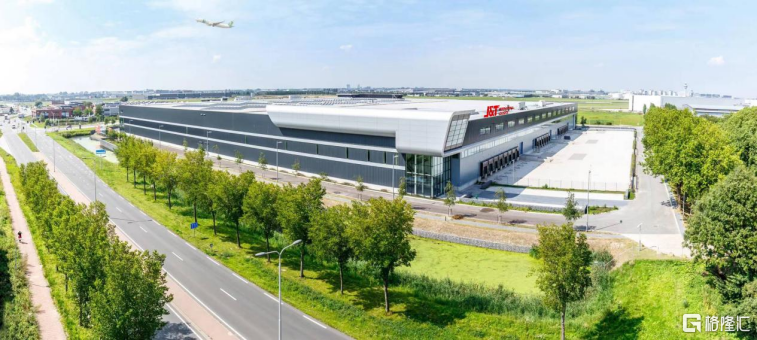
极兔速递(01519.HK):上半年总收入55亿美元,“成长+价值”双重属性共振
Ge Long Hui· 2025-09-01 04:18
Core Insights - The logistics industry is experiencing both opportunities and challenges, with rising operational costs and unstable market demand due to global trade fluctuations and geopolitical uncertainties, while the booming e-commerce sector presents significant growth prospects for logistics companies [1] - J&T Express has demonstrated strong performance in the first half of the year, showcasing its "value" and "growth" attributes, making it a noteworthy case study in the industry [1] Group 1: Financial Performance - In the first half of the year, J&T Express achieved a total package volume of 13.99 billion, a year-on-year increase of 27.0%, reflecting its strong market competitiveness [4] - The company's total revenue reached $5.5 billion, a 13.1% increase year-on-year, with core express service revenue at $5.34 billion, up 12.7% [4][6] - J&T Express reported a net profit of $88.93 million, a significant increase of 186.6% year-on-year, with adjusted net profit at $160 million, up 147.1% [5][6] Group 2: Growth Strategy - J&T Express is expanding globally, with a focus on building a comprehensive and efficient logistics network to enhance its competitiveness in international markets [9] - In Southeast Asia, the company saw a package volume increase of 57.9%, capturing a market share of 32.8%, and revenue growth of 29.6% to $1.97 billion [10][16] - The company also reported a 20.0% increase in package volume in China, reaching 10.6 billion, with a market share growth to 11.1% [11][16] Group 3: Technological Innovation - J&T Express is heavily investing in technology innovation, focusing on logistics network construction, smart sorting, unmanned vehicle delivery, and cloud warehouse services to enhance operational efficiency and service quality [17][18] - The company has deployed 600 unmanned delivery vehicles across multiple provinces, significantly improving delivery efficiency and accuracy [20] - J&T Express has established a cloud warehouse network in 12 countries, covering over 670,000 square meters, enhancing its service capabilities and supporting its core express business [21][23] Group 4: Industry Positioning - The logistics industry is shifting from scale competition to value competition, with J&T Express exemplifying a successful transition by combining growth and value attributes [25] - The company's profitable scale growth, rhythmic global expansion, and technological innovation position it as a leading player in the evolving global logistics market [25]