物质资本积累

Search documents
对话张军:中国经济下一程,钱会更多投向这些领域
Guan Cha Zhe Wang· 2025-12-24 11:05
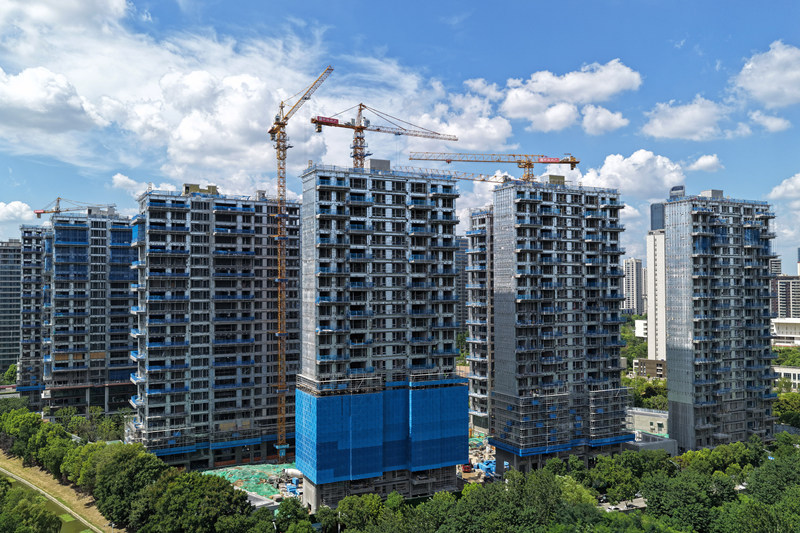
Core Viewpoint - The article emphasizes the shift in China's economic focus from "investment in physical capital" to "investment in human capital" as a response to the changing economic landscape and the need for improved social welfare and equity [1][3][5]. Group 1: Economic Development and Human Investment - Over the past four decades, China has achieved remarkable economic growth through substantial investments in physical infrastructure, leading to a comprehensive industrial system [1]. - The current economic stage necessitates a focus on "investment in people," which aims to enhance wages, employment, education, healthcare, housing, and pensions [1][3]. - The emphasis on human development reflects a recognition that economic growth alone is insufficient to address disparities in income and wealth among different social groups [5][6]. Group 2: Transition from Physical to Human Capital - Fixed asset investment in China has reached 50 trillion yuan, indicating that the previous model of heavy investment in physical capital is experiencing diminishing returns [6][8]. - As the growth rate of fixed asset investment declines, there is a clear shift towards allocating resources to improve human conditions, which is seen as a long-term investment in human capital [8]. - The balance between material capital accumulation and human capital development is crucial, with the latter gaining priority as the economy matures and capital accumulation levels are already high [8].

吴海江 黄颖超
Xin Lang Cai Jing· 2025-12-23 08:46
Core Viewpoint - The recent discussions in the 20th Central Committee and the Central Economic Work Conference emphasize the integration of investments in material and human capital, marking a shift in China's investment philosophy towards a more balanced approach that fosters both economic growth and quality development [3][4][5]. Group 1: Investment Philosophy Shift - The "14th Five-Year Plan" suggests a focus on combining investments in people's welfare and consumption with investments in material goods and human resources [3]. - The transition from high-speed growth to high-quality development necessitates a deeper understanding of the dialectical relationship between material and human capital [3][5]. - The emphasis on human capital is seen as essential for overcoming the middle-income trap and achieving high-income status [5][6]. Group 2: Human Capital vs. Material Capital - Historical perspectives indicate that a linear growth mindset focused solely on material capital can lead to diminishing returns, highlighting the need for investment in human capital [4][5]. - Human capital is characterized by its unique property of increasing returns, as knowledge and skills do not deplete but can generate spillover effects [5][6]. - The relationship between material and human capital is not competitive but rather interdependent, where each supports the growth of the other [6][7]. Group 3: Practical Implementation - To effectively combine investments in material and human capital, systemic reforms are necessary to eliminate barriers to resource allocation and enhance collaborative production relationships [9][10]. - A top-down approach is required to shift the focus from "material-heavy" assessments to include human capital in evaluations of high-quality development [9]. - Education, technology, and talent systems must be integrated to ensure that human capital development aligns with industrial needs, thereby reducing structural unemployment [10]. Group 4: Long-term Investment Perspective - Investing in human capital is viewed as the most efficient and forward-looking investment, essential for sustainable modernization and societal stability [8][9]. - The ultimate goal of modernization should prioritize the well-being of the people, ensuring that development aligns with human-centered logic [8][9].