
现代海盗逻辑

Search documents
媒体怎么报道“美国强掳马杜罗”……
Xin Jing Bao· 2026-01-05 08:56
Group 1 - The core event involves the U.S. military operation that led to the capture of Venezuelan President Maduro, which has been characterized as a blatant act of U.S. hegemony [2][4][5] - The operation was executed with 20 helicopters and 400 special forces, taking only 5 minutes to detain Maduro from his residence [2][15] - The media's response has been swift, with various outlets providing in-depth analyses and interpretations of the event, highlighting its implications for international relations and U.S. foreign policy [3][16] Group 2 - The U.S. aims to control Venezuela's vast oil resources, which are the largest proven reserves globally, exceeding 300 billion barrels, and this military action is seen as a means to facilitate American corporate access to these resources [6][5] - The operation is part of a broader strategy by the Trump administration to reshape political power in Latin America, potentially leading to the establishment of a pro-U.S. government in Venezuela [6][7] - Historical parallels are drawn between Maduro's situation and that of former Panamanian leader Noriega, suggesting a grim outlook for Maduro's future following his capture [9][10]
为何抓 野蛮掠夺殖民 美国图穷匕见
Xin Lang Cai Jing· 2026-01-04 16:56
Group 1 - The core viewpoint of the article revolves around the U.S. military action against Venezuela, specifically targeting President Maduro, as part of a broader strategy to assert U.S. dominance in the Western Hemisphere and control Venezuela's rich natural resources [3][4][11]. - The U.S. aims to use Venezuela as a strategic point to enhance military influence in the Caribbean and South America, facilitating operations and creating a buffer zone against anti-American forces [4][5]. - The Trump administration's actions are framed as a response to Venezuela's economic crisis and the alleged drug trafficking activities of Maduro's government, which the U.S. claims are a threat to its national security [4][8]. Group 2 - The military action against Venezuela was not sudden; it followed months of increased military presence and covert operations authorized by Trump, including a significant military deployment in the Caribbean [5][6]. - The U.S. has accused Maduro of various crimes, including drug trafficking and terrorism, but experts question the validity of these claims, noting a lack of direct evidence linking Maduro to drug smuggling activities [8][9]. - The future of Venezuela remains uncertain, with constitutional provisions allowing for a transition of power to the vice president if the president is absent, and opposition figures positioning themselves for potential leadership [9][10]. Group 3 - The U.S. military's actions against Venezuela are seen as a continuation of historical interventions in Latin America, with comparisons drawn to past U.S. actions in Panama and Grenada [10][11]. - The international community has reacted strongly against the U.S. actions, with various leaders condemning the violation of international law and expressing concerns over the implications for global peace and security [11][12]. - The narrative suggests that the U.S. is prioritizing its economic interests in Venezuela's resources over adherence to international norms, raising alarms about the potential for similar actions against other nations [12][13].

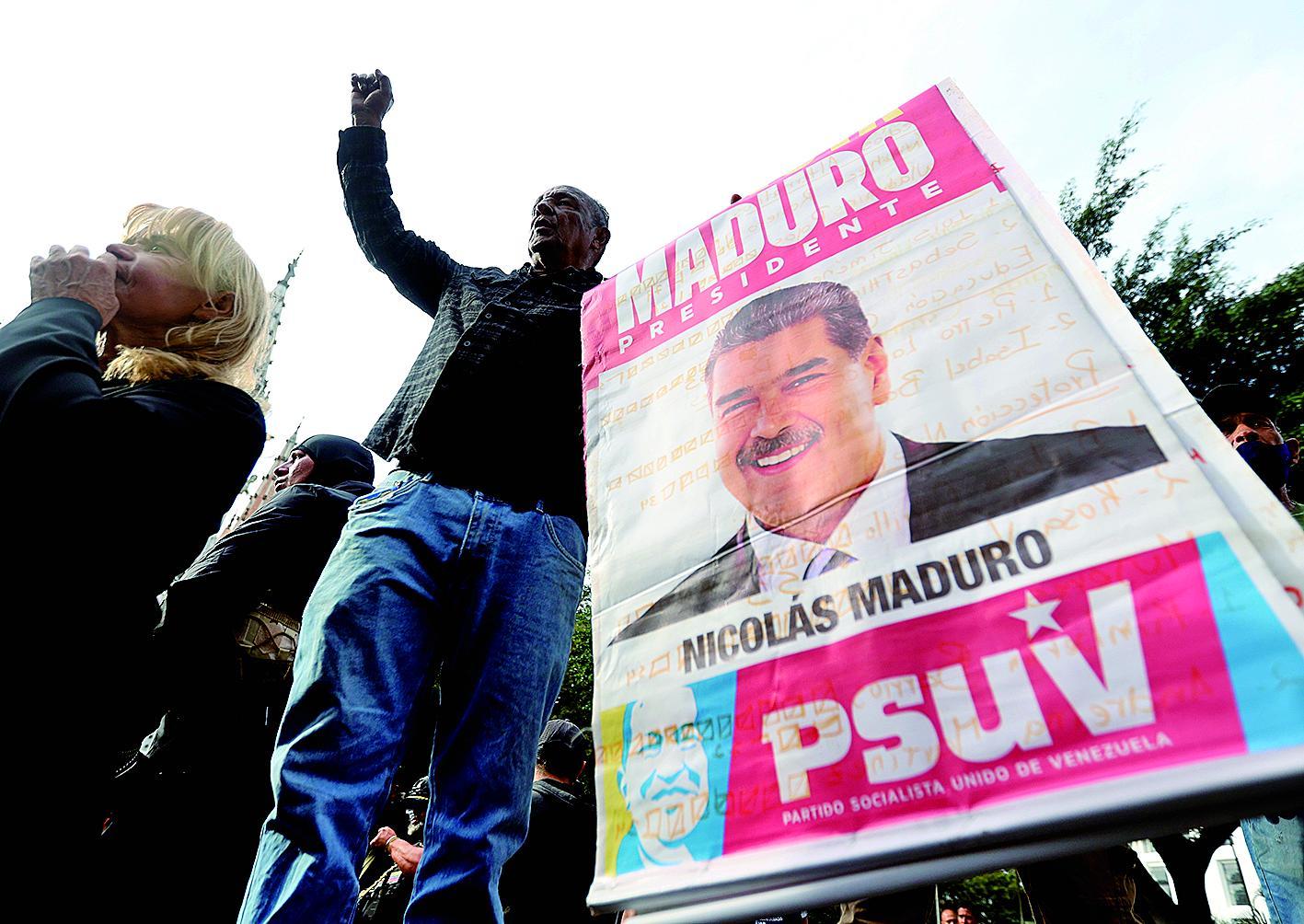
新华社:美国抓走马杜罗 图穷匕见 不过如此
Xin Hua She· 2026-01-04 10:20
Group 1 - The core viewpoint of the articles highlights the aggressive military actions taken by the U.S. against Venezuela, which include the abduction of President Maduro and the subsequent declaration of U.S. management over Venezuela's resources, particularly its oil industry [1][2] - The U.S. military operation is compared to historical acts of colonialism, suggesting a pattern of resource exploitation under the guise of military intervention and regime change [1][2] - International reactions to the U.S. actions indicate widespread condemnation, with various leaders and organizations emphasizing the violation of international law and the potential for increased global instability [2][3] Group 2 - The articles suggest that the U.S. narrative of a "rules-based international order" is fundamentally a facade for pursuing its own interests, revealing a pattern of predatory behavior [3]

新华社发声:图穷匕见,不过如此
Xin Lang Cai Jing· 2026-01-04 07:35
Core Viewpoint - The article criticizes the recent military actions by the United States against Venezuela, labeling them as blatant acts of hegemony and a violation of international law, revealing the true nature of U.S. resource imperialism [1][2][3]. Group 1: U.S. Military Actions - The U.S. military conducted a large-scale attack on Venezuela, capturing President Maduro and forcibly taking him to the U.S. [1] - President Trump announced that the U.S. would "manage" Venezuela and that American oil companies would invest billions of dollars to repair oil infrastructure [1]. Group 2: International Reactions - The international community is increasingly outraged by the U.S. actions, with the UN Secretary-General stating it sets a dangerous precedent [2]. - Leaders from Brazil, Cuba, and Russia condemned the U.S. actions as violations of international law and acts of state terrorism [2]. Group 3: Critique of U.S. Justifications - The article argues that the U.S. narrative of promoting a "rules-based international order" is merely a facade for its own interests and resource exploitation [3].
新华社发声:图穷匕见,不过如此
中国基金报· 2026-01-04 07:19
Core Viewpoint - The article criticizes the recent military actions by the United States against Venezuela, labeling them as blatant acts of hegemony and resource imperialism, revealing the true motives behind U.S. interventions in sovereign nations [2][3]. Group 1: U.S. Military Actions - On January 3, the U.S. military conducted a large-scale attack on Venezuela, capturing President Maduro and forcibly taking him to the U.S. [2] - President Trump announced that the U.S. would "manage" Venezuela and that American oil companies would invest billions of dollars to "repair" the oil infrastructure [2]. Group 2: International Reactions - The international community is increasingly outraged by the U.S. actions, with UN Secretary-General Guterres stating that it sets a "dangerous precedent" [3]. - Brazilian President Lula condemned the actions as prioritizing power over multilateralism, while Cuban President Díaz-Canel described it as state terrorism against nations in the Americas [3]. Group 3: Criticism from Within the U.S. - U.S. Senator Ruben Gallego criticized the country for becoming a "bully" on the world stage, and Senator Mike Lee questioned the constitutional basis for the actions [3]. - Former National Security Advisor Benjamin Rhodes described the intervention as a ridiculous attempt at regime change in Latin America [3]. Group 4: Broader Implications - The article warns that such actions threaten global peace and security, with even U.S. allies like the EU calling for respect for international law and the principles of the UN Charter [4]. - Chilean President Boric expressed the widespread concern that if "jungle law" replaces international norms, no sovereign nation is safe [4].
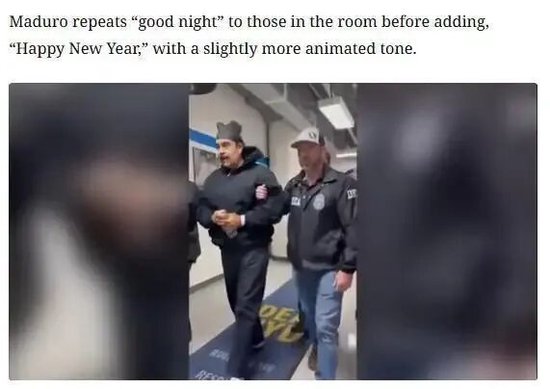
疑似左腿受伤!马杜罗被抓后首次发声,其身边内鬼详情曝光,新华社:图穷匕见,不过如此
Xin Lang Cai Jing· 2026-01-04 05:45
Group 1 - The article reports on the capture of Venezuelan President Maduro by U.S. military forces during a large-scale operation in Caracas, with Trump stating that the U.S. will "manage" Venezuela until a "safe" transition occurs [13][14][26] - Maduro was taken to a detention center in Brooklyn, New York, after being processed at the DEA office, and is expected to appear in court next week [3][18] - The U.S. military action is characterized as a blatant act of hegemony, with comparisons made to the Iraq War, highlighting the U.S.'s historical pattern of resource acquisition through military intervention [14][27] Group 2 - Protests erupted in over 100 U.S. cities against the military action in Venezuela, organized by anti-war groups, emphasizing the negative impact of such actions on Venezuelan citizens and U.S. taxpayers [8][22] - Demonstrators expressed their opposition to U.S. intervention, holding banners with messages like "Defend Venezuela" and "Trump must go" [9][22] - The protests reflect a growing discontent among the American public regarding military interventions and their consequences [22][23] Group 3 - Reports indicate that the CIA had been monitoring Maduro's movements since August 2025, utilizing both internal informants and drone surveillance to gather intelligence leading up to the military operation [5][21] - The operation was described as a result of deep cooperation between the CIA and U.S. military, involving months of planning [21][27] - Trump's authorization of more aggressive CIA actions in the fall of 2025 was a pivotal moment in the lead-up to the operation [21]
新华时评|赤裸裸的霸权行径
Xin Hua She· 2026-01-04 04:56
Core Viewpoint - The article highlights the aggressive military actions taken by the U.S. against Venezuela, including the capture of President Maduro, which is framed as a blatant act of imperialism and a violation of international law [1][2]. Group 1: U.S. Military Actions - The U.S. military launched a large-scale attack on Venezuela, capturing President Maduro and forcibly taking him to the U.S. [1] - President Trump announced that the U.S. would "manage" Venezuela and that American oil companies would invest billions of dollars to repair oil infrastructure [1]. Group 2: International Reactions - The international community is increasingly outraged by the U.S. actions, with UN Secretary-General Guterres stating that it sets a dangerous precedent [2]. - Brazilian President Lula criticized the U.S. for prioritizing power over multilateralism, while Cuban President Díaz-Canel labeled it as state terrorism against nations in the Americas [2]. - Russian officials condemned the U.S. actions as a blatant violation of international law [2]. Group 3: Domestic Criticism in the U.S. - U.S. lawmakers, including Senator Rubén Gallego and Senator Mike Lee, have criticized the U.S. for becoming a "bully" on the world stage and questioned the constitutional basis for such actions [2]. - Former U.S. National Security official Benjamin Rhodes described the actions as absurd and indicative of a regime change effort in Latin America [2]. Group 4: Broader Implications - The article suggests that the U.S. actions represent a return to 19th-century colonial practices, posing a threat to global peace and security [2]. - The EU has called for respect for international law and the principles of the UN Charter, reflecting widespread concern that such actions could set a precedent for future interventions in other countries [2].
新华时评丨赤裸裸的霸权行径
Xin Hua She· 2026-01-04 04:40
Core Viewpoint - The article highlights the U.S. military's large-scale attack on Venezuela, capturing President Maduro and asserting control over the country, which is framed as an act of imperialism and resource exploitation [1][2]. Group 1: U.S. Actions and Implications - The U.S. military's actions against Venezuela are described as a blatant display of hegemony, with President Trump announcing plans for U.S. oil companies to invest billions in Venezuela's oil infrastructure [1]. - The operation is compared to the Iraq War, indicating a pattern of U.S. intervention aimed at seizing foreign resources under the guise of justice and anti-terrorism [1]. - The article argues that the U.S. approach reflects a modern form of piracy, disregarding international law and reverting to colonial-era practices of resource plunder [1]. Group 2: International Reactions - The international community is increasingly outraged by the U.S. actions, with the UN Secretary-General calling it a dangerous precedent and various leaders condemning it as state terrorism and a violation of international law [2]. - Criticism also arises from within the U.S., with lawmakers questioning the constitutional basis for such actions and labeling the country as a global bully [2]. - The article emphasizes a growing concern that such actions threaten global peace and security, with warnings that if "jungle law" replaces international norms, no sovereign nation is safe [2].