
现代经济增长

Search documents
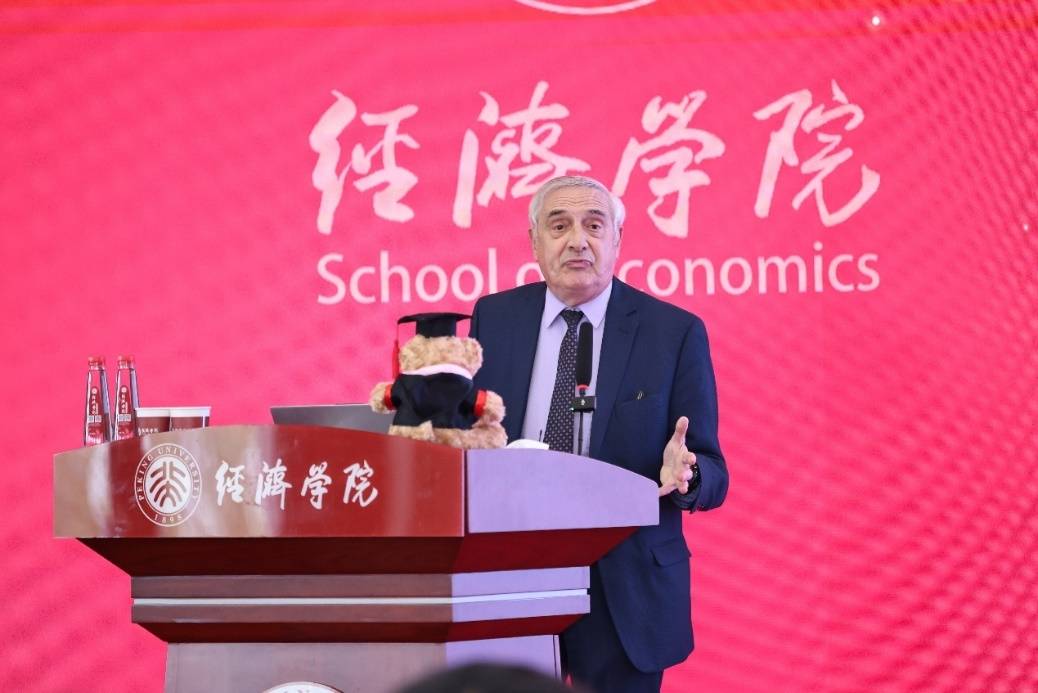
获得2025年诺贝尔经济学奖后的第11天,莫基尔访问北京大学
Sou Hu Cai Jing· 2025-10-27 07:47
Core Insights - Joel Mokyr, a professor at Northwestern University, received the 2025 Nobel Prize in Economic Sciences and visited Peking University on October 24 [1] - Mokyr delivered a lecture titled "Revisiting the Origins of the Industrial Revolution and Modern Economic Growth," emphasizing that the essence of the Industrial Revolution lies in the application of "practical knowledge" rather than mere invention [2] Group 1 - Mokyr highlighted the interconnection between skill supply, institutional environment, and market demand, which fostered a positive feedback loop of income growth and technological advancement in the UK during the Industrial Revolution [2] - In discussing China's economic growth, Mokyr expressed confidence in China's path in technological innovation, drawing parallels to the Song Dynasty as a historically advanced economy [2] - He praised China's impressive intellectual resources and talent pool, citing the recent success of Chinese participants in the Chopin International Piano Competition as evidence of China's talent cultivation capabilities [2] Group 2 - Mokyr has a history of academic exchanges with Peking University, having participated in various programs and lectures since 2015, focusing on topics such as economic growth and the Industrial Revolution [3] - His previous engagements at Peking University included discussions on key drivers of economic growth and the knowledge economy, which received widespread attention and acclaim [3]

2025诺贝尔经济学奖:关于创新与淘汰的真相
首席商业评论· 2025-10-15 05:25
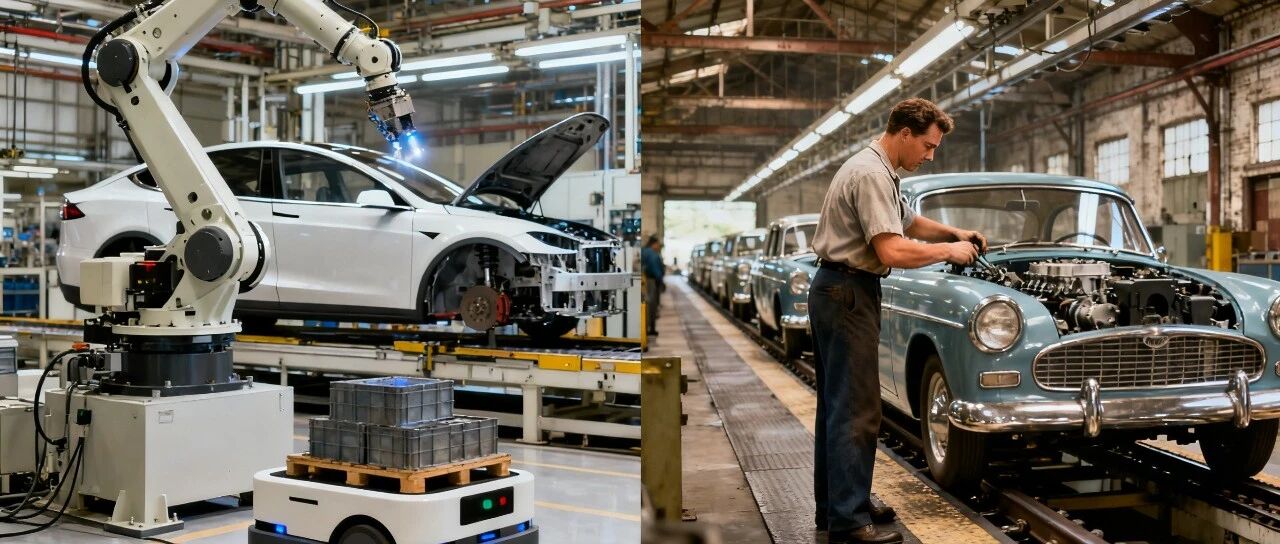
Core Insights - The article emphasizes that economic growth is driven by continuous innovation and the concept of "creative destruction," where old technologies and jobs are replaced by new ones, leading to a rapid transformation of society [2][3][6] - It highlights the importance of adapting to change and developing skills that are difficult to replace, suggesting that individuals should focus on integrating and transferring skills across different fields [2][3] Summary by Sections Economic Growth and Innovation - The 2025 Nobel Prize in Economic Sciences recognizes the role of innovation in driving economic growth, rather than mere hard work [2][4] - The theory of "creative destruction" illustrates how new inventions replace outdated ones, such as steam engines replacing horse-drawn carriages and digital cameras replacing film [2][6] Implications for Individuals - Individuals are encouraged to move beyond merely executing tasks to mastering the use of tools like AI to enhance productivity [2] - The article suggests that understanding the reasons behind tasks is crucial for driving change, rather than just adapting to it [2][3] Skills for the Future - The focus should shift from seeking stable jobs to acquiring skills that are less likely to be automated, specifically integration skills (understanding tools, scenarios, and human behavior) and transferability skills (ability to switch fields quickly) [2][3] - The article concludes that true stability lies in embracing new orders rather than clinging to old ones [3]
诺奖经济学奖出炉 追问增长的终极动力
Xin Jing Bao· 2025-10-13 12:21
Core Insights - The 2025 Nobel Prize in Economic Sciences was awarded to Joel Mokyr, Philippe Aghion, and Peter Howitt for their research on the role of technological change in sustained economic growth [1] Group 1: Joel Mokyr's Contributions - Mokyr emphasizes the strong dependence of modern economic growth on knowledge, arguing that the West prioritized knowledge earlier, fostering a culture and institutions that support knowledge creation and dissemination [3] - His research focuses on the "Great Divergence," analyzing why the West experienced modern growth while the East stagnated, with a cultural perspective [2] Group 2: Aghion and Howitt's Contributions - Aghion and Howitt's significant theoretical contribution is their study of the "creative destruction" concept, which explains how technological progress occurs through the replacement of old technologies with new ones [5][6] - Their theory is a crucial part of endogenous growth theory, addressing the dynamics of economic growth and the randomness involved in successful research and development [5] Group 3: Implications of Their Theories - The "creative destruction" mechanism illustrates that while new technologies enhance long-term growth potential, the destruction of old technologies can negatively impact firms and interest groups associated with them [6] - Their theories provide insights into economic cycles and the challenges posed by monopolistic companies that may suppress new technologies [6] Group 4: Conclusion on Economic Growth - The awarding of the Nobel Prize to researchers focused on growth issues reflects a return to the core concerns of economics, highlighting the ongoing challenges in economic development and the potential insights from these theories [7]