珍稀植物保护

Search documents
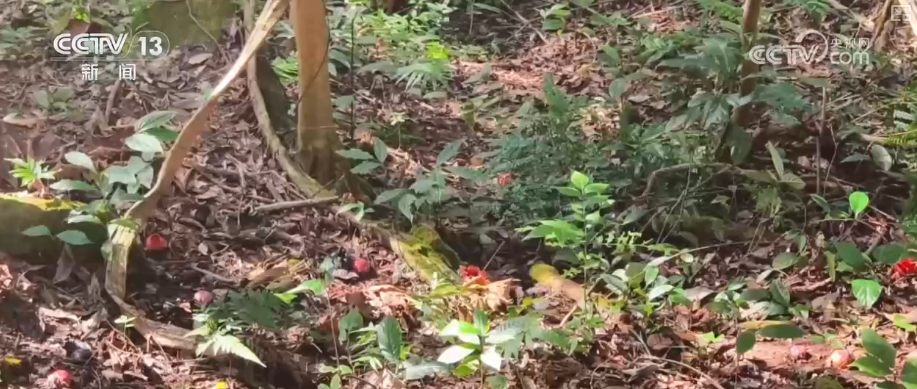
原生生态环境持续改善 珍稀植物“寄生花”连续三年如期绽放
Yang Shi Wang· 2025-11-24 11:11
Core Insights - The observation of the national second-class protected plant "Parasitic Flower" entering its flowering period marks the third consecutive year of stable growth in the Mengla County Nature Reserve [1][5] Group 1: Ecological Significance - The "Parasitic Flower" is the only species of the large flower family in China, characterized by its lack of stem, roots, and leaves, relying entirely on the host plant, "Bian Dan Vine," for nutrients [3][9] - This plant is considered a crucial indicator species for the health of tropical rainforest ecosystems, with its stable presence reflecting improvements in the local ecological environment [9][11] Group 2: Monitoring and Protection Efforts - Monitoring personnel conducted standardized checks on the distribution points, growth status, and health of the host plants, finding stable flowering individuals and no signs of human interference [5][7] - The continuous monitoring in the Dongzongbao area of Mengla County indicates a complete ecosystem structure and stable habitat conditions suitable for the survival and reproduction of the "Parasitic Flower" [7][9] Group 3: Conservation Challenges - The "Parasitic Flower" is rare, with limited distribution in Tibet and southern Yunnan, and there are currently no successful techniques for ex-situ conservation or artificial cultivation, making in-situ protection essential for its population sustainability [11]

科尔沁国家级自然保护区里的守护人:用“珍惜”换“珍稀”
Zhong Guo Xin Wen Wang· 2025-10-05 07:17
Core Viewpoint - The article highlights the dedication of the staff at the Inner Mongolia Khorchin National Nature Reserve in protecting migratory birds and their habitat, emphasizing the importance of conservation efforts in the region. Group 1: Conservation Efforts - The Khorchin National Nature Reserve covers an area of 119,587 hectares, with a management team of 9 members responsible for a 14,000-hectare ecological functional area [2] - The reserve is a crucial stopover for migratory birds along the East Asia-Australasia flyway, with staff actively monitoring and protecting the wildlife [5] - The management team conducts regular patrols, often facing harsh weather conditions, to ensure the safety of the flora and fauna, including the rare Mongolian elm [4] Group 2: Wildlife Rescue and Rehabilitation - The wildlife rescue center within the reserve is staffed by individuals who care for injured migratory birds, with a focus on rehabilitation and release [5][6] - The center has successfully treated various species, including a red-crowned crane, which was released back into the wild after recovery [8] - As of the latest monitoring in spring 2025, the reserve has recorded 239 bird species, including five newly discovered species, indicating a positive trend in biodiversity [9]