理财信息披露

Search documents
理财信披“赶考”: 豁免收紧、披露细化下的双线攻坚
Zhong Guo Zheng Quan Bao· 2026-02-12 22:16
Core Viewpoint - The implementation of the "Management Measures for Information Disclosure of Asset Management Products by Banking and Insurance Institutions" is approaching, with significant pressure on the preparation of periodic reports due to tightened exemption clauses and increased disclosure granularity, leading to higher labor and system upgrade costs for institutions [1][2][3] Group 1: Challenges in Periodic Reporting - The periodic report preparation has become the main pressure point for the industry, with the removal of certain exemption clauses expanding the coverage and increasing the required disclosure elements significantly [2][3] - The new regulations have deleted the exemption for products with a remaining term of less than 90 days, allowing only those established for less than 90 days to be exempt from reporting [2] Group 2: System Upgrade and Standardization - Many asset management companies have initiated preliminary system upgrades, but full implementation awaits the release of unified industry standards and templates [4][5] - The timeline for system upgrades has been clarified, with key deadlines set for internal system modifications and compliance testing by mid-2026 [5] Group 3: Long-term Industry Development - In the long term, unified, transparent, and efficient information disclosure will support the enhancement of marketing service levels and core investment capabilities, laying a solid foundation for high-quality development [6][7] - Some companies are already leading the way in proactive disclosure practices, reflecting a shift from passive compliance to active governance in the industry [6][7]
理财信披“赶考”:豁免收紧、披露细化下的双线攻坚
Zhong Guo Zheng Quan Bao· 2026-02-12 20:26
Core Viewpoint - The implementation of the "Management Measures for Information Disclosure of Asset Management Products by Banking and Insurance Institutions" is approaching, with significant pressure on the preparation of periodic reports due to tightened exemption clauses and increased disclosure granularity, leading to higher labor and system modification costs for institutions [1][2][3] Group 1: Regulatory Changes - The final version of the regulation has improved operational feasibility based on feedback from various institutions during the consultation phase, indicating a higher acceptance of the proposed rules by regulatory authorities [1][2] - The removal of certain exemption clauses has expanded the coverage of periodic reports and increased the number of required disclosure elements, intensifying the pressure on institutions [2][3] Group 2: System Upgrades - Many asset management companies have completed assessments and initiated preliminary modifications of their existing information disclosure systems, but full implementation awaits the release of unified industry standards and templates [3][4] - The timeline for system upgrades has been established, with key deadlines set for internal modifications and testing to ensure compliance with the new regulations by September 1, 2026 [4][5] Group 3: Industry Response and Development - The industry is optimistic about the successful implementation of the new measures, with some companies already enhancing their disclosure practices by proactively providing detailed information on their top assets and investment managers [6][7] - The regulatory framework now includes information disclosure as a factor in the regulatory rating of asset management companies, reinforcing the motivation for comprehensive disclosure [6][7]
数字化助力理财市场规范运行
Sou Hu Cai Jing· 2025-08-12 22:46
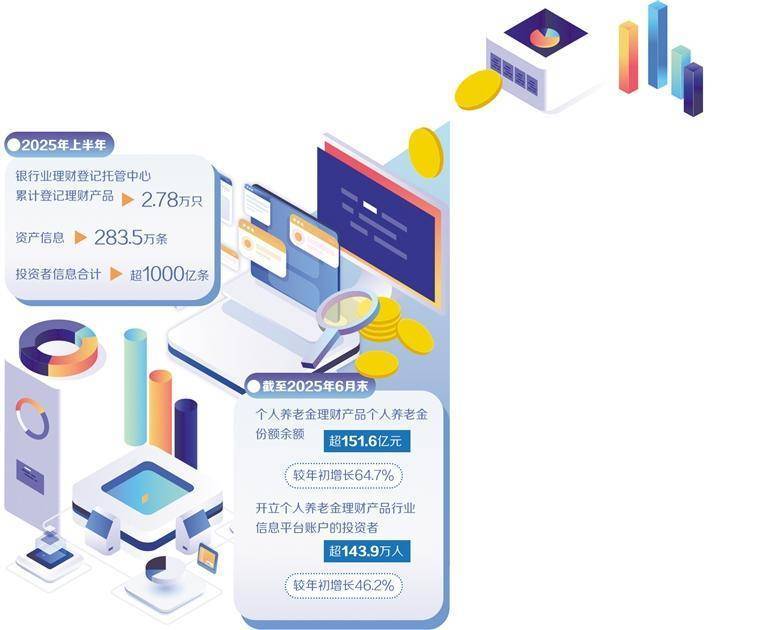
Core Insights - The report highlights the continuous efforts in China's wealth management market to enhance the registration services for wealth management products, optimize information disclosure platforms, and strengthen the construction of a central data exchange platform for wealth management products [2] Group 1: Centralized Registration and Regulation - Centralized registration of wealth management products is a key initiative to improve governance capabilities in the wealth management market, addressing the previous lack of unified information management and standards [3] - As of June 2025, the banking wealth management registration and custody center has connected with 36 local financial regulatory bureaus and over 1,000 banks and wealth management companies, registering 27,800 wealth management products and over 283.5 million asset information entries [3][4] Group 2: Information Disclosure and Investor Protection - Information disclosure is crucial for protecting investor rights, reducing sales misguidance, and fostering a healthy market ecosystem [7] - The China Wealth Management Network's information disclosure platform has been upgraded to ensure standardized reporting, automated disclosures, and comprehensive service, with over 400,000 announcements published as of June 2025 [7][8] Group 3: Data Sharing and Industry Efficiency - The establishment of a central data exchange platform has facilitated the efficient exchange of sales information and data among 1,266 institutions, with transaction volumes reaching nearly 70 trillion yuan in the first half of the year [10][11] - The industry is transitioning from a focus on scale to an emphasis on regulation, transparency, and efficiency, enhancing the professional and digital levels of the wealth management market [12]