银行业理财

Search documents
理财净值化驶入深水区“稳稳的幸福”悄然退场
Zhong Guo Zheng Quan Bao· 2026-02-23 20:18
Core Viewpoint - The transition to net value-based wealth management products is deepening, leading to increased volatility in product values, which is challenging for investors accustomed to stable returns [1][4]. Group 1: Market Trends - Recent fluctuations in wealth management product values have drawn investor attention, with many experiencing unexpected losses due to market volatility [1][2]. - The net value of a fixed income-enhanced product held by an investor increased from 1.1124 to 1.1223 between January 15 and January 29, but subsequently fell to 1.1138, causing concern among investors [2][3]. - Historical volatility of wealth management indices has increased, indicating greater fluctuations in asset prices, particularly for higher-risk products [3][4]. Group 2: Product Characteristics - Many wealth management products are now employing a "multi-asset, multi-strategy" approach to enhance returns, particularly in a low-interest-rate environment [4][6]. - As of the end of 2025, fixed income assets accounted for 51.93% of total investment assets in wealth management products, with a notable increase in allocations to high-volatility assets [4][5]. - The transition to net value-based products requires accurate reflection of underlying asset price fluctuations, which may lead to lower returns if stability is prioritized [5][6]. Group 3: Investor Behavior - Investors holding R2 risk-rated products are experiencing a mismatch between their expectations of stable growth and the actual volatility of product values [3][7]. - It is advised that investors manage their expectations and avoid panic selling during short-term fluctuations, as this could lead to realized losses [7]. - Long-term investment strategies, such as regular contributions, can help mitigate the impact of short-term volatility on returns [7].
理财市场规模稳健扩张
Jing Ji Ri Bao· 2026-01-27 22:13
Core Insights - The report indicates that the number of investors holding wealth management products reached 143 million by the end of 2025, marking a 14.37% increase from the beginning of the year [1] - The total scale of the bank wealth management market was 33.29 trillion yuan, reflecting an 11.15% growth year-on-year, with 33,400 new wealth management products issued throughout the year, raising 76.33 trillion yuan [1] Group 1: Investor Growth and Composition - The number of individual investors increased by 17.69 million, while institutional investors grew by 310,000 [1] - Individual investors accounted for 98.64% of the total, with 141 million individuals, while institutional investors made up 1.36% with 1.94 million [5] - The majority of individual investors are classified as having a low-risk preference, with 33.54% being moderate-risk (level 2) investors [5][6] Group 2: Product Performance and Structure - Wealth management products generated a total return of 730.3 billion yuan in 2025, a 2.87% increase from the previous year, with banks contributing 113.2 billion yuan and wealth management companies 617.1 billion yuan [2] - The average yield of wealth management products was 1.98%, with fixed-income products dominating the market at 97.09% of the total scale [2][3] - The scale of fixed-income products was 32.32 trillion yuan, while mixed products accounted for 0.87 trillion yuan, and equity and commodity products were significantly smaller at 0.08 trillion yuan and 0.02 trillion yuan, respectively [2] Group 3: Risk Levels and Product Types - By the end of 2025, 95.73% of wealth management products were rated as level 2 (medium-low risk) or below, while only 0.24% were rated level 4 (medium-high risk) or above [3] - Open-ended wealth management products made up 79.87% of the total scale, amounting to 26.59 trillion yuan, while closed-end products accounted for 20.13% [3] - The average duration of newly issued closed-end products ranged from 322 to 489 days, with 70.87% of these products having a duration of over one year [4] Group 4: Support for the Real Economy - Wealth management funds supported approximately 21 trillion yuan in the real economy by investing in bonds, non-standardized debt assets, and equity assets [8] - Investments in bonds totaled 18.52 trillion yuan, with credit bonds making up 13.27 trillion yuan, representing 37.21% of total investment assets [8] - The report highlights the role of wealth management products in optimizing fund allocation and supporting various sectors, including green bonds and initiatives related to the Belt and Road [8][9]
中国银行业理财市场年度报告(2025年)
Xin Lang Cai Jing· 2026-01-25 06:34
Core Insights - The year 2025 is a pivotal year marking the end of the 14th Five-Year Plan and the beginning of the 15th, with China's economy demonstrating resilience and vitality despite internal and external pressures [1] Group 1: Economic Performance - China's economy has shown a stable and progressive development trend, achieving significant advancements in both hard and soft power over the past five years [1] - The banking wealth management market is projected to reach a total scale of 33.29 trillion yuan by the end of 2025, reflecting an 11.15% increase from the beginning of the year [1] - A total of 3.34 million new wealth management products were issued throughout the year, raising funds amounting to 76.33 trillion yuan [1] Group 2: Support for the Real Economy - Wealth management products have supported approximately 21 trillion yuan in funding for the real economy through investments in bonds, non-standardized debt assets, and equity assets [1] - The number of investors holding wealth management products reached 143 million, marking a 14.37% increase since the beginning of the year [1] - The total returns generated for investors throughout the year amounted to 730.3 billion yuan [1] Group 3: Pension Wealth Management - By the end of 2025, the personal pension wealth management product sector supported the issuance of 37 products by six wealth management companies [2] - The central data exchange platform for wealth management products facilitated sales data exchange for 966 issuing and selling institutions, with a total transaction volume of 142 trillion yuan for subscription and redemption activities [2] - The wealth management industry information disclosure platform has published over 500,000 announcements and more than 2.7 million product net value information entries [2]

截至2025年末理财产品存续规模达33.29万亿元,较年初增加11.15%
Bei Jing Shang Bao· 2026-01-23 10:44
Core Insights - The report indicates a significant growth in the banking wealth management market, with a total of 46,300 products and a scale of 33.29 trillion yuan by the end of 2025, marking increases of 14.89% and 11.15% respectively compared to the beginning of the year [1][2] Group 1: Market Overview - By the end of 2025, there are 159 banking institutions and 32 wealth management companies with active products, with wealth management companies holding 33,700 products and a scale of 30.71 trillion yuan, representing 92.25% of the market [1] - Fixed income products dominate the market, with a scale of 32.32 trillion yuan, accounting for 97.09% of the total, although this represents a slight decrease of 0.24 percentage points from the beginning of the year [1] Group 2: Investor Trends - The number of investors holding wealth management products reached 143 million by the end of 2025, reflecting a growth of 14.37% from the start of the year, with personal investors increasing by 17.69 million and institutional investors by 310,000 [2] - The majority of personal investors have a risk preference classified as level two (moderate), making up 33.54% of the total, with increases in conservative and aggressive investor categories [2] Group 3: Performance Metrics - The overall performance of wealth management products remained stable, generating a total return of 730.3 billion yuan for investors in 2025, which is a 2.87% increase from the previous year [2] - The average yield of wealth management products in 2025 was reported at 1.98% [2]
个人养老金理财市场再扩容
Zhong Guo Ji Jin Bao· 2025-11-17 02:34
Core Insights - The personal pension system has shown steady growth over the past three years, with a total investment in pension financial products reaching 110.36 billion yuan and generating over 390 million yuan in returns for investors, with an average annualized return exceeding 3.4% [1][5]. Group 1: Market Development - The personal pension financial product market has transitioned from pilot exploration to comprehensive promotion, characterized by solid institutional foundations, continuous growth in participation, and a rich variety of product offerings [3]. - As of the end of October, the number of personal pension financial products has reached 37, providing a diverse range of strategies to help clients achieve stable returns [3]. - The number of accounts opened for personal pension products has surpassed 70 million, indicating a broad coverage and multi-layered market structure [3]. Group 2: Investment Strategies - The success of personal pension financial products is attributed to sound investment strategies, optimized asset allocation, and strict risk control, supported by favorable policies and market education [5]. - The current market environment suggests a need to increase the allocation of "fixed income plus" and equity assets to enhance the attractiveness of financial products [5][7]. - Recommendations include focusing on high-rated, medium-duration bonds and allocating a small portion to low-volatility equity assets, while also considering alternative assets like gold and silver [7]. Group 3: Regulatory Support - The recent notification from the National Financial Supervision Administration to expand the pilot areas for pension financial products nationwide for three years is expected to inject strong momentum into the development of pension financial services [9]. - The expansion of pilot regions and scale is anticipated to enhance the richness of investment strategies and improve the flexibility of purchasing, redeeming, and dividend mechanisms [9]. - Future developments in the pension financial market are expected to see increased participation from more financial and insurance institutions, with a focus on long-term products and diverse asset allocation to meet varying risk preferences [9][10].
个人养老金理财产品扩容至37只 中邮理财新增2只产品
Zheng Quan Ri Bao· 2025-08-28 00:01
Core Viewpoint - The expansion of personal pension financial products reflects the deepening market-oriented operation of the pension system in China, with banks needing to enhance product innovation to meet diverse investor needs [1][2]. Group 1: Product Expansion - As of August 26, 2023, the China Wealth Management Registration and Custody Center has supported six wealth management companies in issuing a total of 37 personal pension financial products [1]. - The newly added products by China Post Wealth Management have minimum holding periods of 18 months and 2 years, both classified as medium-low risk (PR2) [1][2]. - The new products aim to balance liquidity and returns, catering to different age groups and their pension planning needs [1]. Group 2: Investment Strategy - The new products maintain a "low volatility and stable" core positioning, with at least 80% of investments in low-risk fixed-income assets and up to 20% in equities [2]. - The design of these products addresses the long-term capital preservation and appreciation needs while mitigating liquidity risks associated with frequent redemptions [2]. Group 3: Market Landscape - Since the first batch of personal pension financial products was launched in February 2023, there are currently 21 commercial banks involved in distribution, indicating a growing market presence [3]. - The number of personal pension financial products remains lower compared to insurance and fund categories, primarily due to regulatory requirements and the relatively short participation time of bank wealth management subsidiaries [3]. Group 4: Future Development - There is a need for steady expansion of personal pension financial products to create a rich matrix of pension financial products that cater to various risk preferences [4]. - Recommendations for enhancing personal pension products include product innovation, improving investor education, and optimizing institutional design to support dynamic tax incentives and advisory services [5].
低利率+股债波动:理财公司如何应对?
Zhong Guo Jing Ying Bao· 2025-08-18 15:04
Core Viewpoint - The average annualized yield of wealth management products in China's banking sector has decreased to 2.12% in the first half of 2025, down from 2.65% in 2024, indicating a significant decline in returns amid a low-interest-rate environment [1] Group 1: Industry Trends - The asset management industry is transitioning from a reliance on single assets to a diversified asset allocation strategy due to low interest rates and an asset shortage [2] - Financial intermediaries, such as banks, are encouraged to transform by enhancing financial services, developing asset management businesses, strengthening asset trading, and promoting comprehensive operations [1][2] - The current asset management market is characterized by a large scale but relatively single asset categories, which limits depth and diversification [3] Group 2: Product Development - Wealth management companies are focusing on combination management and asset allocation strategies to navigate the challenges posed by low yields [1][2] - "Fixed income plus" products are becoming a key competitive tool for banks, allowing for increased yield flexibility while maintaining stability [5][6] - The introduction of rights-containing products is seen as a potential second growth curve for wealth management firms, complementing traditional fixed income products [4][5] Group 3: Strategic Recommendations - The asset management industry should enhance core capabilities by developing equity investment systems and exploring alternative asset allocations like REITs [4] - There is a need for structural reforms in key areas such as client expansion in the wealth management market and optimizing incentive mechanisms for public funds [4] - Companies are advised to leverage technology for smart investment advisory services, providing customized asset allocation plans based on client risk preferences and return objectives [6]
数字化助力理财市场规范运行
Sou Hu Cai Jing· 2025-08-12 22:46
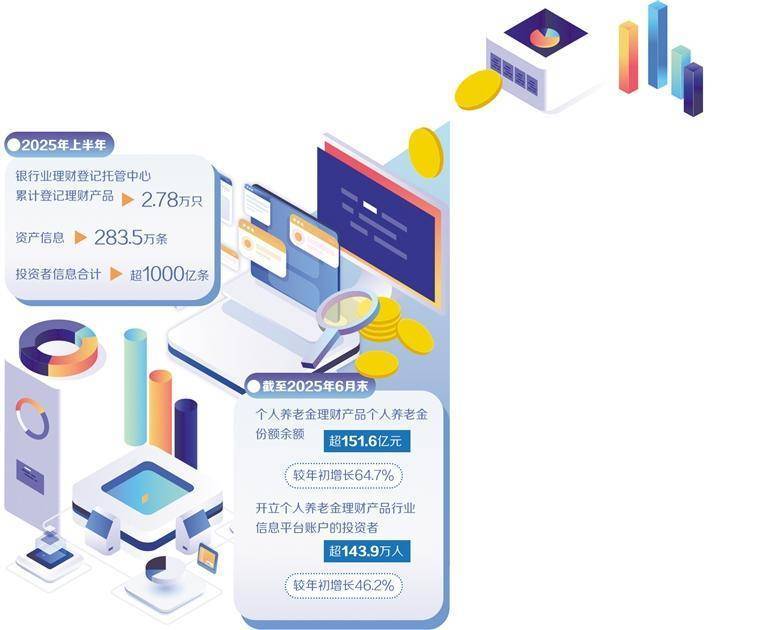
Core Insights - The report highlights the continuous efforts in China's wealth management market to enhance the registration services for wealth management products, optimize information disclosure platforms, and strengthen the construction of a central data exchange platform for wealth management products [2] Group 1: Centralized Registration and Regulation - Centralized registration of wealth management products is a key initiative to improve governance capabilities in the wealth management market, addressing the previous lack of unified information management and standards [3] - As of June 2025, the banking wealth management registration and custody center has connected with 36 local financial regulatory bureaus and over 1,000 banks and wealth management companies, registering 27,800 wealth management products and over 283.5 million asset information entries [3][4] Group 2: Information Disclosure and Investor Protection - Information disclosure is crucial for protecting investor rights, reducing sales misguidance, and fostering a healthy market ecosystem [7] - The China Wealth Management Network's information disclosure platform has been upgraded to ensure standardized reporting, automated disclosures, and comprehensive service, with over 400,000 announcements published as of June 2025 [7][8] Group 3: Data Sharing and Industry Efficiency - The establishment of a central data exchange platform has facilitated the efficient exchange of sales information and data among 1,266 institutions, with transaction volumes reaching nearly 70 trillion yuan in the first half of the year [10][11] - The industry is transitioning from a focus on scale to an emphasis on regulation, transparency, and efficiency, enhancing the professional and digital levels of the wealth management market [12]

养老理财募资规模超四百亿 机构称未来发展空间巨大
Xin Hua Wang· 2025-08-12 06:26
Core Insights - The development of pension wealth management products has expanded significantly, with 24 products launched within six months, and a total fundraising scale exceeding 40 billion yuan [1][2] - The pilot program for pension wealth management products has been extended from four regions and institutions to ten, indicating a move towards normalization in issuance [2] - The introduction of personal pension accounts presents new growth opportunities for pension wealth management products, supported by government policies [3] Group 1: Product Development - As of mid-June, 22 pension wealth management products are currently active, with a total fundraising amount surpassing 40 billion yuan, indicating strong market interest [1] - The net asset values of 21 pension wealth management products have been disclosed, with 20 products showing values exceeding 1, reflecting positive performance [1] Group 2: Institutional Involvement - Five institutions are involved in the issuance of pension wealth management products, with the largest number held by China Construction Bank Wealth Management (9 products) and Everbright Wealth Management (7 products) [2] - The pilot program has expanded to include multiple institutions, enhancing the competitive landscape and availability of products [2] Group 3: Regulatory Environment - The China Banking and Insurance Regulatory Commission (CBIRC) has issued guidelines to promote the development of commercial pension finance, indicating a shift towards a more structured and healthy growth phase for the industry [2] - The establishment of personal pension accounts is expected to facilitate the purchase of various financial products, including pension wealth management products, thereby enhancing their market potential [3]
收益率回调别慌!理财公司齐发“定心丸” 债市调整下投资者如何布局
Bei Jing Shang Bao· 2025-07-31 15:40
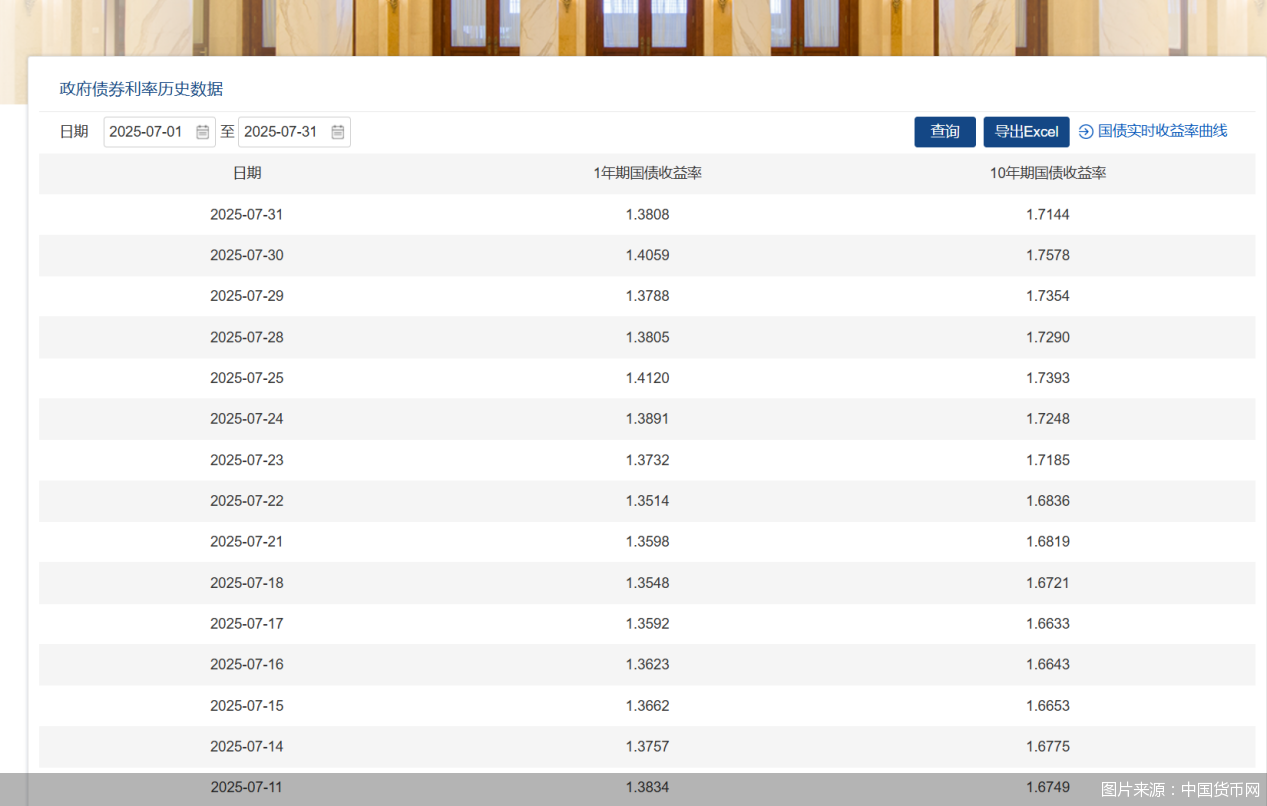
Group 1: Market Overview - The bond market has experienced adjustments since July, with the 10-year government bond yield rising to around 1.75%, impacting fixed-income products [1][3] - As of July 31, the 10-year government bond yield was reported at 1.7144%, having increased from 1.6653% on July 15 and peaked at 1.7578% on July 30 [3][2] - The average annualized yield of open-ended fixed-income wealth management products decreased by 0.23 percentage points to 2.81% during the last month [3] Group 2: Investor Sentiment and Reactions - Many investors have felt the impact of declining yields, with some considering redeeming their fixed-income products due to lower returns [3][4] - Financial institutions have collectively emphasized that the current market adjustments are within a reasonable range and investors should not panic [4][6] Group 3: Economic and Policy Factors - The adjustment in the bond market is attributed to multiple factors, including the unexpected introduction of "anti-involution" policies and the launch of major infrastructure projects, which have shifted market sentiment towards riskier assets [4][5] - The People's Bank of China conducted a reverse repurchase operation of 789.3 billion yuan on July 25, indicating a proactive monetary policy to support market liquidity [6][7] Group 4: Long-term Outlook - Despite short-term pressures, several financial institutions maintain confidence in the medium to long-term outlook for the bond market, citing ongoing economic recovery and fundamental support [5][8] - Historical data suggests that over 70% of fixed-income products that experienced a decline in net value have recovered within two months, indicating resilience in the market [7][8]