生命感交互

Search documents
逸璟科技发布新一代灵巧脸「灵智5号」:开启人形机器人"生命感交互"新时代
Huan Qiu Wang Zi Xun· 2026-02-10 07:09
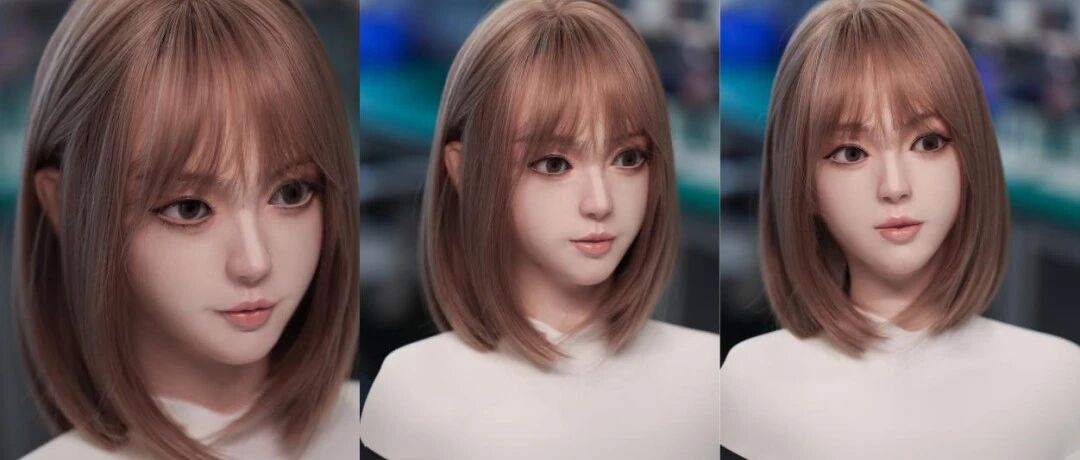
Core Viewpoint - The company Yijing Technology has launched its next-generation bionic interactive product "Lingzhi No. 5" and its core technology system "LingWorld Platform," aiming to address the structural issue of "strong embodiment, weak interaction" in the humanoid robot industry, facilitating large-scale applications in complex scenarios such as home, service, and social interactions [1][2][15] Product Release: "Lingzhi No. 5" Bionic Face - "Lingzhi No. 5" is designed for humanoid robots and high-end interactive scenarios, featuring high expressiveness and advanced bionic facial control [2][4] Hardware Features - The product integrates 33 micro-drive units and employs a high-density bionic tendon structure for precise control of facial micro-expressions, surpassing the freedom of movement found in some complete humanoid robots [4] - It uses custom platinum bionic silicone skin to ensure durability while achieving a natural texture and subtle deformation effects [4] Core Technology: LingWorld Platform - The LingWorld Platform is a comprehensive interactive technology system aimed at transforming robots from "passive response tools" to "interactive subjects with a sense of life" [7] Key Capabilities of LingWorld Platform - **Relationship Perception**: The platform builds interactive relationships through multimodal perception, allowing robots to exhibit human-like attention and behavior prediction [8] - **Intrinsic Modeling**: It employs a continuous, multidimensional emotional state modeling mechanism, enabling robots to express emotions more authentically [9] - **Rhythm Control**: The platform introduces a mechanism for rhythm control, maintaining a "life background noise" even in non-interactive states, preventing a mechanical "power-off" feel [10] Application Positioning - Yijing Technology positions itself not just as a hardware supplier but as a provider of integrated soft and hardware solutions for humanoid robot manufacturers, enhancing user experience in various scenarios [11] - The bionic face can serve as an independent "intelligent life entry point" in cultural tourism, IP, and high-end commercial settings, offering immersive human-robot interaction [11] Future Outlook - The company believes that as humanoid robots' physical capabilities mature, expressive ability and interactive intelligence will become key differentiators for product success and commercial deployment [15] - The launch of "Lingzhi No. 5" and the LingWorld Platform is seen as a step towards evolving human-robot interaction from functional exchanges to relationship building, opening new possibilities for humanoid robots in real social contexts [15]



下一个万亿市场?人形机器人的“脸”和“脑子”,谁来做?
机器人大讲堂· 2026-02-09 04:04
Core Viewpoint - The article discusses the evolution of human-robot interaction, emphasizing the shift from a tool-based interaction paradigm to a more emotionally engaging and life-like interaction model, termed "life-sensing interaction" [7][9][25]. Group 1: Old Paradigm vs. New Paradigm - The past decade has seen human-robot interaction evolve into a history of efficiency but a loss of emotional connection, where interactions have become tool-like and devoid of deeper relationships [7][8]. - The traditional interaction model focuses on task completion, leading to a paradox where more intelligent robots can evoke feelings of loneliness due to their programmed nature [8][9]. - The new paradigm proposed by Yiqing Technology aims to redefine interaction by fostering a sense of existence and understanding rather than mere task execution [9][25]. Group 2: Technological Framework - Yiqing Technology introduces a comprehensive technical framework called "Life Intelligence Base," which aims to inject social intelligence into robots, transforming their heads into primary carriers of life-sensing [11][22]. - The "Lingzhi 5" head integrates 33 micro-motors, allowing for intricate facial expressions and movements, emphasizing the importance of aesthetics in establishing trust [11][13]. - The concept of "life-sensing" is broken down into three dimensions: attention focus, emotional response, and temporal continuity, which together create a more engaging interaction experience [13][14][15]. Group 3: Managing Expectations - The article highlights the challenge of the "Uncanny Valley," where highly realistic robots can evoke discomfort if their behavior does not meet human expectations [17][18]. - Yiqing's strategy focuses on managing expectations by ensuring that robots do not attempt to mimic human expressions too closely, thus avoiding the pitfalls of the Uncanny Valley [19][20]. - The approach emphasizes natural distractions and rhythm over precision, allowing for a smoother transition from perceiving robots as tools to recognizing them as entities worthy of interaction [19][20]. Group 4: Strategic Positioning - Yiqing Technology positions itself not merely as a hardware supplier but as a provider of interactive cores for humanoid robots, enhancing their social interaction capabilities [22][24]. - The company aims to create a unique data asset by collecting multimodal perception signals and continuous emotional states, which could define future standards for bionic interaction [24]. - The exploration of "life-sensing" suggests a need to reassess the priorities in robot development, shifting focus from physical capabilities to interactive intelligence as a key differentiator [24][25]. Group 5: Conclusion and Future Outlook - The article concludes that the competition in the robotics industry is shifting from creating tools to fostering understanding and emotional acceptance of robots [25][27]. - This transition marks a pivotal point in human-robot interaction, where the essence of robots may redefine the boundaries of life and existence [25][27][28].