生态兼容性

Search documents
商汤大装置首获5A认证,商汤的进步意味着什么?
Xin Lang Cai Jing· 2026-02-05 12:24
Core Insights - SenseCore, the native AI cloud platform by SenseTime, has achieved the highest industry rating of 5A excellence certification, marking it as the first native AI cloud platform to receive this recognition [1][5] - The certification reflects the platform's superior performance in key areas such as computing power management, scheduling, monitoring, and enabling capabilities, showcasing its system-level capabilities and platform maturity [1][5] Group 1: Platform Economics - The 5A certification highlights the accelerating release of economies of scale under the trend of "platformization" in AI infrastructure, as traditional AI development relies on fragmented and customized computing resources, leading to high marginal costs and low reuse rates [2][6] - SenseCore's ability to achieve large-scale computing power management and high-performance scheduling has created a highly integrated and reusable AI production platform, significantly lowering the unit cost of AI research and development, thus allowing small and medium enterprises to access advanced AI capabilities at a lower threshold [2][6] - According to Frost & Sullivan, SenseTime holds the largest market share in China's native AI cloud vendor market, indicating that its platform model is widely accepted in the market, creating a positive feedback loop where more users lead to faster platform optimization [2][6] Group 2: Technical Leadership - SenseTime's leading capabilities in multi-chip heterogeneous adaptation and elastic fault tolerance reflect its strategic foresight in "technical universality" and "ecological compatibility," addressing the fragmented nature of the current AI chip ecosystem in China [3][7] - By supporting multi-chip heterogeneous scheduling, SenseCore acts as a "computing power integrator," breaking down technical barriers between different hardware manufacturers and enhancing the overall efficiency of computing resource allocation [3][7] - This capability not only strengthens the platform's risk resistance but also provides a feasible path for the country to build a self-controllable and efficient collaborative AI computing power infrastructure [3][7] Group 3: System-Level Competitiveness - SenseTime's breakthrough signifies a transition in China's AI industry from "single-point technological innovation" to "system-level competitiveness," with a focus on the underlying platform capabilities that support efficient training, deployment, and iteration of models [4][8] - The 5A certification encompasses a comprehensive evaluation of AI lifecycle service capabilities, indicating that SenseTime has established a complete value chain covering "computing power, modeling, and application" [4][8] - This system-level capability not only solidifies SenseTime's moat in the B-end market but also lays the foundation for future participation in the global AI infrastructure competition, representing a significant step for China in building its underlying AI ecosystem [4][8]


深度拆解沐曦MXMACA软件栈功能,算力自主+生态兼容,破解国产GPU落地难题
机器之心· 2025-12-29 04:44
Core Viewpoint - The article discusses the significant technological release of MXMACA software stack version 3.3.0.X by the newly listed domestic GPU company, Muxi Co., which aims to enhance the usability of domestic GPUs in various applications [1][2][4]. Group 1: Software Stack and Compatibility - The MACA software stack is defined as a core computing platform that includes a complete set of self-developed tools, covering compilers, performance analysis tools, and format conversion components, enabling multi-language support and automatic optimization [6][9]. - MACA serves as a critical link between Muxi's self-developed GPU hardware and upper-layer application ecosystems, addressing the compatibility issues faced by domestic GPUs in the AI development landscape [7][9]. - The new version of MACA focuses on deep adaptation to various scenarios, achieving a high success rate of 92.94% in adapting existing CUDA projects, with 4,173 out of 4,490 projects able to run directly on the Muxi platform [10][12]. Group 2: AI Framework Compatibility - MACA 3.3.0.X has achieved deep compatibility with PyTorch 2.8, covering all 2,650 core operators, and supports other mainstream frameworks like TensorFlow, PaddlePaddle, and JAX [15][16]. - The software stack is designed to ensure seamless usage of existing models without requiring adjustments to project build logic, thus enhancing the platform's usability for developers [16][18]. Group 3: Performance Optimization and Integration - MACA includes a complete toolchain for performance analysis and optimization, enabling developers to identify computational bottlenecks and ensuring a full workflow from development to deployment on the Muxi platform [24][25]. - The software stack is designed to support high-performance computing, with optimizations for distributed training and inference, achieving over 95% linearity in training and improving GPU utilization by 15%-30% [30][31]. Group 4: Strategic Positioning and Ecosystem Development - The launch of MACA 3.3.0.X represents a long-term strategy for Muxi to redefine the ecosystem through software-defined computing, ensuring compatibility with existing CUDA projects while maintaining a self-developed instruction set for security and performance [37][38]. - Muxi's approach aims to lower the migration costs for AI developers, facilitating their transition to the domestic computing ecosystem while maximizing commercial efficiency [39][40].

企业常用什么小程序开发者工具?兼容与定制成关键
Sou Hu Cai Jing· 2025-12-05 12:32
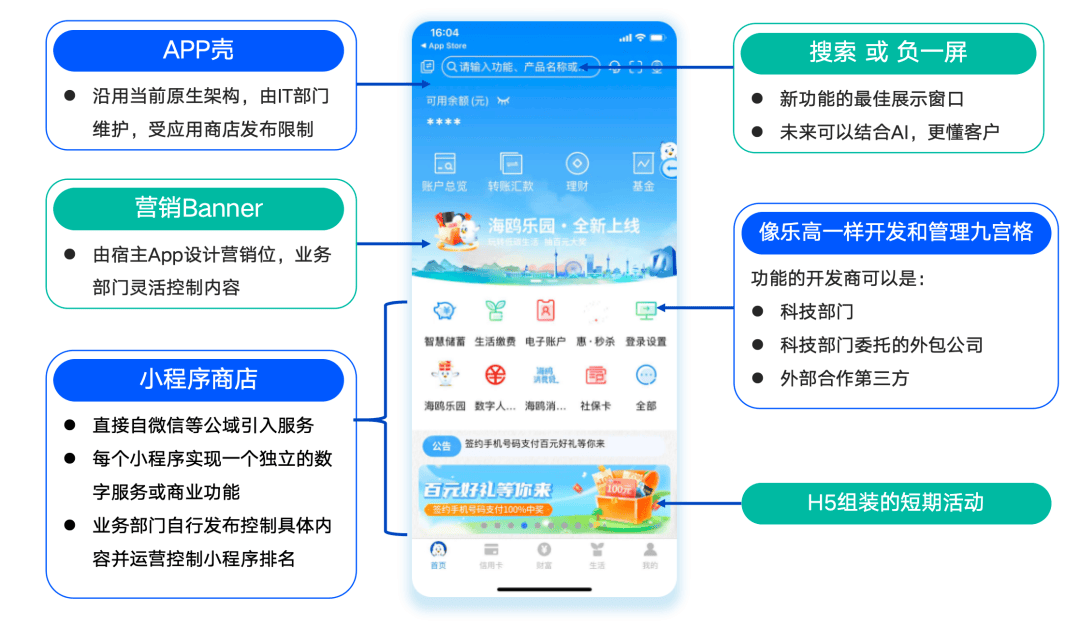
Core Insights - The article emphasizes the importance of mini-program technology in building a digital ecosystem for enterprises, highlighting its role in expanding service boundaries and enhancing operational agility [1] Group 1: Benefits of FinClip Supporting WeChat Syntax - Significant reduction in migration and startup costs, allowing businesses to transfer existing WeChat mini-programs to their own apps with minimal code changes, thus shortening development time from months to days [2][3] - Seamless reuse of WeChat ecosystem capabilities, enabling users to have a consistent experience within the enterprise app by integrating WeChat login and payment interfaces [2] - Maximization of developer resource efficiency, as teams can use familiar WeChat mini-program development standards without needing to learn new syntax or frameworks [2] Group 2: Effects of FinClip Customization Features - Achieving complete brand independence and reducing dependency on major internet companies through comprehensive white-label customization [4] - Meeting high security and compliance requirements by allowing private deployment, ensuring data remains within the internal network and adhering to regulatory standards [4] - Flexibly integrating with existing IT architecture through open APIs, promoting a modular evolution of IT systems rather than creating new silos [4] Group 3: Case Studies and Practical Applications - A large state-owned bank utilized FinClip's features to quickly integrate numerous WeChat mini-programs into its mobile banking app, reducing technical integration time by over 80% and enhancing user engagement [2] - A city implemented a unified service app using the platform's customization capabilities, integrating services from over 30 government departments while ensuring compliance with local software and hardware requirements [5] Group 4: Comparison with Comprehensive Platforms - Specialized mini-program platforms differ from comprehensive platforms like Alibaba's mPaaS, which offers a wide range of mobile development solutions but may not focus on the rapid construction and independent operation of mini-program ecosystems [6] - Specialized platforms prioritize performance, multi-end compatibility, and management depth, making them more suitable for enterprises needing high autonomy and control [6] Group 5: Integration of AI Capabilities - Leading platforms are beginning to integrate AI capabilities, such as ChatKit, into mini-programs, enhancing user interaction by allowing natural language processing and dynamic generation of forms or investment suggestions [7] Conclusion - The digital journey of enterprises is shifting from functional construction to ecosystem operation, with the choice of mini-program development tools reflecting a strategic technological approach [9] - The ability to quickly integrate existing resources while ensuring brand independence and security is crucial for maintaining agility and autonomy in a rapidly changing environment [9]
特斯拉终妥协!Apple CarPlay 进入测试,未来数月或上线
Huan Qiu Wang Zi Xun· 2025-11-14 05:31
Core Insights - Tesla is advancing its adaptation of Apple CarPlay, which is currently in the testing phase and expected to launch in the coming months [1][3] - Tesla has historically relied on its proprietary infotainment system and has been one of the few automakers not to support Apple CarPlay, which has affected its sales among Apple ecosystem users [1][3] Group 1 - The CarPlay integration will be presented in an "independent window" format within Tesla's existing interface, rather than a full-screen replacement, and will only support the standard wireless version of CarPlay, excluding the newly launched CarPlay Ultra [3] - The primary goal of this feature upgrade is to boost sales, as competition in the electric vehicle market intensifies and consumer demand for ecosystem compatibility increases [3] - The lack of CarPlay has led to a noticeable loss of users for Tesla, and this adaptation is expected to attract a significant number of Apple ecosystem users, potentially expanding Tesla's market share [3] Group 2 - Tesla has not yet announced a specific launch date for the CarPlay feature, indicating that the release schedule is still being adjusted, which may result in a delayed rollout [3]