
生态司法保护

Search documents
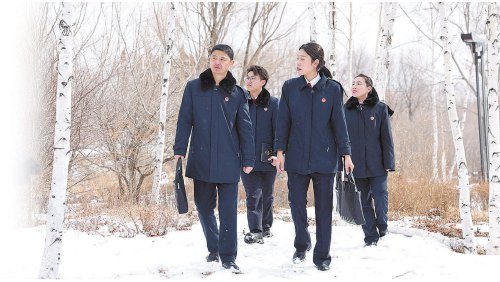
踏雪回访 守护林场
Xin Lang Cai Jing· 2026-01-13 23:58
Group 1 - The Inner Mongolia Zhalantun City Procuratorate's Criminal Prosecution Department and Public Interest Litigation Department conducted a follow-up investigation on an ecological restoration case related to forest and grassland [2] - Prosecutors confirmed the effectiveness of rectification through on-site verification, ensuring ongoing monitoring and protection of local mountain and grassland ecosystems [2] - The initiative aims to strengthen the ecological judicial protection framework in the region [2]

世界自然遗产有了专属“守护人”
Xin Lang Cai Jing· 2026-01-10 22:40
Core Viewpoint - The establishment of the ecological prosecutor's office at Fanjing Mountain aims to enhance ecological protection and supervision in the region, addressing challenges in cross-departmental collaboration for ecological conservation [1] Group 1: Ecological Significance - Fanjing Mountain is recognized as a UNESCO World Heritage site, a national nature reserve, and a 5A-level scenic area, highlighting its unique ecological value and biodiversity protection mission [1] - The ecological safety of Fanjing Mountain is crucial for regional sustainable development and the national ecological strategy [1] Group 2: Government Initiatives - The Tongren municipal government has prioritized Fanjing Mountain as a world-class tourist destination in recent years [1] - The newly established office will implement a "zero-distance" ecological protection supervision model, integrating specialized legal supervision, restorative judicial practices, and social comprehensive governance [1] Group 3: Collaborative Efforts - The office will consist of experienced prosecutors from the People's Procuratorate of Yinjiang Autonomous County, who will collaborate with administrative departments [1] - Joint meetings, information-sharing mechanisms, and special action initiatives will be established to collectively safeguard the Fanjing Mountain World Heritage site [1]
破立助企 温情护弱 司法护绿 多元解纷
Xin Lang Cai Jing· 2025-12-29 20:21
Core Viewpoint - The Jin Tang Court has focused on enhancing judicial services to support economic development, protect vulnerable groups, and promote ecological conservation during the "14th Five-Year Plan" period, aiming to ensure fairness and justice in every judicial case [6][12]. Judicial Support for Enterprises - The court has integrated bankruptcy trials into supply-side structural reforms to help struggling enterprises recover, establishing a bankruptcy dispute resolution team and a research base for bankruptcy law [7]. - Innovative approaches like "sale-type liquidation restructuring" have revived long-stalled projects, and the court has successfully utilized pre-restructuring procedures to address issues hindering enterprise operations [7]. Judicial Support for Vulnerable Groups - The court has developed the "Pea Pod·Golden Heart Nurturing Seed" brand for juvenile protection, ensuring comprehensive legal support for minors through a specialized case handling system [8]. - For elderly rights protection, the court has implemented measures such as on-site hearings and upgraded facilities to ease the legal process for seniors, demonstrating a commitment to safeguarding their rights [9]. Judicial Environmental Protection - The court has launched the "Golden Heart Nurturing Green" initiative to enhance ecological protection, hosting forums and establishing a judicial protection base for green manufacturing [10]. - Collaborative efforts with various entities have led to the establishment of a practical base for judicial protection of green manufacturing, directly supporting the development of low-carbon industries [10]. Multi-Party Dispute Resolution - The court has embraced the "Fengqiao Experience" to resolve conflicts at the grassroots level, collaborating with local governments and integrating community mediation into its operations [11]. - Initiatives like the "Baba Court" and partnerships with various departments have enhanced the court's role in social governance, improving the efficiency of dispute resolution [11].
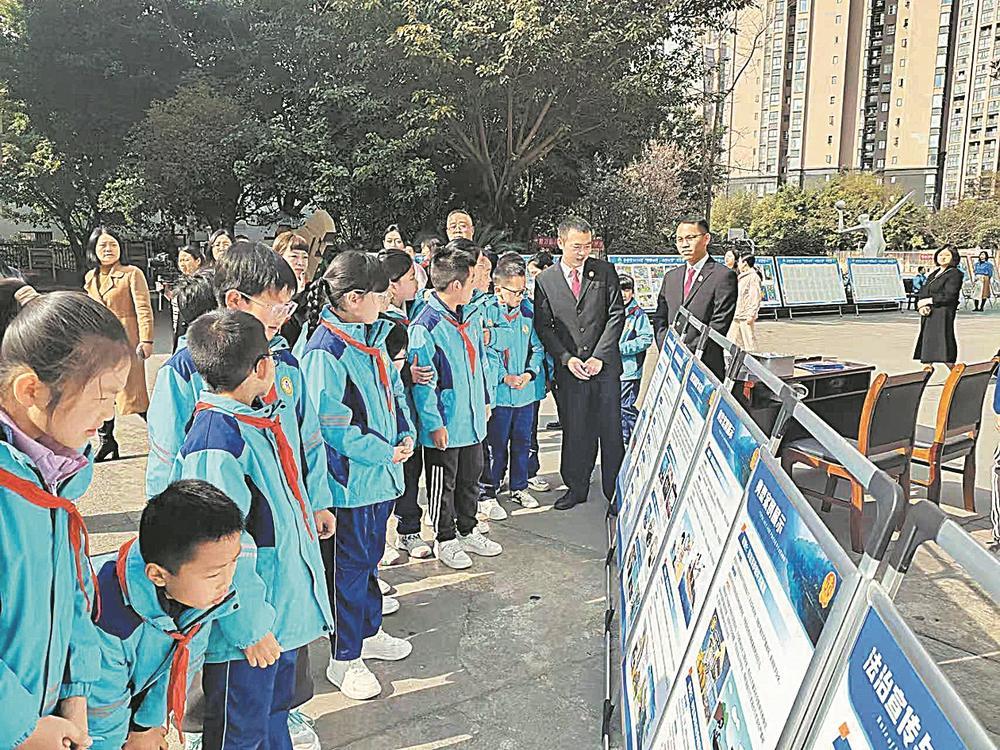
成都环境资源法庭:用心守护“一江清水”
Ren Min Wang· 2025-04-28 00:40
Core Points - The Supreme People's Court's work report emphasizes the importance of ecological protection and strict punishment for environmental crimes, particularly in the Yangtze River and Yellow River basins [1] - The establishment of the Chengdu Environmental Resource Court aims to enhance judicial protection for the Yangtze River's upper reaches, focusing on comprehensive and systematic environmental protection [1][2] - The court has adopted a professional and innovative approach to environmental cases, ensuring that ecological damage assessments are integral to judicial decisions [2][3] Group 1: Judicial Actions and Cases - The Chengdu Environmental Resource Court has handled various environmental cases, including a significant case involving illegal sand mining that resulted in a compensation ruling of over 54 million yuan for ecological damages [2][3] - The court's approach includes detailed assessments of ecological damage, emphasizing the need for judges to understand both legal and technical aspects of environmental cases [3] - A notable case involved a villager causing a forest fire, where the court mandated compensation for firefighting costs, marking a precedent in supporting third-party rescue expenses in environmental lawsuits [4][5] Group 2: Ecological Restoration and Collaboration - The Chengdu Environmental Resource Court has introduced innovative restorative justice measures, such as the "wild release" of confiscated wildlife, which has been recognized as a successful ecological restoration method [6][7] - The court has established partnerships with various organizations to create restoration bases, enhancing the effectiveness of ecological restoration efforts [8] - Collaborative efforts extend to international platforms, where the court advocates for shared experiences in environmental governance [10][11] Group 3: Public Awareness and Education - The court has engaged in public education initiatives, including art exhibitions that promote ecological justice concepts, aiming to foster a culture of environmental protection within society [12][13] - Over 21 public awareness activities have been organized, reaching more than 30,000 participants, highlighting the court's commitment to community involvement in environmental issues [13]