生态游

Search documents
生态游激活冬日文旅热
Xin Lang Cai Jing· 2025-12-25 20:25
Core Viewpoint - The article highlights the successful ecological restoration efforts in the Manas National Wetland Park, which have led to an increase in the population of swans and enhanced winter tourism, demonstrating a harmonious coexistence between nature and human activities [1][2][3]. Group 1: Ecological Restoration and Biodiversity - The number of swans wintering in the park has exceeded 1,000, with a significant increase in the proportion of juvenile swans, indicating improved population renewal capabilities [2] - Since the initiation of the national wetland park pilot construction in 2011, over 30,000 acres of wetland have been restored, with the total area of the wetland park reaching 47.02 square kilometers and wetland coverage increasing to 64.12% [2] - The park now provides a high-quality habitat for 315 species of wildlife, showcasing the rich biodiversity supported by the ecological improvements [2] Group 2: Economic Impact and Tourism Development - The ecological improvements have significantly boosted winter tourism, with photographers and visitors flocking to capture the elegance of the swans [2] - Local villagers are leveraging wetland resources to develop agritourism and homestay businesses, sharing in the ecological benefits [2] - The "birdwatching economy" has revitalized rural tourism, with the village of Bahu expected to achieve an average income of 36,100 yuan per capita by 2025 through a model that integrates tourism with agriculture and culture [2] Group 3: Infrastructure Development - A new 300-square-meter birdwatching warm house has been inaugurated, replacing the previous simple platform, enhancing visitor experience with better facilities and views [1][3] - The warm house allows visitors to enjoy birdwatching in comfort, reflecting the county's commitment to promoting high-quality development through "ecology + tourism" [3]
综述:双节叠加 热闹非凡——国庆中秋假期香港旅游市场欣欣向荣
Xin Hua Wang· 2025-10-10 03:10
Group 1: Tourism Performance - During the eight-day "super golden week" of the National Day and Mid-Autumn Festival, Hong Kong recorded over 1.4 million inbound travelers from mainland China [1] - The hotel booking data showed significant growth in both the number of nights booked and average prices compared to the previous year [1] - The average daily revenue of the restaurant industry during the holiday reached nearly 300 million HKD, reflecting a 10% year-on-year increase [1] Group 2: Consumer Market Dynamics - Hong Kong remains a top destination for high-net-worth individuals from mainland China during the holiday period, aided by policies that enhance tax exemptions on luggage [2] - Popular shopping districts like Tsim Sha Tsui and Causeway Bay saw a 12% increase in foot traffic and nearly a 20% rise in traveler spending compared to last year [2] - The "new Chinese-style" consumption trend is on the rise, with luxury brands and promotional activities driving consumer engagement [2] Group 3: Cultural and Recreational Activities - The holiday featured a variety of cultural and recreational activities, including fireworks displays and traditional performances, enhancing the overall visitor experience [3] - Eco-tourism gained popularity, with one tour company reporting a record of 700 participants in a single day during the holiday [3] - The "Kowloon Walled City Light and Shadow Tour" attracted significant interest, showcasing historical scenes that resonated with visitors [3] Group 4: Government Initiatives and Future Outlook - The Hong Kong government implemented cross-departmental collaboration to enhance the travel experience, including real-time updates on crowd conditions at popular attractions [6] - Plans are in place to develop nine tourism hotspots and promote industrial tourism, with new routes expected to launch by the end of the year [6] - The government aims to maximize the economic benefits of major events and encourage longer stays and repeat visits from travelers [6]
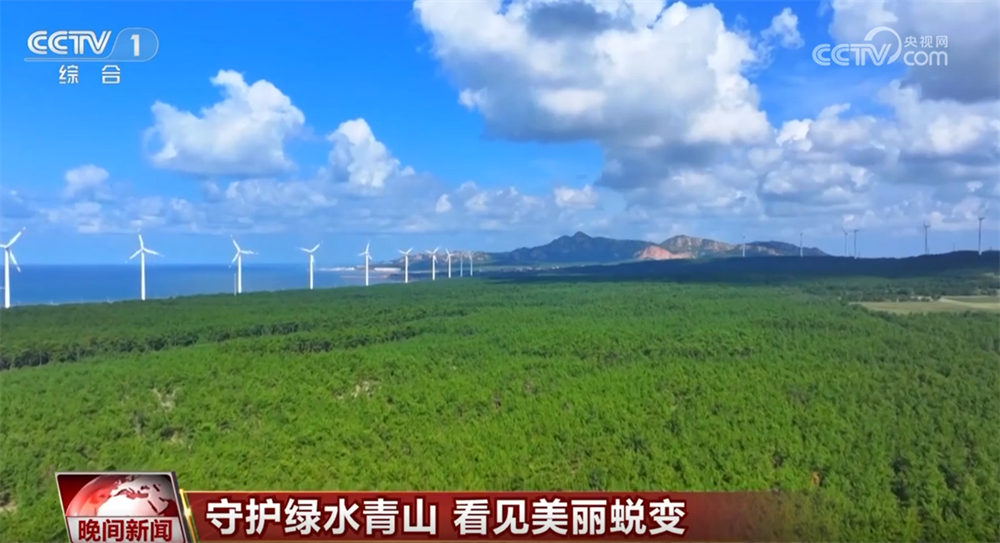
各地深入践行“两山”理念 因地制宜探索绿色发展新路径
Yang Shi Wang· 2025-07-25 02:24
Group 1 - The concept of "ecological tourism" has gained popularity among tourists this summer, reflecting the implementation of the "Two Mountains" theory for green development [1] - In Rongcheng City, Shandong Province, nearly 10,000 acres of coastal protective forests have created a "green corridor" that attracts a large number of tourists [3] - The local government has adopted a town-managed forest farm model to address issues of insufficient forestry management and unstable professional teams, ensuring year-round employment for workers [5] Group 2 - The new management approach has led to a decrease in forest fire incidents and pest outbreaks, with forest coverage increasing to 29%, while the ecological tourism industry has generated over 2 billion yuan in annual revenue [6] - In Cangnan County, Zhejiang Province, traditional seaweed farming practices have put pressure on forest resources due to the reliance on bamboo stakes, leading to environmental degradation [6] - Since 2022, Cangnan has initiated a "green revolution" in the seaweed industry, investing 170 million yuan to replace bamboo stakes with fiberglass poles, which are more durable and increase seaweed yield [8] - By the end of 2024, the area of fiberglass pole farming in Cangnan is expected to reach 21,000 acres, contributing to marine ecosystem restoration [10]