老铺黄金饰品

Search documents
强call顺周期消费-低估港股先行
2026-03-18 02:31
Summary of Key Points from Conference Call Records Industry Overview - The consumer sector, particularly the cyclical consumption segment, is showing signs of bottoming out, with potential for rebound or reversal in demand. This is supported by positive trends in the restaurant industry, which serves as a key reference point [2][2] - The restaurant industry is experiencing a slowdown in price wars, with companies like McDonald's and KFC implementing slight price increases, indicating a more rational pricing environment [2][2] Company-Specific Insights Haidilao - Haidilao's table turnover rate has improved to over 4.0, with expectations for 2026 revenue to reach approximately 4.6 billion yuan [1][5] - The return of founder Zhang Yong as CEO is expected to accelerate the growth of the main brand and the "hard bone" sub-brands, with plans to expand into lower-tier cities and introduce new dining formats [6][6] - If Haidilao maintains a turnover rate above 4.0 and a customer price close to 100 yuan, it could achieve a profit recovery to around 4.6 billion yuan, corresponding to a valuation of about 20 times [6][6] Mixue Ice Cream - Mixue Ice Cream is expected to see over 20% growth in store openings in 2026, with its price advantage under 10 yuan becoming more pronounced as delivery subsidies decline [1][7] - Despite market concerns about same-store sales and growth, Mixue's actual performance may exceed pessimistic expectations, with a stable same-store sales growth forecast [7][8] Songcheng Performance - Songcheng Performance is projected to achieve revenue between 1 billion to 1.1 billion yuan in 2026, driven by improvements in existing projects and new developments [3][4] Old Puhuang Gold - Old Puhuang Gold is transitioning towards a luxury goods model, with expected revenue of around 7.2 billion yuan in 2026 and a low valuation of 15 times [1][10] - The company is focusing on high-value customers, with significant growth potential in its high-end gold product offerings [11][11] China Oriental Education - China Oriental Education has seen a year-on-year increase of over 25% in spring recruitment collections, with a projected profit of 1 billion yuan for 2026 [1][17] - The company is expanding into new sectors such as beauty and pet care, indicating a strategic diversification [17][18] Dongfang Zhenxuan - Dongfang Zhenxuan is experiencing a fundamental turnaround, with plans to expand its self-operated product offerings by 90% to approximately 1,500 SKUs in the 2026 fiscal year [1][18] - The company is enhancing its multi-channel strategy, including expanding its own app and offline teaching networks [18][18] Bluko - Bluko is guiding for a 30% revenue growth in 2026, with a focus on international expansion and new product categories like building vehicles [1][16] - The company aims for a 70%-80% growth in its overseas segment, leveraging popular IPs for market penetration [16][16] Additional Insights - The overall sentiment in the cyclical consumption sector is cautiously optimistic, with signs of recovery in consumer spending and strategic shifts among key players [2][2] - Companies are increasingly focusing on enhancing customer experience and product offerings to drive sales growth in a competitive environment [1][1]

一香港居民在日本札幌遭酒瓶砸头,中领馆发布提醒;段永平1200亿元持仓曝光;金银原油全线大涨;老铺黄金即将调价丨每经早参
Mei Ri Jing Ji Xin Wen· 2026-02-18 23:47
Group 1 - The Chinese Consulate in Sapporo has advised Chinese citizens to avoid traveling to Japan following an incident where a Hong Kong resident was assaulted in Sapporo [8] - As of the end of 2025, H&H International Investment, managed by Duan Yongping, has a total portfolio value of approximately $17.489 billion, equivalent to over 120 billion RMB [13] - International crude oil futures saw a significant increase, with WTI crude oil rising by 4.59% to $65.19 per barrel, and Brent crude oil increasing by 4.35% to $70.35 per barrel [4][20] Group 2 - The U.S. stock market indices closed higher, with the Nasdaq up 0.78%, S&P 500 up 0.56%, and Dow Jones up 0.26%, driven by gains in major tech stocks [3] - The market for gold and silver also saw increases, with spot gold rising by 2.08% to $4,979.56 per ounce and spot silver increasing by 5.04% to $77.2335 per ounce [4] - The State Council's Safety Committee and the Ministry of Emergency Management have emphasized the need for strict safety regulations regarding fireworks to prevent accidents [6] Group 3 - Several domestic gold jewelry brands have reduced their prices below 1,500 RMB per gram, with Chow Tai Fook and Lao Miao Gold both pricing at 1,499 RMB per gram [7] - On February 17, the total cross-regional movement of people in China reached 22.4182 million, a 15.5% increase from the previous day and a 9.4% increase compared to the same day last year [7]



美日中消费演进启示录:下一站,风起服务消费
Shenwan Hongyuan Securities· 2026-02-10 06:11
Group 1: Core Insights - The report emphasizes that China's consumption market potential lies not only in income growth but also in the effective release of consumption scenarios and time, with current policies addressing constraints in holiday optimization and work time regulations [3] - The evolution of consumption patterns in the U.S., Japan, and China shows a clear transition from "survival" to "experience" consumption, with China's service consumption significantly lower than that of developed countries [3][10] - The report identifies three core variables driving consumption changes: economic development stage, demographic shifts, and technological innovation, highlighting the structural transformation of consumer preferences in China [3][12] Group 2: Historical Consumption Evolution - The U.S. consumption history from the 1970s to the present reflects a shift from practical consumption during crises to brand-driven consumption, rational consumption, and experience-oriented consumption, culminating in technology-enabled and social consumption [10][11] - Japan's consumption evolution post-World War II transitioned from durable goods to quality and luxury consumption, followed by a rational return and the emergence of the "silver economy" due to aging demographics [18][20] - China's consumption history since 1978 has progressed from policy-driven practical consumption to brand consumption, and now to a blend of rational and self-indulgent consumption, with a notable rise of domestic brands [23] Group 3: Current Market Analysis - The A-share consumption sector has seen significant price adjustments, with stock prices declining by 40%-70% since 2021, indicating a potential for long-term investment opportunities as market sentiment begins to recover [3][6] - The report suggests that the consumption sector is currently undervalued, with low profitability and low holdings, presenting a significant expectation gap compared to the technology sector [3][6] - Service consumption is highlighted as a key area for alpha returns, with structural highlights in sectors such as cultural tourism, sports, emotional value, and beauty, indicating a potential for independent alpha performance among core companies in these fields [3][6]
女子花2万多买金饰代购失联
Xin Lang Cai Jing· 2026-02-05 09:58
Group 1 - The article highlights the increasing popularity of purchasing local specialties and high-value items through agents as the Spring Festival approaches, with various products being sought after, including food, cultural items, and gold jewelry [1] - A consumer reported a scam involving a gold jewelry purchase through a代购 (agent), where after a successful initial transaction, the agent disappeared after a larger order, leading to significant financial loss [1] - The article indicates that multiple victims have experienced similar scams, with reported losses ranging from thousands to hundreds of thousands of yuan, suggesting a pattern of "small trial, large fraud" in high-value item purchases [1] Group 2 - The rise of代购 services has created potential risks related to product quality, financial security, and after-sales disputes, particularly for high-value items [1] - The investigation reveals that while代购 services appear convenient, they can conceal significant consumer traps, especially for high-value transactions [1] - The article emphasizes the need for consumers to be cautious when engaging with代购 services, particularly in the context of high-value purchases like gold jewelry [1]
消费专场-追寻结构性增量
2026-01-30 03:11
Summary of Key Points from Conference Call Records Industry Overview 1. Baijiu Industry - The baijiu industry is experiencing cautious expectations for sales during the Spring Festival, with a decrease in the willingness of distributors to collect payments. However, Moutai shows strong demand resilience, with its price rebounding. The misalignment of the Spring Festival holiday is expected to benefit Q1 2026, and policies to stimulate domestic demand may be implemented, leading to increased dividend yields for leading companies and maintaining strong profitability [1][3][5]. 2. Paper Industry - The profitability in the paper industry is shifting towards upstream sectors due to high pulp prices and weak downstream consumption, resulting in narrowed profits for midstream operations. It is anticipated that wood chip and pulp prices will continue to rise in Q1, driving up paper prices. Companies with their own pulp production capacity are expected to see sustained profitability [1][7][8]. 3. Forestry Carbon Sink - China is actively promoting forestry carbon sinks as part of its national climate strategy. Companies capable of developing forestry carbon sinks and possessing forestry resources are worth attention, as the cost-effectiveness of forestry carbon sinks is the highest [1][9]. 4. New Consumption Sector - Leading companies in the new consumption sector, such as Laopu Gold, are currently undervalued with strong performance expectations. The rise in gold prices and discount promotions are driving sales growth. Laopu Gold significantly raised prices in the second half of last year, and substantial growth is expected this year [1][10][11]. 5. Home Appliance Industry - The home appliance industry is showing signs of bottoming out, with expectations for a reversal post-Spring Festival. The implementation of trade-in subsidies is expected to improve retail performance. TCL Electronics is integrating Sony's TV business, opening up profitability potential, and is currently undervalued [1][17][19]. Company-Specific Insights 1. Moutai and Other Baijiu Brands - Moutai is recommended as a key investment due to its undeniable competitiveness. Other notable brands include Luzhou Laojiao, Gujing Gongjiu, and Shanxi Fenjiu, which have significant advantages in competitiveness and operational capabilities, with opportunities to increase market share [1][6]. 2. Paper Companies - Recommended paper companies include Nine Dragons Paper, Sun Paper, and Yueyang Forest Paper, which are expected to see continuous profit improvements due to their upstream integration [1][7][8]. 3. New Consumption Leaders - Key investment opportunities in the new consumption sector include Laopu Gold, which is expected to achieve a performance of 7 to 8 billion yuan in 2026, corresponding to a P/E ratio of about 16 times, reflecting a 50% growth compared to 2025 [1][11][12]. 4. Gold and Jewelry Sector - The gold and jewelry sector is entering a bull market, with companies like Taibai Gang showing significant profit growth and low P/E ratios, indicating substantial potential. The sector is expected to benefit from promotional activities during Valentine's Day and the Spring Festival [1][13]. 5. Livestock and Meat Industry - The livestock sector, particularly beef and pork, is facing supply pressures, with pig prices in a downward cycle. However, the beef market is expected to see price support due to tight supply conditions [1][20][21][23][22]. 6. Pharmaceutical Manufacturing - The CRO, raw materials, and intermediates sectors in pharmaceutical manufacturing are poised for growth in 2026, driven by changes in supply and demand dynamics. Companies like WuXi AppTec and Junshi Biosciences are highlighted as key players in this space [1][24][25]. Additional Insights - The overall sentiment in the market indicates a cautious but optimistic outlook for various sectors, with specific companies showing strong potential for growth and profitability amidst changing market conditions [1][2][4][10][18].

彻夜搭帐篷排队,有人苦守7小时花50万元买金,老铺黄金排长队
Sou Hu Cai Jing· 2026-01-26 12:42
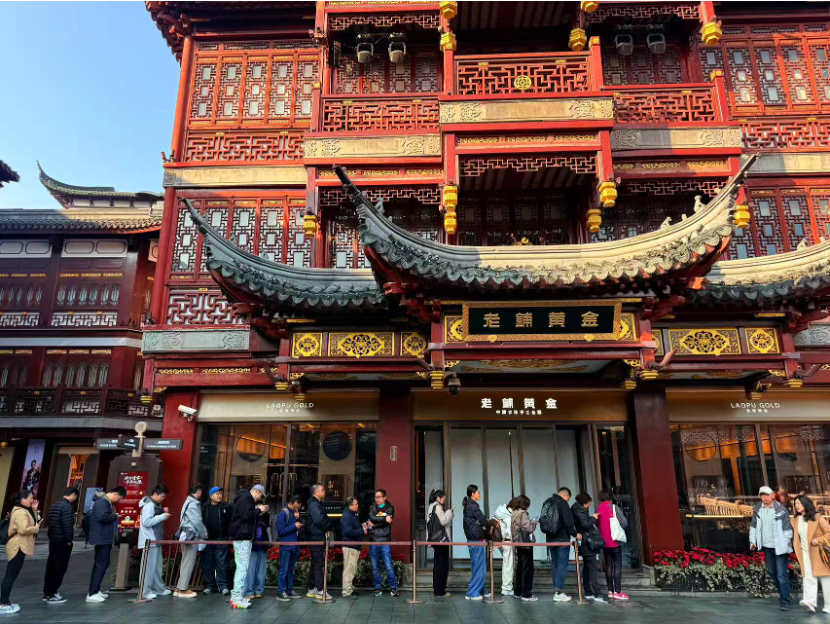
Core Viewpoint - The surge in gold prices has led to a significant increase in consumer demand for gold jewelry, particularly during the Chinese New Year shopping season, resulting in long queues at stores like Lao Pu Gold [1][6]. Group 1: Market Activity - On January 26, international spot and futures gold prices broke the $5000 per ounce mark, reaching an all-time high in the global gold market [1]. - Lao Pu Gold in Hangzhou launched a promotional campaign offering discounts, which attracted a large number of customers, leading to a queue of approximately 50 people waiting to purchase gold jewelry [3][6]. - The promotional activity included a "spend 1000 get 100 off" offer, which encouraged consumers to make significant purchases, with some customers buying gold products worth up to 300,000 yuan [6]. Group 2: Consumer Behavior - Customers began queuing as early as the night before the sale, with some even camping out to secure their place in line, indicating high demand [6]. - A customer reported spending around 500,000 yuan on a pair of Lao Pu's dragon and phoenix scented pouches after waiting for several hours [3]. - The presence of "queue scalpers" selling queue numbers for 500 yuan reflects the intense competition among buyers [9]. Group 3: Price Trends - Lao Pu Gold's stock price surged to 898 HKD per share, an increase of over 12%, indicating strong market confidence [9]. - The promotional price for Lao Pu's gold products ranged from 1500 to 1600 yuan per gram for pure gold, and 1700 to 1800 yuan per gram for gold-inlaid products [9]. - The overall market sentiment is positive, with reports of gold wholesalers experiencing high demand and rapid sales of gold bars [11].
从巅峰到裁员关店,一年蒸发60%市值:潘多拉魔盒打开了什么?
Sou Hu Cai Jing· 2026-01-20 07:36
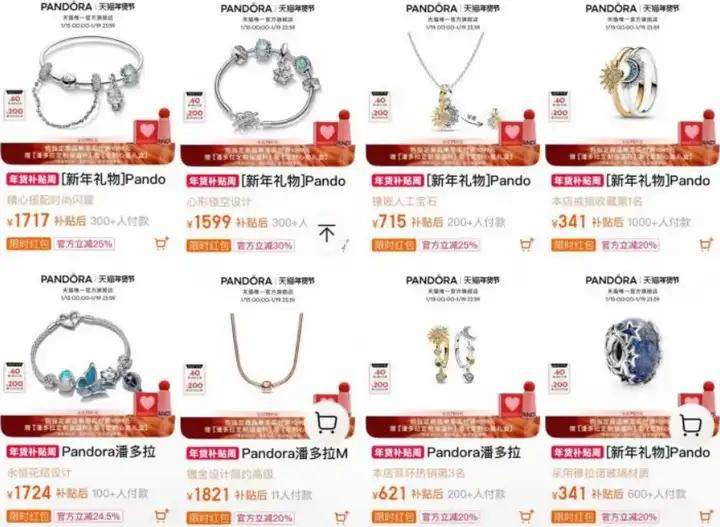
Core Viewpoint - Pandora, a representative of the affordable luxury jewelry sector, has faced a significant decline in stock price, dropping 60% in 2025, leading to widespread discussions in the jewelry industry about its future and the challenges it faces [1]. Group 1: Expansion and Profitability - The affordable luxury segment saw a remarkable expansion, with Pandora capitalizing on a market gap in the mid-range jewelry sector, which was previously dominated by high-end luxury brands and low-cost alternatives [1]. - Pandora entered the Chinese market in 2015, leveraging emotional marketing and a DIY model, resulting in over 240 stores within four years and accounting for 9% of its global revenue by 2019 [3]. - A turning point in profitability occurred in 2021 when Pandora's sales in China began to decline, halving from 11.26 billion Danish Krone in 2021 to 5.64 billion Danish Krone in 2023 [5]. Group 2: Cost Pressures and Market Challenges - Rising raw material costs, particularly silver, which constitutes over 40% of production costs, have significantly squeezed Pandora's profit margins, with silver prices reaching a 15-year high starting in 2024 [10]. - Despite initiating a price increase strategy, the high price sensitivity in the affordable luxury market led to consumer loss, as the brand's positioning was compromised [11]. - Operational costs have surged, with the proportion of costs to revenue increasing from 28% in 2019 to 35% in 2025, prompting Pandora to double its planned store closures in China from 50 to 100 [13]. - Currency fluctuations and geopolitical factors have further exacerbated cost pressures, particularly affecting exports to the U.S. due to increased tariffs [15][17]. Group 3: Shifts in Consumer Behavior and Competition - Changing consumer attitudes have led to a re-evaluation of product value, with a growing preference for items that retain value and practicality, contrasting with Pandora's initial emotional appeal [19]. - The second-hand market shows that Pandora's products lack strong resale value, with prices significantly lower than retail, indicating a shift in consumer expectations towards value retention [21]. - Intense competition has emerged as high-end brands introduce affordable luxury lines, and local brands like Chow Tai Fook and emerging brands like HEFANG capture market share with trendy, value-retaining products [23][24]. - As a result, Pandora has had to increase marketing efforts to maintain market share, with same-store sales growth in the U.S. at only 2% in Q4 2025, below the annual average of 6% [26]. Group 4: Strategic Recommendations for the Industry - To adapt to rational consumer behavior, affordable luxury brands must balance emotional value with practical attributes, potentially incorporating materials like gold and diamonds to enhance product value [28][30]. - Brands should optimize their channel structures, focusing on quality over quantity in store locations, and consider a hybrid model of online and community stores to reduce operational costs [32]. - Understanding industry trends is crucial, as the primary consumer base shifts towards Gen Z, who prioritize personalization and value, necessitating product designs that cater to everyday use and social contexts [33][34]. - The case of Pandora serves as a cautionary tale for the industry, highlighting the need for innovation and a focus on core competencies to achieve sustainable growth in a competitive landscape [35].
欧洲老钱盯上了老铺黄金
远川研究所· 2026-01-14 13:10
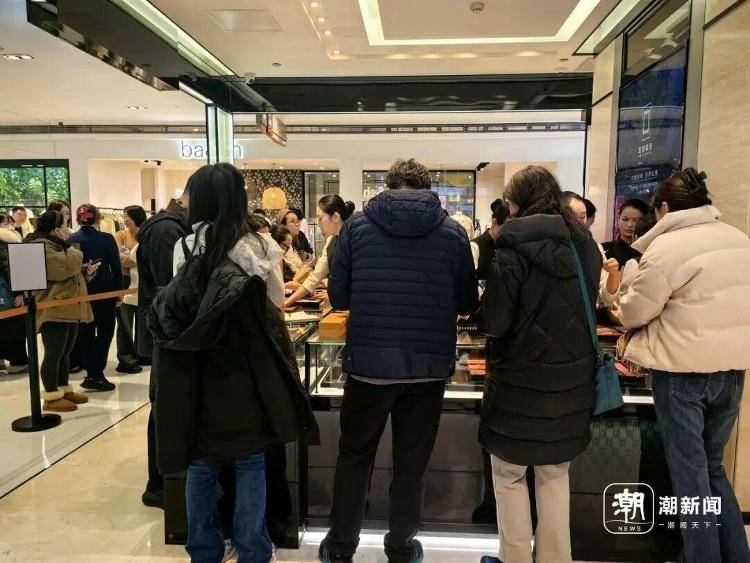
Core Viewpoint - The article discusses the rise of Laopuhuangjin (老铺黄金) as a significant player in the luxury jewelry market, highlighting its unique business model and the implications for established luxury brands like LVMH and Richemont [5][11]. Group 1: Market Position and Competition - Laopuhuangjin has attracted attention from major luxury brands, with LVMH's CEO acknowledging its impact on the jewelry market despite a 23% revenue decline in the Chinese market for LVMH [5]. - The sales per store of Laopuhuangjin are approximately double that of Cartier and three times that of Van Cleef & Arpels, indicating its strong market performance [5]. - The overlap in consumer demographics between Laopuhuangjin and luxury brands like LV, Hermes, and Cartier is significant, with an average overlap rate of 77.3% [7]. Group 2: Disruption of Luxury Market Dynamics - Laopuhuangjin is seen as a threat to the monopoly that luxury brands have over high-net-worth consumers, as it diversifies the luxury market landscape [7][11]. - The luxury goods market is dominated by three major groups (LVMH, Kering, Richemont) and two iconic brands (Hermes, Chanel), which have historically controlled the narrative around luxury consumption [7][8]. - The luxury market is projected to exceed €150 billion in revenue by 2024, while Laopuhuangjin's revenue is estimated at around HKD 30 billion for 2025, highlighting the disparity in scale [8][13]. Group 3: Unique Business Model of Laopuhuangjin - Laopuhuangjin has achieved a gross margin of 40% on gold products, significantly higher than the industry average, which is typically below 20% [15][16]. - The brand's success is attributed to its ability to modernize gold jewelry aesthetics and incorporate cultural elements, making it appealing to contemporary consumers [18][19]. - Laopuhuangjin's strategic location in high-end shopping areas reinforces its luxury positioning, with a limited number of stores enhancing its exclusivity [21][23]. Group 4: Consumer Behavior and Perception - The perception of gold as a stable asset allows consumers to justify their purchases as investments, creating a psychological loop where spending feels like asset allocation [27]. - Laopuhuangjin's pricing strategy and the inherent value of gold contribute to a consumer mindset that equates high spending with smart investment, differentiating it from traditional luxury goods [27][30]. - The brand's growth is characterized by a blend of luxury and investment appeal, which is a departure from conventional luxury consumption patterns [30][31]. Group 5: Future Challenges and Market Dynamics - The success of Laopuhuangjin may inspire new entrants in the luxury gold market, as established brands like Chow Tai Fook and others begin to adapt their strategies to compete [31][33]. - The potential for replication of Laopuhuangjin's model exists, as the gold market is transparent and accessible, allowing other brands to adopt similar strategies [31][33]. - The luxury market's hierarchical nature poses challenges for Laopuhuangjin in establishing itself as a true luxury brand, as it navigates the complexities of brand perception and consumer loyalty [33].

老铺黄金新春再现“排队潮” 高盛、花旗给予“买入”级别
Zheng Quan Ri Bao Wang· 2026-01-13 10:47
Core Viewpoint - The upcoming sales seasons, including New Year's Day and Spring Festival, are expected to drive significant sales growth for Laopu Gold, with reports of long queues in major cities like Shanghai, Beijing, and Hangzhou [1][4]. Group 1: Sales Performance - Laopu Gold's sales during the New Year's period have surged, with predictions of strong performance during the Spring Festival due to increased brand awareness, channel expansion, and operational optimization [1][4]. - Goldman Sachs reported that Laopu Gold's gross margin has recovered to over 40% following a price increase in October last year [4]. - Citi forecasts a 224% increase in net profit for Laopu Gold by 2025, reaching 4.8 billion yuan, with continued growth in gross margin and net profit expected in 2026 [4]. Group 2: Market Position and Consumer Insights - Laopu Gold has gained significant consumer overlap with major luxury brands such as Louis Vuitton, Hermès, Cartier, and Bulgari, with an average overlap rate of nearly 80% [4]. - The brand has successfully met consumer demands for culture, craftsmanship, aesthetics, and genuine product value, creating a new value consumption segment [4]. - Recent sales data for new products from Laopu Gold has shown consistent growth, which is strategically important for enhancing brand competitiveness [4]. Group 3: Analyst Ratings and Stock Performance - Both Citi and Goldman Sachs have assigned a "Buy" rating to Laopu Gold, with target prices set at 1,119 HKD and 1,088 HKD, respectively [4]. - As of January 12, Laopu Gold's stock price was reported at 682.5 HKD [4].
2025,中国IP经济“高光之年”
21世纪经济报道· 2026-01-05 04:35
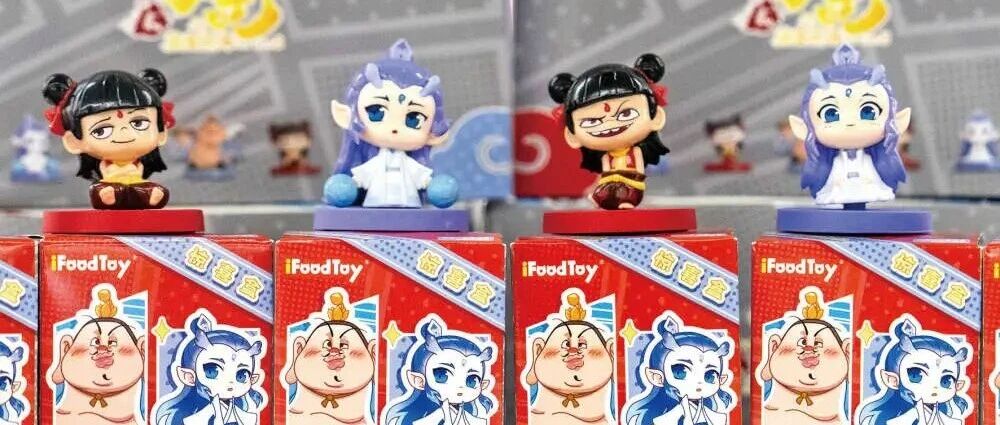
Core Viewpoint - The year 2025 is highlighted as a "high光 year" for China's IP economy, marking a significant leap where local IPs are becoming global symbols and innovating based on traditional roots [1]. Group 1: Achievements of Chinese IP - Labubu participated in the New York Manhattan Flower Parade alongside global icons like Mickey Mouse and Super Mario [1]. - "Nezha: The Devil's Child" broke box office records, ending Hollywood's long-standing dominance in animation history [1][4]. - The film achieved a domestic box office of 15.446 billion yuan and a global total of over 15.9 billion yuan (approximately 1.902 billion USD), ranking fifth in global box office history and first in animation history [4]. Group 2: Market Performance and Trends - In 2025, both Pop Mart and Laopu Gold saw stock price increases exceeding 100%, with significant capital inflow into the IP toy and gold jewelry sectors [1]. - Pop Mart's stock reached a peak of 339.8 HKD, with a market cap of approximately 456 billion HKD, and reported a revenue of 13.876 billion yuan, a year-on-year increase of 204.4% [7]. - Laopu Gold achieved a revenue of 12.3 billion yuan in the first half of 2025, a year-on-year increase of 251%, with a gross profit margin exceeding 41% [11]. Group 3: Cultural and Economic Impact - The integration of Chinese IP into films, games, toys, and jewelry represents a new approach to monetizing cultural assets [1]. - Laopu Gold is recognized as a significant competitor in the luxury goods market, with predictions that it will surpass Richemont's total revenue in China by 2025 [11]. - The emergence of new players like Mingchuang Yipin is expected to further propel Chinese IP onto the global stage [12].