生态环保理念

Search documents
新年 新路 新篇 新疆乌尉高速公路重塑区域经济格局
Yang Shi Wang· 2026-01-01 03:29
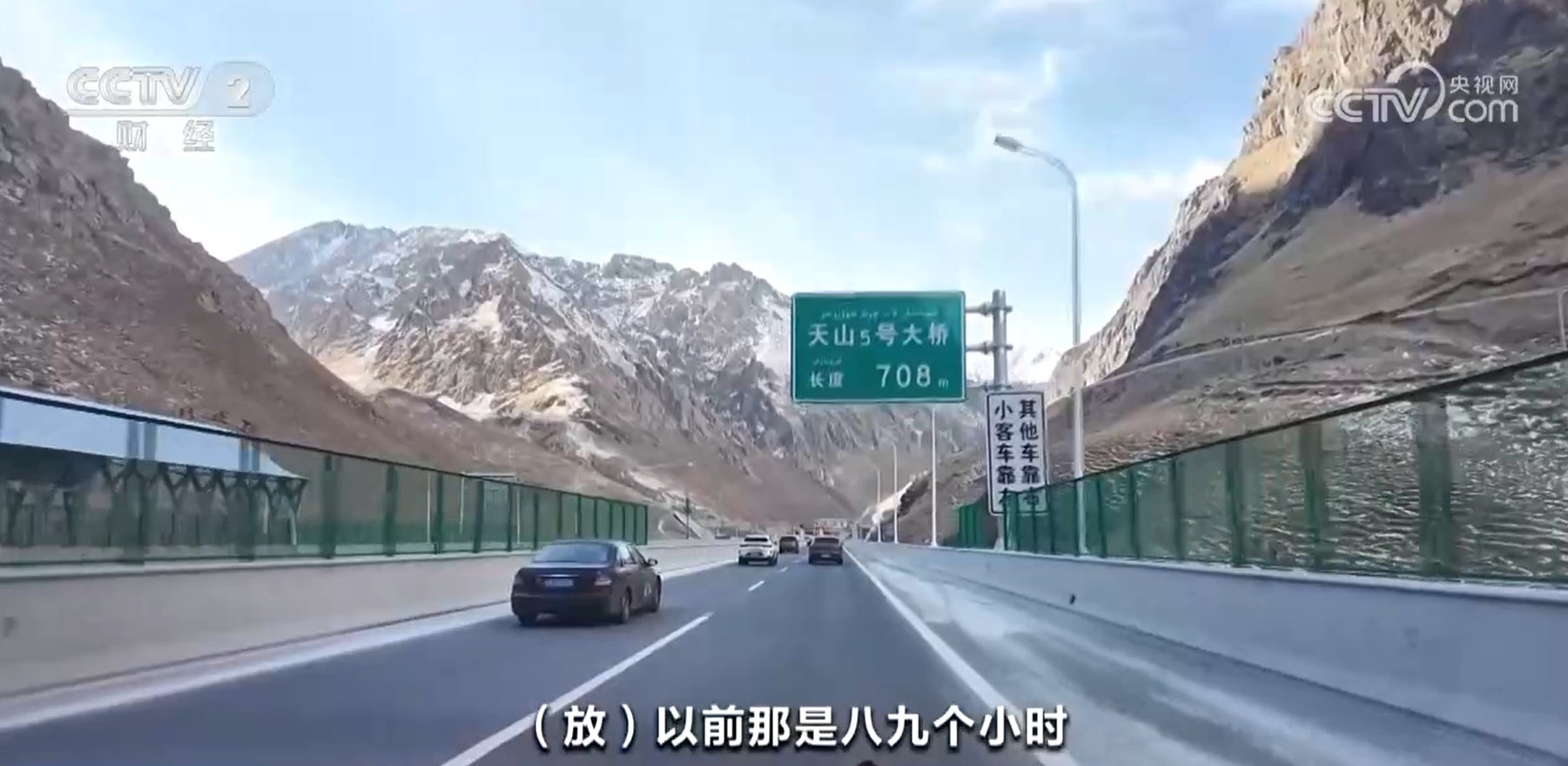
Core Viewpoint - The newly opened Wuyi Expressway significantly enhances transportation efficiency in Xinjiang, connecting the northern and southern regions and facilitating the distribution of agricultural products across the area [1][2]. Group 1: Infrastructure Development - The Wuyi Expressway spans 324.7 kilometers and features 274 bridges and 17 tunnels, showcasing a major infrastructure achievement in the region [3]. - The expressway construction took over five years, culminating in its opening on December 26, 2025, marking a significant milestone for local connectivity [1]. Group 2: Economic Impact - The expressway provides a more efficient logistics route for agricultural products, allowing for quicker transportation of fruits and vegetables from southern Xinjiang to urban markets [2][5]. - Drivers report a reduction in travel time from eight to nine hours to just two to three hours, significantly improving operational efficiency for freight transport [5][9]. Group 3: Environmental Considerations - The construction project emphasizes ecological preservation, with efforts to restore natural habitats and promote coexistence with local wildlife [7]. - The project includes initiatives for ecological restoration, such as planting native grasses in disturbed areas, reflecting a commitment to environmental sustainability [7].

走近大国工程 | “智造”大桥 飞虹越江
Zhong Yang Ji Wei Guo Jia Jian Wei Wang Zhan· 2025-07-14 00:38
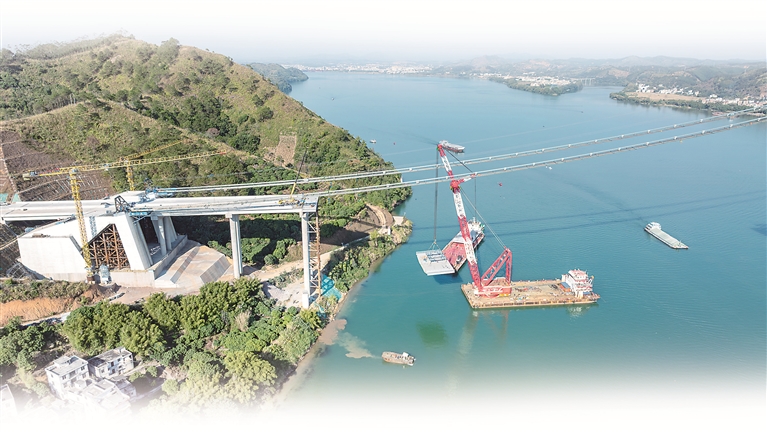
Core Viewpoint - The article highlights the completion and significance of the Fujian Xunjiang Bridge, which is the world's first single-tower spatial cable-stayed and suspension bridge, showcasing innovative engineering and ecological construction practices [10][12][25]. Group 1: Bridge Design and Engineering - The Fujian Xunjiang Bridge spans 1,604 meters with a main span of 2*638 meters and a main tower height of 238 meters, making it the tallest bridge tower in Guangxi [10]. - The bridge combines the advantages of cable-stayed and suspension bridge designs, achieving significant breakthroughs in structural engineering [11][12]. - The construction faced challenges due to complex structural transitions and the unique design, requiring precise management of stress and deformation during the building process [12][14]. Group 2: Technological Innovations - The project team implemented advanced technologies, including an intelligent monitoring system and customized lifting solutions, to enhance construction efficiency and safety [16][17]. - The bridge features the first domestic application of a spatial cable efficient spinning system and adaptive catwalk technology, significantly improving construction speed and precision [16][17]. - The use of a 7mm diameter steel wire for the main cable, through the AS method, represents a major advancement in construction technology, allowing for faster and more accurate installation [16][17]. Group 3: Environmental Considerations - The construction process integrated ecological protection measures, ensuring minimal impact on the local environment, particularly in a drinking water protection area [20][21]. - Innovative construction methods, such as using a mud separation device, were employed to manage waste and reduce environmental pollution during the building process [24]. - The project team prioritized green construction practices, including dust suppression and air purification systems, to maintain ecological integrity throughout the construction phase [25]. Group 4: Economic and Social Impact - The completion of the Fujian Xunjiang Bridge significantly reduces travel time across the Xunjiang River from one hour to five minutes, facilitating economic development and rural revitalization in the region [10][25]. - The bridge serves as a new landmark for innovative bridge engineering, enhancing the region's infrastructure and connectivity [10][25].