
生态自觉

Search documents
舟山泼墨绘“绿”奔赴“新”程
Zhong Guo Huan Jing Bao· 2025-08-12 01:36
Core Viewpoint - Zhoushan Islands are exemplifying the concept of "Lucid waters and lush mountains are invaluable assets" through various ecological and sustainable development practices, marking the 20th anniversary of this philosophy's introduction [1]. Group 1: Ecological Development - The establishment of the first local standard for ecological product value accounting in a marine area in Zhoushan provides a model for realizing ecological product value [1]. - Zhoushan is committed to high-level construction of a marine garden city, promoting the brand "Green Development Looks at Zhoushan" [1]. - The transformation of the Dihai Bay area from an industrial port to a beautiful ecological park illustrates the successful implementation of the "Two Mountains" concept [2]. Group 2: Environmental Management - Comprehensive water environment governance has turned previously polluted rivers into clean waterways, showcasing effective ecological resource management [4]. - Zhoushan ranks among the top cities in air quality in China, with a centralized sewage collection rate of 86.45% and a waste classification rate of 86.1% as of 2024 [4]. - The city has implemented a "no leaf sweeping" initiative to enhance seasonal aesthetics and established a real-time monitoring platform for environmental data [4]. Group 3: Rural Transformation - The transformation of rural areas, such as the New Village and Milin Village, demonstrates successful rural environmental improvement and the development of new tourism and hospitality industries [7][8]. - The "One Village, One Product" initiative has led to the creation of garden-like villages, enhancing local tourism and community engagement [8]. - Zhoushan has achieved a 50% coverage rate for beautiful rural areas, with significant investments in modernizing small towns and villages [8]. Group 4: Marine and Ecological Protection - Zhoushan has established a comprehensive marine sanitation mechanism to manage marine waste effectively, contributing to the protection of its marine ecosystem [10]. - The city has completed 113 out of 149 ecological infrastructure projects aimed at enhancing biodiversity and environmental quality [10]. - Community involvement in environmental protection is evident, with local volunteer groups actively participating in beach clean-ups and conservation efforts [11].


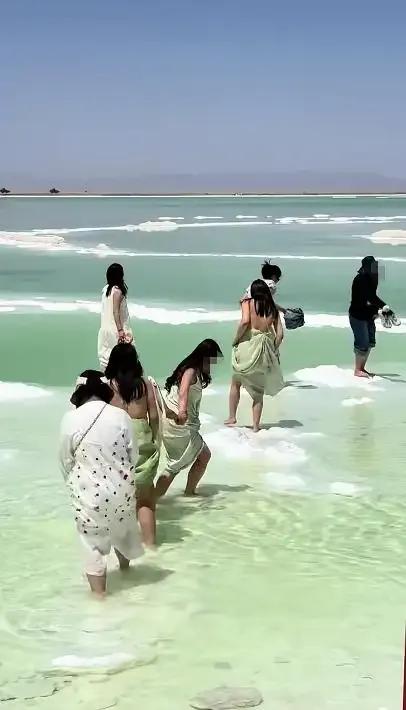
马上评|盐湖不是海滨浴场,“见水就下”陋习要改
Xin Lang Cai Jing· 2025-06-19 10:29
Core Viewpoint - Recent incidents of tourists ignoring warnings and entering the Chaka Salt Lake barefoot have sparked significant online discussion, highlighting the need for better management and public awareness regarding safety and ecological preservation in tourist areas [1][3]. Group 1: Tourist Behavior and Safety - Tourists entering salt lakes barefoot pose safety risks due to high salinity levels that can cause skin irritation and potential health hazards if ingested [3][4]. - The Chaka Salt Lake has clear regulations prohibiting both barefoot and shoe-covered entry into the water, emphasizing the importance of adhering to these rules for visitor safety [4][5]. Group 2: Ecological Awareness and Management - There is a growing need for tourists to develop a new ecological consciousness, recognizing that their actions can harm natural environments, and that certain behaviors should be modified [4][5]. - Tourist sites must enhance management practices, increase patrols, and improve public education about the dangers of entering salt lakes, as many visitors may not fully understand the risks involved [4][5]. Group 3: Inconsistencies in Regulations - Discrepancies in regulations between different salt lakes, such as the Chaka Salt Lake and others in the same province, can confuse tourists and undermine the effectiveness of safety measures [4][5]. - A unified approach to regulations across various tourist sites could facilitate better understanding among visitors and promote a clearer ecological philosophy [5].
从“要我做”到“我要做”,全民生态自觉这样被唤醒
Zhong Guo Huan Jing Bao· 2025-06-16 01:12
Group 1 - The core viewpoint emphasizes that Chinese-style modernization is characterized by harmonious coexistence between humans and nature, with a unique ecological perspective and significant practical innovations in ecological modernization theory and practice [1] - The construction of a beautiful China is a crucial aspect of accelerating the modernization process, requiring collective action from all individuals, families, and organizations [1] - The concept of ecological consciousness is defined as a deep reflection on the relationship between humanity and nature, which includes recognizing the value of natural existence and human significance [3] Group 2 - The current fundamental task of ecological civilization construction is closely linked to the degree of ecological consciousness among the population, which influences the level of ecological civilization development [4] - To enhance ecological consciousness, it is essential to promote green development, education, institutional design, and cultural cultivation [5][6] - Green development should be integrated into all aspects of economic and social development, creating a low-carbon, circular production and lifestyle to meet the growing demand for a beautiful ecological environment [5]