
生态警务机制建设

Search documents
公安部:依法严厉打击环境资源领域突出犯罪
Xin Lang Cai Jing· 2026-01-08 13:53
Core Viewpoint - The Ministry of Public Security is intensifying efforts to combat environmental resource crimes and is advancing the construction of an ecological policing mechanism by 2025, with significant achievements reported in various operations [1][3]. Group 1: Criminal Cases and Actions - A total of 37,000 criminal cases related to environmental resource crimes have been filed and investigated, with 145 major cases under special supervision by the Ministry [3]. - Specific cases include over 1,500 environmental pollution cases, more than 6,200 illegal occupation of agricultural land cases, 90 cases of black soil resource destruction, and 3,100 illegal mining cases [3]. - The "Peaceful Wilderness - 2025" initiative led to the investigation of 16,000 criminal cases related to wildlife protection, addressing significant safety hazards [3]. Group 2: Collaborative Governance - The Ministry of Public Security has established a coordinated enforcement and judicial mechanism involving 12 departments, including the Supreme People's Court and the Ministry of Ecology and Environment, to combat environmental resource crimes [4]. - Collaborative efforts include special rectification actions against illegal dumping of solid waste, illegal occupation of agricultural land for funeral facilities, and illegal river sand mining in the Yangtze and Yellow River basins [4]. - The Ministry is also addressing management loopholes and risks identified during investigations by notifying relevant departments through police advisories and recommendations [4]. Group 3: Ecological Policing Mechanism - The Ministry, in collaboration with nine other departments, has issued guidelines to strengthen the ecological policing mechanism, aiming for basic establishment by 2027 and maturity by 2035 [4]. - Key tasks include enhancing criminal enforcement, proactive prevention, promoting comprehensive governance, and facilitating value transformation [4]. - The implementation of these measures is being prioritized to ensure effective ecological policing [4].

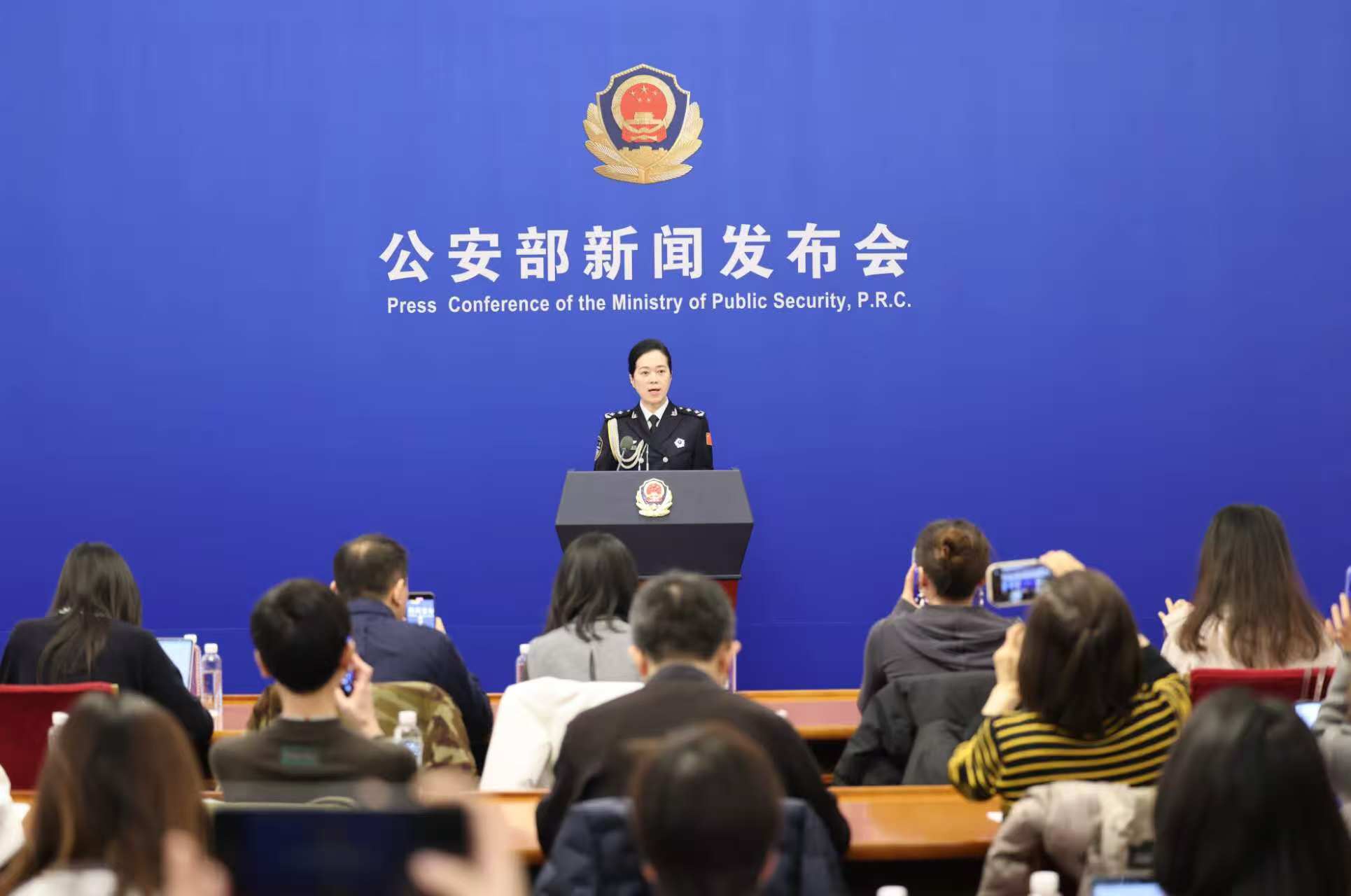
公安部:去年立案侦办破坏环境资源刑案3.7万起
Xin Lang Cai Jing· 2026-01-08 03:31
Core Viewpoint - The Ministry of Public Security of China is intensifying efforts to combat environmental resource crimes, with a target of handling 37,000 criminal cases by 2025, emphasizing strict legal measures to protect the ecological environment [1][2]. Group 1: Criminal Case Statistics - A total of 37,000 criminal cases related to environmental resource crimes have been filed, with 1,500 cases concerning environmental pollution, 6,200 cases of illegal occupation of agricultural land, 90 cases of black soil resource destruction, and 3,100 cases of illegal mining [2]. - The Ministry has also conducted 15 regional campaigns and cluster strikes against these crimes, with 145 major cases under special supervision [2]. Group 2: Special Operations - The Ministry has launched specific operations such as "Peaceful Wilderness - 2025" targeting illegal hunting activities, resulting in 16,000 criminal cases being filed [2]. - In addition, operations like "Fishing Ban on the Yangtze River" and "Safe Yangtze River" have led to over 2,900 criminal cases related to fishing, with 178,000 kilograms of illegal catches confiscated, contributing to the recovery of the Yangtze River ecosystem [2]. Group 3: Collaborative Governance - A coordination mechanism involving 12 departments, including the Supreme People's Court and the Ministry of Ecology and Environment, has been established to combat environmental crimes [3]. - The Ministry is also working on building an ecological policing mechanism, with a two-step goal to establish it by 2027 and mature it by 2035, focusing on criminal enforcement, proactive prevention, comprehensive governance, and service value transformation [3].
推动生态警务机制建设,浙江有这些实践经验可供参考
Zhong Guo Huan Jing Bao· 2026-01-06 05:47
Core Viewpoint - The article discusses the implementation of an ecological policing mechanism in Zhejiang Province, emphasizing the collaboration between various governmental departments to enhance ecological law enforcement and management, serving as a model for other regions [1][2][3]. Group 1: Strengthening Law Enforcement - Zhejiang Province's police are enhancing their capabilities in ecological law enforcement, maintaining a strict stance against environmental crimes, as evidenced by operations like the "Nankxi River Basin Illegal Sand Mining Case" [1]. - A collaborative initiative called "Ecological Zhejiang" has been launched, involving 15 administrative departments to facilitate joint law enforcement and streamline case processing through a green channel for inspections and appraisals [1]. Group 2: Proactive Prevention Mechanisms - The police are shifting their focus towards proactive prevention by establishing a risk detection mechanism based on a grid system, supported by 8,079 "ecological police chiefs" and various operational centers [2]. - The integration of community involvement through initiatives like "ecological volunteer" teams and the "Ecological Green Whistle" app has expanded the monitoring network, enhancing responsiveness to ecological risks [2]. Group 3: Comprehensive Governance and Judicial Efficiency - The introduction of the "Legal Protection of Green Water and Green Mountains" model aims to create a comprehensive ecological judicial protection system that includes prevention, enforcement, restoration, and construction [2]. - The province is implementing a dual approach of enforcement and restoration, utilizing a model that combines injunctions with multi-faceted restoration efforts, thereby improving both ecological and judicial outcomes [2]. Group 4: Realizing Ecological Value - Zhejiang's ecological policing practices are integrated into broader economic and social development, establishing a directory of over 20,000 "Green Water and Green Mountain Enterprises" to provide targeted protection for key ecological product producers [3]. - The police have developed the "Safe Camping" app to enhance management services for the rapidly growing camping economy, while also promoting a marine ecological policing model to support sustainable marine economic development [3]. - The long-term vision for ecological policing is to modernize ecological governance capabilities, combining institutional advantages, local wisdom, and public expectations to create a unique path for collaborative ecological governance in China [3].
加强生态警务机制建设
Ren Min Ri Bao· 2025-12-01 22:11
Core Viewpoint - The Ministry of Public Security, in collaboration with multiple government departments, has issued guidelines to strengthen the ecological policing mechanism, aiming to combat environmental resource crimes and ensure safety in the construction of a beautiful China while promoting high-quality development [1] Summary by Relevant Sections Ecological Policing Mechanism - The guidelines emphasize a systematic approach, innovation, collaborative governance, localized strategies, and legal compliance in building the ecological policing mechanism [1] - The goal is to establish a basic ecological policing mechanism by 2027 and a mature, efficient system by 2035 [1] Main Tasks - The document outlines four main tasks: enhancing criminal prosecution, strengthening proactive prevention, promoting comprehensive governance, and facilitating value transformation [1] Supportive Measures - Clear requirements are set for improving organizational coordination, operational effectiveness, inter-departmental collaboration, and regional cooperation [1] - Emphasis is placed on leveraging the strengths of public security and other administrative departments to achieve optimal results through collaborative efforts [1]
公安部等十部门联合印发意见加强生态警务机制建设
Xin Hua She· 2025-12-01 02:58
Group 1 - The core viewpoint of the article is the establishment of an ecological policing mechanism led by the Ministry of Public Security in collaboration with various government departments [1] Group 2 - The Ministry of Public Security, along with the National Development and Reform Commission, Ministry of Justice, Ministry of Natural Resources, Ministry of Ecology and Environment, Ministry of Transport, Ministry of Water Resources, Ministry of Agriculture and Rural Affairs, National Forestry and Grassland Administration, and China Coast Guard, has issued opinions to strengthen the ecological policing mechanism [1]
公安部等十部门联合印发《关于加强生态警务机制建设的意见》
Yang Shi Wang· 2025-12-01 01:25
Core Viewpoint - The article discusses the issuance of the "Opinions on Strengthening the Construction of Ecological Police Mechanism" by multiple government departments in China, aiming to establish a collaborative ecological policing system to combat environmental crimes and support high-quality development while ensuring ecological safety [1][2]. Group 1: Strengthening Criminal Prosecution - The "Opinions" emphasize a strict approach to law enforcement against environmental crimes, including pollution, destruction of wildlife resources, illegal fishing, and illegal mining activities [2]. - It highlights the need for improved mechanisms for case supervision, collective strikes, and collaborative intelligence sharing to address the professionalization and cross-regional nature of these crimes [2]. Group 2: Enhancing Proactive Prevention - The document encourages local governments to explore mechanisms such as river and forest police to enhance ecological protection efforts [2]. - It suggests the establishment of ecological policing collaborative centers and workstations in areas with high environmental crime rates, integrating ecological policing with daily law enforcement and community governance [2]. Group 3: Promoting Comprehensive Governance - The "Opinions" advocate for a strategy that combines law enforcement with governance, ensuring that identified risks are reported to relevant departments for proactive management [2]. - It stresses the importance of balancing protection and restoration efforts, guiding offenders to take responsibility for ecological restoration in environmental crime cases [2]. Group 4: Supporting Value Transformation - The document calls for the integration of crime fighting with ecological governance and green industrial transformation to enhance economic advantages and the total value of ecological products [3]. - It emphasizes the need to protect the legitimate rights of enterprises and combat crimes related to high-quality agricultural products and geographical indication products [3]. - The "Opinions" outline the necessity for improved organizational coordination, operational mechanisms, and support measures to enhance the effectiveness of ecological policing [3].