生成式引擎(GEO)

Search documents
当AI接管购物车,你的产品在ChatGPT里隐身了吗?
3 6 Ke· 2026-01-22 05:11
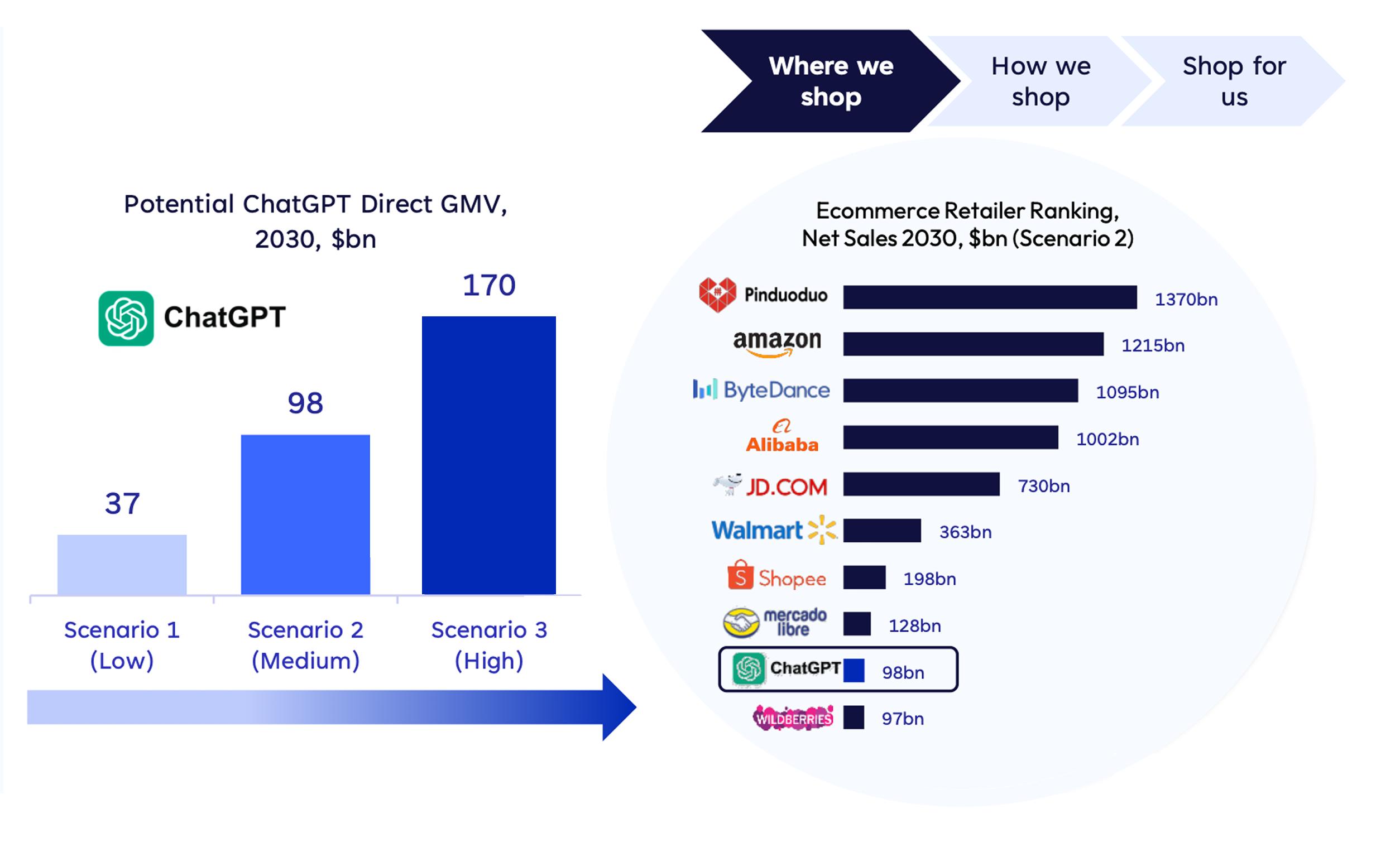
Core Insights - The article discusses the evolution of ChatGPT from a search tool to a potential transaction gateway in e-commerce, indicating a shift in consumer purchasing decision-making power towards AI agents [1][2] - The introduction of Instant Checkout by OpenAI allows users to complete purchases directly within ChatGPT, marking a significant change in the shopping experience [2] - The future growth paths for ChatGPT in e-commerce suggest it could become a major player, potentially reaching a Gross Merchandise Volume (GMV) of over $170 billion by 2030 [3] Group 1: Evolution of Shopping Experience - ChatGPT is transitioning from a search tool to a direct purchasing platform, allowing users to browse and buy products within the chat interface [2] - Major retailers like Target and Instacart are exploring ways to integrate full shopping experiences into ChatGPT, indicating a trend towards conversational commerce [2] Group 2: Future Growth Projections - Three potential growth scenarios for ChatGPT are outlined: 1. A conservative growth path where it becomes a significant traffic and recommendation source but does not disrupt existing platforms [4] 2. A moderate growth scenario where it competes with regional e-commerce giants, with 20% of transactions occurring within the chat [5] 3. A high growth scenario where it could rank among the top ten global e-commerce platforms, with 30% of transactions completed in conversation [6] Group 3: Shift in Product Discovery - The article highlights a shift in product discovery from traditional search engines to generative engines, emphasizing the need for brands to adapt their strategies to be recognized by AI [8] - Consumers are increasingly asking specific questions to AI rather than performing generic searches, which necessitates a new approach to product information [8] Group 4: Brand Strategy in the Age of AI - The rise of Agentic Commerce signifies that brands must now focus on optimizing for AI recommendations rather than traditional advertising methods [9] - Brands are encouraged to understand AI's recommendation logic and ensure product information consistency across platforms to enhance visibility [11] - Companies should prepare for the integration of AI as a retail channel and develop internal capabilities to leverage AI effectively [11]

从被唱衰到逆袭,谷歌搜索副总裁揭秘AI搜索翻身内幕
3 6 Ke· 2025-11-27 08:15
Core Insights - Google's AI search mode is evolving rather than replacing traditional search, aiming to make information universally accessible [4][6] - The Gemini model is a significant driver of Google's recent success, allowing for a more natural and human-like search experience [4][11] - The integration of AI into search is expanding capabilities, enabling users to ask complex questions in natural language [9][12] Group 1: AI Integration and User Experience - Google's AI search mode incorporates three main capabilities: AI overview, multimodal search, and conversational mode, enhancing user interaction [9][11] - The AI model is designed specifically for information tasks, allowing real-time web searches and verification, which reduces errors and enhances reliability [11] - Users are increasingly comfortable asking complex queries, indicating a shift in how search is utilized [9][12] Group 2: Market Position and Competitive Landscape - Gemini's rise to the top of the App Store reflects a significant turnaround for Google, previously overshadowed by competitors like ChatGPT [4][5] - The growth of Google's products is attributed to continuous improvements and a focus on user needs, rather than singular events or leadership changes [5][6] - The shift from traditional SEO to AI-driven content evaluation (AEO and GEO) is changing the landscape for content creators [11][12] Group 3: Product Philosophy and Development - The philosophy behind product development at Google emphasizes persistence and a drive for continuous improvement [12][14] - Successful product development requires a balance between addressing user needs and utilizing metrics to measure progress [14][15] - The motivation to create better user experiences stems from a desire to improve the world, rather than mere satisfaction with existing solutions [12][13]