生育友好社区建设

Search documents
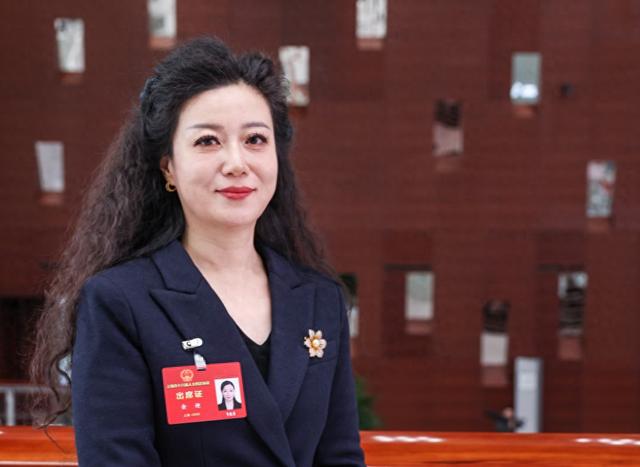
育儿压力大?代表建议打造生育友好社区、设置商务楼宇弹性托管点
Xin Lang Cai Jing· 2026-02-05 07:52
Core Viewpoint - The article emphasizes the need for community-level support for families in Shanghai to address the challenges of slowing population growth and deep aging, advocating for a supportive environment for childbirth and child-rearing [1] Group 1: Community Support Initiatives - The representative suggests integrating resources and services at the community level to promote the construction of family-friendly communities, which is crucial for sustainable urban development [1] - There is a call to improve the distribution of quality educational resources and reduce the competitive pressure for school admissions [3] - The proposal includes expanding community-based childcare services and establishing flexible childcare points in industrial parks and business buildings to alleviate family caregiving and educational pressures [3] Group 2: Healthcare Improvements - The representative advocates for enhancing the availability of quality medical resources in communities, including the establishment of pediatric, maternal and child health, and elderly care departments in community medical institutions [3] - The creation of electronic health records covering the entire cycle of marriage, pregnancy, and child-rearing is recommended to provide one-stop services for vaccinations and health management [3] Group 3: Housing and Urban Development - The article suggests exploring flexible housing designs suitable for multi-generational living and promoting the renovation of old residential areas to be more child- and elderly-friendly [3] - The proposal includes the addition of community facilities such as dining halls and shared living spaces to improve safety and convenience for residents [3] Group 4: Policy Recommendations - The representative recommends implementing paternity leave and incentivizing companies that comply, as well as policies supporting multi-child families in housing [4] - It is suggested to incorporate childcare facility construction and women's rights protection into corporate evaluation systems, and to establish community "parenting advisors" to foster a culture of shared parenting and social support [4]

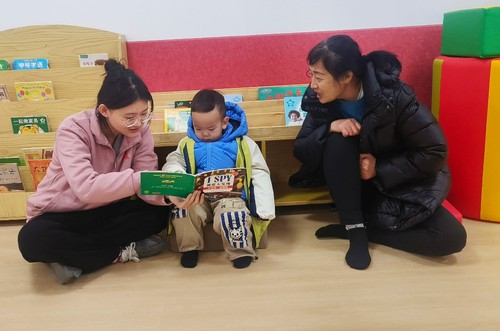
锚定国家人口发展战略 “小小松果”托育园开园 北京市首部街乡级生育友好社区建设标准发布
Xin Lang Cai Jing· 2025-12-20 10:52
Core Viewpoint - The establishment of the "Little Pine Cone" nursery and the release of the first community-level "Fertility-Friendly Community Construction Standards" in Beijing aim to implement national fertility support policies and promote long-term balanced population development [1][6]. Group 1: Nursery and Childcare Services - The "Little Pine Cone" nursery focuses on the universal childcare needs for children aged 0-3 years, with classes divided by age groups: infant class (6-12 months), toddler class (12-24 months), and preschool class (24-36 months), adhering to caregiver ratios of 1:3, 1:5, and 1:7 respectively [3]. - The nursery is designed to directly address the urgent needs of 50 families facing childcare challenges, with services covering a 15-minute walking radius within the community [3]. Group 2: Health and Support Systems - The Scientific Parenting Guidance Center collaborates with multiple medical institutions, including the Capital Institute of Pediatrics, to establish a closed-loop mechanism for community health screening, professional warning, and green referral, aligning with national recommendations for enhancing maternal and child health services [3][5]. - The "Mother Empowerment Program" aims to activate community support by training certified community childcare instructors, shifting childcare responsibilities from individual families to community collaboration [5]. Group 3: Community Standards and Future Plans - The newly released "Fertility-Friendly Community Construction Standards" break down the concept of a fertility-friendly environment into eight dimensions, including universal childcare, maternal and child health, and friendly spaces, supported by organizational and resource frameworks [6]. - Future plans include creating a "1 core guidance center + N community growth stations" network to provide comprehensive support throughout the pregnancy, childbirth, and childcare process, contributing to the implementation of national population development strategies [6].