城市可持续发展

Search documents
人鸥同乐庆新春
Xin Lang Cai Jing· 2026-02-21 22:20
Core Viewpoint - The article highlights the successful ecological and cultural integration of the red-billed gull in Kunming, showcasing a 40-year journey of environmental protection and community engagement that has transformed the species into a cultural symbol of the city [1][4][7]. Group 1: Ecological Development - The population of red-billed gulls in Kunming has grown from approximately 9,000 in 1985 to a stable count of around 40,000 in recent years, with projections of 42,000 by 2025, indicating a positive recognition of the city's ecological environment [2][6]. - Kunming's government has implemented various protective measures, including the establishment of local regulations and scientific feeding practices, ensuring the gulls receive balanced nutrition through over 30 tons of specialized gull food distributed at more than 60 feeding points [2][3]. Group 2: Cultural Integration - The relationship between the red-billed gulls and the citizens of Kunming has evolved from emotional to rational, with the gulls becoming a unique cultural symbol and a significant part of local festivities, particularly during the New Year [4][5]. - Various cultural and tourism activities have been developed around the gulls, such as themed events and artistic performances, enhancing the city's cultural landscape and promoting eco-tourism [4][5]. Group 3: Sustainable Development - Ongoing ecological restoration efforts around Dianchi Lake have led to the creation of a lakeside ecological belt of 62,900 acres and an increase in natural shoreline to 89%, contributing to the improved habitat for the gulls [6]. - The city aims to further enhance its ecological landscape by developing a green development corridor around Dianchi Lake, promoting biodiversity and sustainable urban growth [6]. Group 4: Future Generations - Educational initiatives are being introduced to engage children in ecological protection, fostering a sense of responsibility and connection to nature through activities related to the red-billed gulls [7]. - The emotional bond between the citizens and the gulls reflects a broader commitment to environmental stewardship, with the community actively participating in the conservation of local wildlife [7].
全球首颗面向城市可持续发展的人工智能大模型卫星成功发射
Xin Hua Wang· 2026-02-12 21:34
Core Viewpoint - The successful launch of the CUHK-1 satellite marks a significant advancement in space technology for Hong Kong, contributing to sustainable urban development through AI-driven earth observation capabilities [1][2]. Group 1: Satellite Launch and Technology - The CUHK-1 satellite was launched using the Jielong-3 rocket from the Taiyuan Satellite Launch Center, successfully placing seven satellites into their designated orbits [1]. - CUHK-1 is the world's first AI model satellite aimed at urban sustainable development, which will work in conjunction with the previously launched "Hong Kong Youth Innovation and Technology" experimental satellite to form Hong Kong's first low Earth orbit satellite constellation [1]. Group 2: Institutional Impact and Future Plans - CUHK's President, Professor Rocky S. Tuan, emphasized that the successful orbiting of CUHK-1 represents a breakthrough in aerospace technology for the university and signifies a new milestone in intelligent remote sensing and spatial information applications [1]. - The university plans to actively support the national "14th Five-Year Plan" by promoting the integration of AI and aerospace technology, nurturing talent in aerospace innovation, and enhancing international research collaboration to contribute to the development of a strong national space program and sustainable smart cities in Hong Kong and the Greater Bay Area [1]. Group 3: Data and Applications - The CUHK-1 satellite will provide high-resolution, multi-spectral earth observation data, supporting key technology research and application demonstrations [1]. - The satellite is expected to enhance environmental monitoring, smart transportation, and disaster response services for the Greater Bay Area and major cities globally [2].
育儿压力大?代表建议打造生育友好社区、设置商务楼宇弹性托管点
Xin Lang Cai Jing· 2026-02-05 07:52
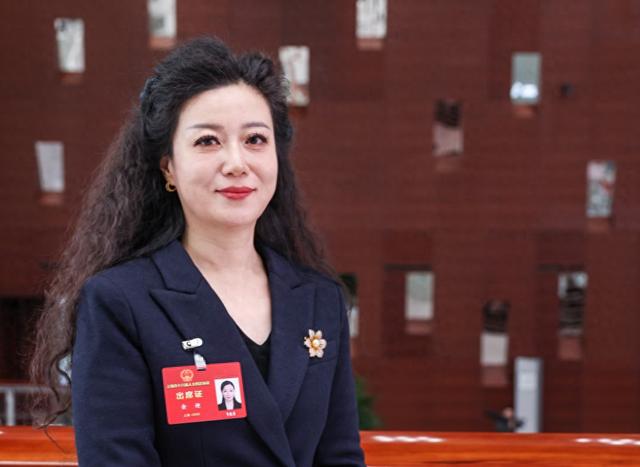
Core Viewpoint - The article emphasizes the need for community-level support for families in Shanghai to address the challenges of slowing population growth and deep aging, advocating for a supportive environment for childbirth and child-rearing [1] Group 1: Community Support Initiatives - The representative suggests integrating resources and services at the community level to promote the construction of family-friendly communities, which is crucial for sustainable urban development [1] - There is a call to improve the distribution of quality educational resources and reduce the competitive pressure for school admissions [3] - The proposal includes expanding community-based childcare services and establishing flexible childcare points in industrial parks and business buildings to alleviate family caregiving and educational pressures [3] Group 2: Healthcare Improvements - The representative advocates for enhancing the availability of quality medical resources in communities, including the establishment of pediatric, maternal and child health, and elderly care departments in community medical institutions [3] - The creation of electronic health records covering the entire cycle of marriage, pregnancy, and child-rearing is recommended to provide one-stop services for vaccinations and health management [3] Group 3: Housing and Urban Development - The article suggests exploring flexible housing designs suitable for multi-generational living and promoting the renovation of old residential areas to be more child- and elderly-friendly [3] - The proposal includes the addition of community facilities such as dining halls and shared living spaces to improve safety and convenience for residents [3] Group 4: Policy Recommendations - The representative recommends implementing paternity leave and incentivizing companies that comply, as well as policies supporting multi-child families in housing [4] - It is suggested to incorporate childcare facility construction and women's rights protection into corporate evaluation systems, and to establish community "parenting advisors" to foster a culture of shared parenting and social support [4]

落雪归林,北京公园的“顺势而为”藏着大智慧
Zhong Guo Huan Jing Bao· 2026-01-23 05:40
Core Insights - The "Snow Returns to the Forest" initiative in Beijing aims to transform snow from a waste product into an ecological resource, utilizing 70,200 cubic meters of snow for nurturing trees and promoting natural cycles [1][2] - This approach contrasts with traditional methods of snow removal that either harm the environment or waste valuable resources, showcasing a sustainable model for urban ecological management [1][2] Group 1: Ecological Practices - Beijing's parks, including the Summer Palace and the National Botanical Garden, have implemented strategies to retain snow for ecological benefits, such as using snow to hydrate plant roots and improve soil moisture [1] - The Summer Palace has converted ancient tree restoration wells into snow storage areas, while the National Botanical Garden has piled snow in tree areas to balance visitor access and water storage for trees [1] - The practices not only preserve the aesthetic value of snow but also enhance its ecological utility [1] Group 2: Long-term Ecological Strategies - The initiative serves as a replicable model for urban ecological governance, emphasizing the importance of adapting snow management to different regional functions [2] - The Beijing Park Management Center is establishing a long-term mechanism for utilizing rain and snow resources, aiming to ensure that every precipitation event contributes to ecosystem health [2] - The shift from reliance on de-icing agents to green snow removal practices highlights the significance of every action in ecological governance as a contributor to sustainable urban development [2]

迪拜公共交通升级:250辆新公交车投入运营
Shang Wu Bu Wang Zhan· 2026-01-21 15:42
Core Insights - Dubai's Roads and Transport Authority has received the first batch of 250 new buses as part of a total procurement plan for 735 buses, marking the largest deployment of electric buses in the UAE [1] - The initiative aims to enhance public transport capacity, encourage residents to reduce private car usage, and support emission reduction and urban sustainability goals [1] Group 1 - The procurement includes 40 Zhongtong electric buses [1] - The overall plan is part of a broader strategy to improve public transportation in Dubai [1] - The initiative aligns with the UAE's commitment to sustainable urban development [1]
联合国人居署中国办公室主任应盛:人工智能正在重塑城市治理逻辑,推动城市转型
Xin Lang Cai Jing· 2026-01-18 03:58
Core Insights - The 2025 year is seen as a critical point for global urban development amidst multiple pressures and uncertainties, including geopolitical conflicts, climate risks, and financing challenges, compounded by rapid digital technology evolution [1][3] - The latest UN Sustainable Development Goals (SDGs) report indicates that less than 20% of global targets are progressing well, with over one-third of targets stagnating or regressing, highlighting the urgency of urban transformation [1][3] - 2025 is widely regarded as the year of large-scale application of artificial intelligence (AI), which is becoming a significant variable in driving urban transformation [1][3] AI and Urban Development - The report "Future City Advisory Outlook 2025: AI and Cities" addresses the pivotal question of how AI will shape cities and promote sustainable urban development, providing a clear answer: creating a better life with fewer resources [1][3] - The report presents a comprehensive technological map of "AI + Cities," offering important references for bridging the gap between AI applications and sustainable development goals [2][4] - A roadmap for "AI + Cities" is introduced, covering various development stages from value alignment and data foundation to scenario-driven and intelligent emergence, providing actionable implementation paths for cities [2][4] Future Focus and Initiatives - An efficient and equitable governance system is emphasized as a crucial foundation for economic growth and social welfare [5] - The theme for the 2026 report is set as "Shaping Future Architecture," with the initiation of the "Future City Advisory Outlook 2026" compilation and a series of research activities titled "Entering Cities and Technology Enterprises" [5] - The value of the China Future City Advisory Committee lies in its focus on Chinese practices while addressing global concerns, maintaining a human-centered approach alongside technological innovation [5]
我国城市可持续发展国际标准取得重要进展 引领中国方案成为国际共识
Zhong Guo Jing Ji Wang· 2025-12-18 08:01
Core Viewpoint - The article discusses China's efforts in establishing a sustainable urban development standard system, addressing challenges in international standards, management applicability, and key technologies, while promoting China's urban governance experiences globally [1][2]. Group 1: Standard Development - China has proposed a framework for urban sustainable development standards, integrating new development concepts into management models [1]. - The "dual synchronization" model for international standard development has been innovatively established, allowing for simultaneous standard formulation and pilot verification [1]. - An example is ISO37113:2024, which provides guidelines for urban sustainable development models in response to public health emergencies, incorporating practices from various countries [1]. Group 2: Technical Innovation - The ISO37111:2024 standard has been developed to provide flexible adaptation tools for different urban areas, enhancing the international standard system for sustainable urban development [2]. - This standard supports phased implementation of sustainable development goals across various urban types, including cities, towns, and communities [2]. Group 3: International Cooperation - The standards serve as a link to deepen exchanges and cooperation between Chinese and foreign cities, such as Beijing and Tianjin with French cities [2]. - The collaboration focuses on areas like transportation, energy, and education, promoting broader and deeper shared development [2]. Group 4: Organizational Structure - A restructuring of the international standardization landscape for cities has occurred, with the establishment of ISO/IEC/JTC4 under ISO/TC268 [2]. - China is actively proposing the formation of relevant sub-technical committees to advance the development of 12 international standards and research on 10 proposals [2].
以金融之力,共筑未来之城
Di Yi Cai Jing Zi Xun· 2025-12-12 12:06
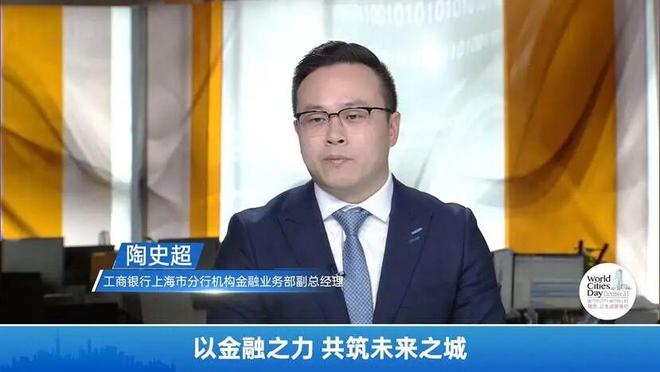
Core Viewpoint - The financial sector is becoming a crucial driving force for high-quality urban development, as highlighted during the 2025 Urban Sustainable Development Conference [1]. Group 1: Urban Development Initiatives - The Industrial and Commercial Bank of China (ICBC) Shanghai Branch is actively involved in promoting sustainable urban development through various initiatives [3]. - The bank supports digital city construction, urban renewal, and improvements in people's livelihoods, while also focusing on green finance and low-carbon innovation [3]. Group 2: Future Commitment - ICBC aims to maintain its commitment to serving the public by leveraging smarter technology, innovative products, and high-quality services [3]. - The bank envisions itself as a long-term partner in the evolution of Shanghai, collaborating with the city to create a better future [3].

以金融之力,共筑未来之城
第一财经· 2025-12-12 11:25
Group 1 - The core viewpoint of the article emphasizes the role of finance as a key driver for high-quality urban development, particularly in the context of sustainable city initiatives [1][3] - The Industrial and Commercial Bank of China (ICBC) Shanghai Branch is actively involved in various aspects of urban development, including digital city construction, urban renewal, and improvements in public welfare [3] - ICBC aims to support green finance and low-carbon innovation, contributing not only through direct funding but also by shaping the future of the city through strategic choices and social activities [3] Group 2 - Looking ahead, ICBC is committed to maintaining its foundational principle of serving the public through smarter technology, innovative products, and high-quality services [3] - The bank positions itself as a long-term partner in the evolution of Shanghai, aspiring to grow alongside the city and collaboratively create a better future [3]
老网红城市厦门的长红考题
21世纪经济报道· 2025-12-10 03:11
Core Viewpoint - Xiamen is at a critical juncture, balancing the drive to meet its 2025 GDP targets with the need to transform its "internet celebrity" status into sustainable development capabilities [1] Group 1: Talent and Population Dynamics - Xiamen's inclusive atmosphere is evident, with about half of the workforce in certain departments coming from outside the province, reflecting a systematic talent policy that includes living subsidies and housing guarantees for new talents [4][5] - The city's permanent resident population reached 5.35 million, a 0.43% increase from the previous year, with Jimei District housing over 1.1 million residents, indicating a shift in population distribution from the island's core areas to emerging urban districts [4][5] Group 2: Business Environment and Support - Xiamen is enhancing its business environment through innovative mechanisms and process reengineering, focusing on providing growth support rather than traditional management oversight [8][11] - The city has achieved over 70% in "non-face-to-face approvals," showcasing its commitment to efficient service delivery for businesses [11] Group 3: Economic Transformation Challenges - Xiamen faces structural challenges, including a reliance on external trade and a weak manufacturing base, as highlighted in the "14th Five-Year Plan" [14][15] - The plan emphasizes the need to shift from external demand-driven growth to internal motivation, proposing a "4+4+6" modern industrial system to strengthen key industries like electronics and machinery [14][15]