电动垂直起降飞行器(eVTOL)

Search documents
两款电动垂直起降飞行器上新
Ren Min Wang· 2026-02-07 01:29
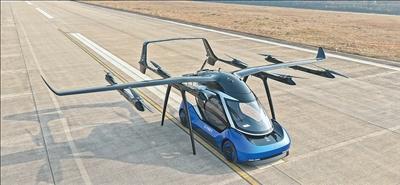
此类产品起飞重量大多集中在1.5吨至3吨,载客规模不超过6人。该飞行器将起飞重量提升至5吨,纯电 版最大航程250公里,混动版最大航程1500公里,客运版可搭载10人,货运版可实现吨级货物运输,使 低空出行和运输更具经济可行性。 航天造eVTOL。 中国航天科技集团九院供图 转换飞行是指从垂直起降转为固定翼巡航的过程。可像直升机一样垂直起飞和降落,也可如固定翼飞机 一样水平巡航,能降低能耗、延长续航里程,可用于城际短途通勤、空中物流等场景。 天际龙在飞行。 袁新宇摄(影像中国) 本报北京2月6日电(记者刘诗瑶)由中国航天科技集团九院联合重庆多方力量研制的首款航天造电动垂直 起降飞行器(eVTOL)6日在重庆永川大安机场首飞成功。 该飞行器采用分体式设计,由机翼、座舱、底盘组成飞行体与陆行体两种形态,飞行体可承载两名乘客 在3000米以下低空以150公里时速飞行,陆行体基于全电智能线控底盘,可实现超300公里续航。依托自 主研发的自动对准、分离耦合机构,各部分连接与分离可由程序自主控制。定制化座舱及多类型底盘、 机翼模块,大幅提升了场景适配性与使用灵活性。 该飞行器是面向适航标准设计研制的多功能低空装备,可实现 ...

新股消息 | 臻驱科技递表港交所 电机控制器装机量在中国排名第八
智通财经网· 2026-01-02 12:54
Company Overview - The company, Zhenqu Technology (Shanghai) Co., Ltd., is a technology-driven supplier of electric control solutions primarily targeting the new energy vehicle sector. It focuses on converting electrical energy into controllable power output for precise motor or power system regulation, ensuring efficient and reliable vehicle performance [3] - The company has developed a layered solution portfolio that includes power modules, motor controllers, and power bricks. Unlike traditional suppliers, its integrated solutions allow customers to select based on vehicle design, cost targets, and engineering requirements [3] - The company pioneered the concept of power bricks and achieved mass production of main drive power bricks in 2021, establishing a future development direction for the industry. This architecture simplifies assembly processes, enhances platform reusability, and shortens development cycles [3] Market Position - As of September 30, 2025, the company has secured 50 designations from 13 major manufacturers, indicating that its solutions will be integrated into multiple vehicle models throughout their lifecycle. Its solutions have been applied to 82 vehicle models, with 54 already in mass production [4] - The company ranks first in the main drive power brick market and third in the dual motor controller market as of September 30, 2025. It also holds significant positions in the electric motor controller and power module markets [4] Financial Performance - The company's revenue for the fiscal years 2023, 2024, and the nine months ending September 30, 2025, is approximately RMB 160 million, RMB 1.16 billion, and RMB 1.22 billion, respectively [5][7] - The company reported losses of approximately RMB 237 million, RMB 335 million, and RMB 257 million for the same periods [5] - The gross margins for the fiscal years 2024 and the nine months ending September 30, 2025, are 1.3% and 3.4%, respectively [6] Industry Overview - The electric control market is rapidly expanding, with a projected growth from RMB 383.1 billion in 2020 to RMB 446.3 billion in 2024, reflecting a compound annual growth rate (CAGR) of approximately 3.9%. It is expected to continue growing at a CAGR of about 5.3% from 2025 to 2030, reaching around RMB 608.4 billion [8] - The motor controller market is anticipated to grow from RMB 114.7 billion in 2020 to RMB 195.4 billion in 2024, driven by the rapid increase in new energy vehicle sales and the penetration of electrified powertrains, with a CAGR of 14.2% [8] - The global power module market is expected to grow from RMB 29.4 billion in 2020 to RMB 68.3 billion in 2024, with a CAGR of approximately 23.5%, and is projected to continue expanding at a CAGR of about 8.9% from 2025 to 2030 [10]
出租车起飞待何时
Jing Ji Ri Bao· 2025-11-16 01:54
Core Viewpoint - The UK has launched a six-month air traffic corridor project between Oxford and Cambridge to test the feasibility of electric air taxis, marking a significant step towards commercial air taxi operations [1] Group 1: Historical Context - The concept of flying cars has been envisioned since 1865, with notable references in literature and media [1] - Early attempts at flying cars, such as those by Glenn Curtiss in 1917, faced technological limitations, resulting in only short-distance flights [2] Group 2: Technological Advancements - The introduction of electric Vertical Take-Off and Landing (eVTOL) aircraft in 2007 by NASA marked a turning point for urban air mobility, allowing for short-distance air travel [2] - Volocopter, founded in 2007, has conducted over 2,000 test flights of its VoloCity eVTOL and is in the certification phase [3] Group 3: Industry Developments - Joby Aviation, a pioneer in the eVTOL space, received its air carrier certificate in 2022 and successfully completed a public airport flight [4] - Vertical Aerospace's VX4 eVTOL also completed its first public flight test in May 2023 [4] Group 4: Market Potential - eVTOL air taxis can avoid ground traffic congestion, operate at cruising speeds of 150 to 250 km/h, and have lower operational costs compared to traditional helicopters [5][6] - The International Civil Aviation Organization has praised eVTOLs for their potential in green transportation and urban air mobility [6] Group 5: Investment and Partnerships - Major airlines like American Airlines, Delta Air Lines, and United Airlines are investing heavily in eVTOL technology, with American Airlines investing $25 million in Vertical Aerospace [6] - Virgin Atlantic and Korean Air have also formed partnerships with Joby Aviation and Archer Aviation, respectively, to promote air taxi services [7] Group 6: Regulatory Challenges - The industry faces significant regulatory hurdles, particularly long certification processes that can strain financial resources [7] - Germany's Volocopter has encountered funding difficulties due to delays in obtaining airworthiness certification [7] Group 7: Global Perspectives - China's Civil Aviation Administration has been recognized for its innovative regulatory approach, significantly reducing the certification timeline for eVTOLs [8] - Experts suggest that other countries should adopt similar regulatory frameworks to accelerate the development and commercialization of eVTOL technology [8]