电动汽车电动化

Search documents
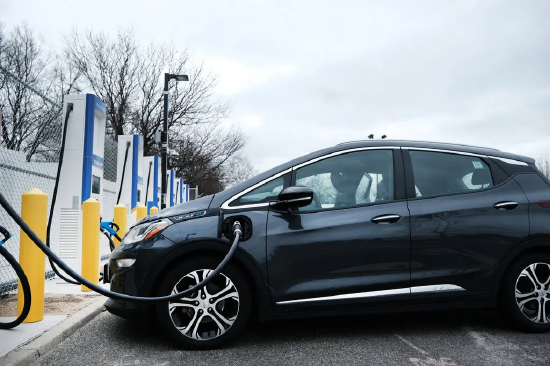
优步将推出激励措施,推动电动汽车充电桩建设
Xin Lang Cai Jing· 2026-02-18 16:21
Core Viewpoint - Uber announced an incentive policy to encourage the construction of electric vehicle charging stations in the communities where its drivers live and work, aiming to boost the electric vehicle market impacted by recent U.S. policy changes [3][4]. Group 1: Incentive Policy and Impact - Uber will ensure that charging stations installed in driver communities meet minimum usage hours, helping operators recover their investments more quickly [3][4]. - Despite a significant drop in electric vehicle sales due to policy changes, the growth rate of charging station installations reached a historical high last year, partly due to the increasing number of electric vehicle drivers among Uber's 13,000 drivers in New York City [3][4]. - Uber plans to promote the construction of 1,000 charging stations to alleviate the issue of charging accessibility for drivers who cannot charge at home [4][16]. Group 2: Collaboration and Infrastructure Development - Uber is collaborating with European charging company Ionity, which will utilize Uber's data to determine optimal locations for new charging stations [5][16]. - The company announced a $100 million investment to build charging hubs for autonomous electric vehicles, which may pose a threat to Uber's business model [6][16]. - Uber's partnership with EVgo indicates that ride-hailing drivers account for about 25% of the charging volume, up from 10% in 2021, highlighting the growing trend of electrification in ride-hailing services [8][18]. Group 3: Driver Support and Market Trends - Uber provides a $4,000 subsidy for drivers purchasing electric vehicles, contingent on completing at least 100 rides [19]. - A survey by Uber indicates that charging issues are a major barrier to purchasing electric vehicles, despite the lower costs of used electric vehicles compared to gasoline counterparts [18][19]. - The company aims to address the charging needs of renters and urban residents who rely on public charging stations, which are often overcrowded [4][16].


电网都没铺好!非洲电动车却找到野路子
汽车商业评论· 2026-01-19 23:07
Core Viewpoint - The research indicates that electric vehicles (EVs) in Africa could achieve total cost of ownership comparable to that of fuel vehicles by 2040, particularly in off-grid solar and fixed storage charging systems, bypassing traditional grid limitations [3][8][10]. Group 1: Market Dynamics - The African vehicle fleet is expected to double by 2050, with growth rates surpassing other continents [3]. - In 2024, new car sales in Africa are projected to be around 1.05 million units, with South Africa and Morocco accounting for significant shares [5]. - The reliance on imports in the African automotive market suggests that the electrification process may begin with taxis, two-wheelers, and buses rather than waiting for public charging networks to be established [5][10]. Group 2: Technological Advancements - Off-grid solar solutions are seen as a key breakthrough, providing a viable alternative to traditional grid systems [6][8]. - The research conducted by ETH Zurich and partners modeled over 2,000 locations across 52 countries, demonstrating that off-grid solar and battery systems can be economically viable [8][9]. - A compact solar system can meet the daily charging needs of a small electric vehicle that drives approximately 50 kilometers per day, making the charging cost a minor part of total usage costs [8]. Group 3: Economic Considerations - The study emphasizes that financing is a major barrier to EV adoption in Africa, with high loan interest rates affecting the initial purchase costs of electric vehicles [9][10]. - Solutions such as government guarantees, innovative financing models, and international support are necessary to facilitate the transition to electric vehicles [10][18]. - The potential for local economic opportunities, such as domestic vehicle assembly and new service industries, is highlighted as a benefit of EV development in Africa [10]. Group 4: Current Trends and Future Outlook - Electric two-wheelers and electric buses are currently more economically viable, with operational models like battery swapping gaining traction in cities like Nairobi [12][14]. - The introduction of electric buses in urban areas is seen as a scalable entry point for electrification, with significant orders already placed in cities like Nairobi and Kigali [12][13]. - The African market is attracting more players, including Chinese automakers, who view it as a potential growth market for hybrid and electric vehicles [17]. Group 5: Policy and Fiscal Implications - The transition to electric vehicles poses fiscal challenges for governments, particularly in low-income countries where fuel tax revenues are significant [18]. - The need for tax reform and international support is emphasized to mitigate potential fiscal gaps arising from reduced fuel tax income as EV adoption increases [18].