
电动车供应链

Search documents
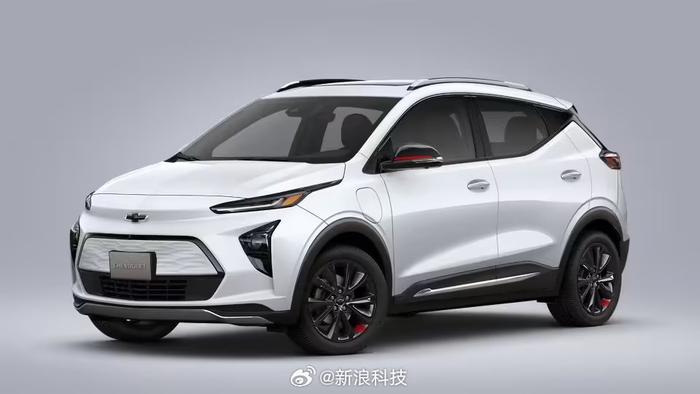
通用汽车将采购宁德时代电池用于雪佛兰Bolt
Xin Lang Ke Ji· 2025-08-08 01:08
Core Insights - General Motors plans to source batteries from China's CATL for its second-generation Chevrolet Bolt electric vehicle despite tariff impacts, filling supply chain gaps while contrasting with its domestic battery manufacturing efforts [1] - The transition period for sourcing from CATL is expected to last approximately two years until General Motors can produce lower-cost batteries in partnership with LG Energy Solution in the U.S. [1] - The new Bolt is set to begin production at the Kansas City Fairfax plant by the end of this year and is positioned as General Motors' most affordable electric vehicle, with a target market launch in 2026 [1] Summary by Sections Battery Sourcing - General Motors will temporarily procure batteries from CATL to support the production of the new Chevrolet Bolt, which is aimed at maintaining competitiveness in the electric vehicle market [1] - The company has indicated that this measure is a stepping stone towards its own production of lithium iron phosphate batteries [1] Vehicle Pricing and Market Position - The new Chevrolet Bolt is priced around $30,000 (approximately 216,000 RMB), with potential subsidies reducing the price to just over $20,000, although these subsidies are expected to be eliminated before the vehicle's launch [2] - Currently, General Motors has 12 electric vehicle models on sale, all equipped with batteries manufactured in the U.S., ranging from the Chevrolet Equinox EV at $35,000 (approximately 252,000 RMB) to the Cadillac Celestiq at $340,000 (approximately 2,443,000 RMB) [1]



小米YU7上市在即,核心产业链梳理
2025-05-19 15:20
Summary of Xiaomi's Automotive Supply Chain and Market Outlook Industry Overview - Xiaomi is set to deliver 450,000 vehicles in 2025, with projections of 750,000 to 800,000 vehicles in 2026, creating growth opportunities for supply chain companies [1][3] - The YU7 model is expected to account for 300,000 units, while other models like Ultra will contribute an additional 150,000 units [1] Key Points on Supply Chain Companies Wuxi Zhenhua - Wuxi Zhenhua is a major supplier of stamping parts for Xiaomi, with an expected revenue contribution from Xiaomi business reaching nearly 20% in 2025, totaling 500 million yuan [5] - The company reported a first-quarter performance of 95 million yuan, with second-quarter expectations exceeding 100 million yuan [5] Fute Technology - Fute Technology holds over 10% market share in the three-electric system sector, with projected total revenue of 2.6 billion yuan in 2025, where Xiaomi's business will account for 23% [6] - Future contributions from Xiaomi could approach half of Fute's total revenue with the launch of a third vehicle [6] Top Group - Top Group's business with Xiaomi has increased to 13-14%, with expectations to meet Xiaomi's needs better as the third vehicle and overseas expansion occur [7] - By 2026, Xiaomi's business could match that of Seres, reaching 30-40% of Top Group's total customer base [7] Jingdian Technology - Jingdian Technology exclusively supplies differential assemblies for Xiaomi vehicles, valued at approximately 200 yuan per vehicle [9] - The deep collaboration with Xiaomi has allowed Jingdian to expand its other business areas, enhancing its core competitiveness [9] Huayang and Desay - Huayang upgraded its automotive products from 1,000 yuan to over 3,000 yuan per unit, with expected supply ratios of 4-5% in 2025 and nearly 10% in 2026 [4][11] - Desay is anticipated to become a significant customer for Xiaomi, with potential revenue contributions of 20% in 2025, positioning Xiaomi as Desay's second-largest customer [12] Additional Insights - The supply chain for Xiaomi's electric vehicles includes various companies such as Yinlun, Bolong Precision, and Songyuan, with new suppliers like Huada Technology emerging [10] - The third range-extended electric vehicle is expected to bring significant supply chain increments, indicating strong continuity but potential fluctuations in unit value [10] - Smaller suppliers like Huguang and Zeekr play a role in providing specific components, enhancing the overall supply chain through deep collaboration [8] Conclusion - Xiaomi's automotive ambitions are set to significantly impact its supply chain partners, with various companies poised to benefit from increased demand and collaboration as new models are introduced and production ramps up [1][3][6]