电影工业

Search documents
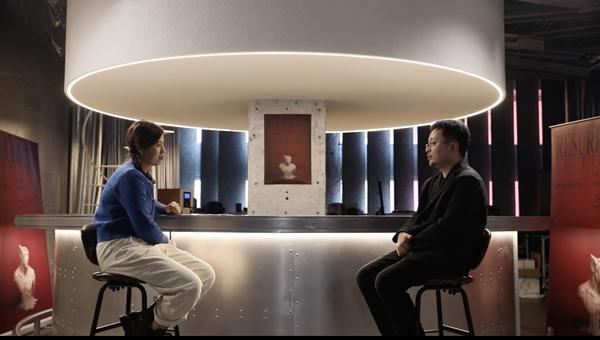
《南京照相馆》导演人民日报撰文谈影视行业AI应用
Xin Lang Cai Jing· 2026-01-02 06:07
Group 1 - The film industry is increasingly focusing on themes of "peace," as seen in movies like "Nanjing Photo Studio" and "The Place of Arms," which utilize the camera as a significant narrative tool [1][2] - The film "Nanjing Photo Studio" has been screened internationally, allowing audiences worldwide to learn about an important historical event, highlighting the responsibility of cinema beyond mere storytelling [1] - The emergence of new technologies, particularly AI, is transforming the film industry, raising concerns about the authenticity of AI-generated content and the need for vigilance in discerning truth [2] Group 2 - The current generation of filmmakers faces challenges from new media, necessitating that films not only captivate audiences visually but also resonate emotionally [2] - Despite the difficulties in surpassing the production capabilities of previous generations, there remains significant potential for expanding the thematic depth of film works [2] - Future projects, including a television series set for 2026, are expected to incorporate AI on a larger scale, yet the essence of art is believed to lie in emotional resonance, which AI cannot replicate [2]
毕赣:不害怕成为一名小众的艺术电影导演
Zhong Guo Qing Nian Bao· 2025-12-17 03:34
Core Viewpoint - The film industry in China has undergone significant changes over the past decade, with the micro-short drama market expected to surpass the domestic film market in 2024. Despite this, director Bi Gan remains committed to creating niche art films, emphasizing his passion for filmmaking rather than commercial success [1][13]. Group 1: Bi Gan's Background and Artistic Journey - Bi Gan was born in 1989 in Kaili, Guizhou, and developed a unique storytelling perspective from a young age, influenced by his strict yet supportive grandmother and the diverse conversations in his mother's barbershop [2]. - He initially pursued a television directing degree in Taiyuan, where he began exploring existential themes in his films, distinguishing himself from peers who focused on campus life [3][7]. - His early exposure to philosophy and literature in a local bookstore shaped his artistic vision, leading him to view art as a means to explore profound questions [3][5]. Group 2: Career Development and Challenges - Bi Gan's first film, "Old Tiger," was made with limited resources and faced numerous technical challenges, leading him to question his suitability for filmmaking [7][8]. - After a brief stint in a wedding studio, he returned to filmmaking with "Kaili Blues," which gained recognition and attracted investment, marking the beginning of his career as a director [8][10]. - Despite initial doubts and external pressures to pursue a stable job, Bi Gan chose to follow his instinct for filmmaking, recognizing the importance of personal choice in his artistic journey [9][12]. Group 3: Recent Work and Artistic Philosophy - Bi Gan's latest film, "Wild Times," reflects his observations of contemporary life and the disconnect between individuals and the world, structured through sensory experiences rather than linear storytelling [12][13]. - He acknowledges the risks of collaborating with commercial actors but believes that a talented actor can enhance a project, maintaining that his creative logic remains unchanged despite industry shifts [13][14]. - Bi Gan emphasizes that the essence of filmmaking lies in conveying genuine emotions, regardless of the complexities involved in the process [14].