电影教育

Search documents
东西问丨扈强:电影如何以光影连接全球?
Xin Lang Cai Jing· 2025-12-27 12:29
Core Viewpoint - The interview with Hu Qiang, Vice President of Beijing Film Academy, emphasizes the role of film as a medium for cultural exchange and the development of Chinese cinema in the context of global dialogue and technological advancements [3][4]. Group 1: Film as a Cultural Connector - Film transcends language and borders due to its intuitive artistic appeal, emotional connections, and cultural openness, making it an effective medium for cultural exchange [4]. - Chinese films like "Crouching Tiger, Hidden Dragon" and "Ne Zha" showcase the beauty of Chinese culture and mythology, while also addressing universal themes that resonate globally [4]. - The approach to cultural exchange is not one-sided; it involves mutual learning and sharing, as seen in the international collaborations at Beijing Film Academy [4][6]. Group 2: Talent Development at Beijing Film Academy - The history of film education in China began with the establishment of the predecessor of Beijing Film Academy in 1950, marking the start of formal film education [6]. - The Academy focuses on both creative and theoretical aspects of filmmaking, integrating practical experiences with academic learning [6][8]. - Recent initiatives include the establishment of new colleges focusing on AI and digital media to adapt to technological advancements in the film industry [7]. Group 3: Globalization of Chinese Cinema - The journey of Chinese cinema's globalization reflects a growing cultural confidence, evolving from early explorations to a more diverse and expansive phase post-reform [12][13]. - Since 2010, the focus has shifted from merely exporting films to a multidimensional approach that includes talent, technology, and cultural exchange [13]. - Future plans include creating an international talent cultivation alliance and supporting international co-productions, particularly in genres like sci-fi and documentaries [13].


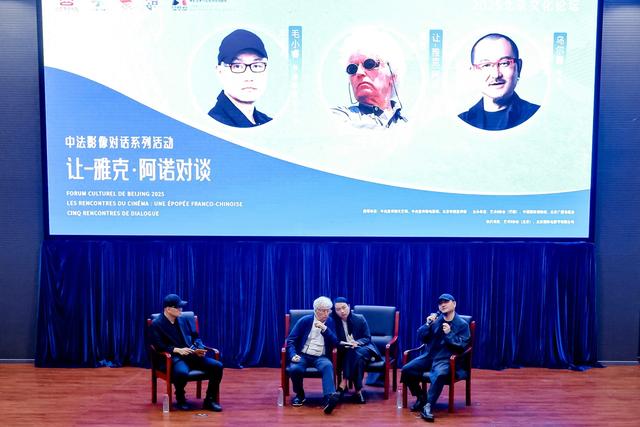
中法导演举行跨文化对话,让-雅克·阿诺:我合作过最好的同事就是中国同事
Bei Jing Ri Bao Ke Hu Duan· 2025-09-24 04:28
Core Insights - The event "Wind Moves, Shadows Change - Sino-French Film Dialogue" featured renowned French director Jean-Jacques Annaud and Chinese director Wu Ershan discussing cross-cultural creation, industry collaboration, and nurturing new generations of filmmakers [1][3][9] Group 1: Cross-Cultural Narrative - Jean-Jacques Annaud emphasized that the essence of film transcends language, relying on visual storytelling to convey emotions and ideas that resonate universally [3][5] - Wu Ershan agreed, stating that the common emotional experiences among people outweigh their differences, highlighting the emotional needs of audiences worldwide [3][5] Group 2: Sino-French Film Industry Collaboration - Annaud cited "Wolf Totem" as a successful example of Sino-French collaboration, noting the shared cultural heritage and pride in identity among both nations [5][6] - Wu Ershan shared insights from the production of "Fengshen," which involved a diverse team from 21 countries, enhancing the creative process through varied perspectives [6][8] - Both directors expressed optimism for future collaborations, with Annaud mentioning dedicated film festivals in France for Chinese creators [6][8] Group 3: Nurturing New Generations of Filmmakers - Annaud and Wu Ershan, both experienced in advertising before directing, highlighted the importance of practical experience in film education [8][9] - The French film system, particularly the support from the CNC, serves as a model for nurturing young filmmakers in China, balancing artistic freedom with industry development [8] - Both directors encouraged young filmmakers to practice and collaborate, emphasizing the need for mutual respect and love within creative partnerships [8][9]