中国电影出海

Search documents
在柏林飞雪中遇见“中国电影之夜”
Xin Lang Cai Jing· 2026-02-14 21:57
Core Viewpoint - The Berlin International Film Festival highlights the increasing global presence and diversity of Chinese cinema, showcasing films that resonate with international audiences beyond traditional genres [1][2]. Group 1: Event Overview - The "Chinese Film Night," hosted by the Shanghai International Film Festival, gathered over 200 guests, including representatives from China and Germany, to discuss the latest developments in the Chinese film industry [1]. - Several Chinese films, including "Shanghai Daughter," "Cold Night Lantern," and "Birthday," were showcased at the festival, reflecting the growing trend of Chinese films going global [1]. Group 2: Diversity in Chinese Cinema - The concept of "diversity" in Chinese cinema is evident not only in genres but also in narrative styles, as seen in the film "Shanghai Daughter," which employs a more perceptive storytelling approach [2]. - The film's universal themes of familial love and female solidarity allow it to connect with audiences from different cultural backgrounds, transcending language barriers [2]. Group 3: Role of Film Festivals - The Shanghai International Film Festival serves as a crucial platform for creators to reach international audiences, facilitating collaboration and enhancing the quality of their works [3]. - The festival's presence in Berlin fosters better communication between Chinese and foreign filmmakers, promoting the global exchange of cinematic stories [3]. - China, now the world's second-largest film market, aims to share its narratives while welcoming international films, emphasizing the importance of openness and cooperation [3].

中国电影“出海”——塑造中国风格 展现中国气派
Ren Min Ri Bao· 2026-01-21 00:01
Core Insights - The Chinese film industry has made significant strides in international markets, with the film "Ne Zha" achieving an overseas box office of $69 million, marking a new high for domestic films [1] - In 2025, the total overseas box office for Chinese films exceeded 1 billion RMB, showing an increase from the previous year [1] - The trend of Chinese films "going global" is becoming more systematic, with 15 out of the top 20 domestic films released overseas [1] Group 1: Trends in Chinese Film Going Global - The production side is seeing a rise in co-productions and international collaborations, exemplified by the "Meg" series, which utilizes a "Chinese control + international resources" model [4] - Chinese filmmakers are expanding their narratives beyond local contexts, allowing Chinese characters to resonate with global audiences [4] - The distribution of Chinese films is evolving from festival screenings to a more commercial and systematic approach, with simultaneous global releases and a dual distribution model of theaters and streaming [4] Group 2: Technological Advancements - China leads in the global LED cinema screen market, with 13 out of 22 certified manufacturers and over 200 installations worldwide [5] - Chinese virtual filming technology is being adopted in North America and Europe, with several companies establishing virtual studios abroad [5] - Chinese film technology is gaining recognition at major international film awards, with domestic cameras and sound technologies being utilized in award-winning films [5] Group 3: Systematic Development and Challenges - The "mode going global" phase reflects a comprehensive management system that encourages innovation and learning, supported by a robust market and public service framework [6] - The essence of "mode going global" is rooted in China's institutional advantages and reforms, which provide a stable policy environment for film development [9] - Challenges include language and cultural barriers, a weak marketing system for overseas films, and the need for skilled professionals familiar with international regulations [11] Group 4: Future Vision - By 2035, China aims to become a major player in the global film industry, not just in market share but also in production capabilities and technological advancements [14] - The goal is to create a comprehensive international standard system in areas like LED optics and sound, positioning China as a key influencer in reshaping the global film landscape [15] - The transition from being a "learner" to a "contributor" and "leader" in the global film industry is underway, with a focus on mutual cultural exchange and interaction [15]
中国电影出海!塑造中国风格,展现中国气派
Xin Lang Cai Jing· 2026-01-17 23:55
Core Insights - The article highlights the significant achievements of Chinese cinema in expanding its presence internationally, with notable box office successes and a systematic approach to "going global" [1][2]. Group 1: Box Office Performance - The film "Ne Zha" achieved an overseas box office of $69 million, setting a new record for Chinese films [1]. - The total overseas box office for Chinese films exceeded 1 billion RMB in the past year, showing an increase compared to the previous year [1]. - Among the top 20 domestic films, 15 were released overseas, indicating a growing trend in international distribution [1]. Group 2: Trends in International Collaboration - Co-productions and international collaborations are becoming key trends, exemplified by the "Meg" series, which utilizes a "Chinese control + international resources" model [2]. - New-generation Chinese directors are expanding their narratives beyond traditional contexts, allowing Chinese characters to resonate with global audiences [2]. - The distribution of Chinese films is evolving from festival screenings to a more commercial and systematic approach, including simultaneous global releases and a dual distribution model of theaters and streaming [2]. Group 3: Technological Advancements - China leads in the global LED cinema screen market, with 13 out of 22 certified manufacturers and over 200 installations worldwide [3]. - Chinese companies are establishing virtual filming studios in North America and Europe, showcasing advancements in virtual production technology [3]. - Chinese sound technology has reached international standards, with immersive sound systems being applied in award-winning films [3]. Group 4: Systematic Development - The "mode going out" phase reflects a comprehensive management system, a robust market framework, and a focus on innovation in the Chinese film industry [4]. - The transition from a "learner" to a "leader" in the global film industry is marked by China's unique film management and cultural governance experiences [4]. Group 5: Challenges Ahead - Language and cultural barriers remain significant challenges for Chinese filmmakers, necessitating a balance between cultural identity and universal appeal [6]. - The marketing and promotion systems for overseas markets are still underdeveloped, which can hinder the success of high-quality films [6]. - The need for professionals familiar with international laws and market dynamics highlights gaps in the talent pool necessary for successful international collaborations [6]. Group 6: Future Outlook - By 2035, China aims to become a major player in the global film industry, influencing the international film ecosystem and expanding its market share [8]. - China is expected to establish a complete international standard system in areas like LED optics and sound, contributing to global film technology [9]. - The transition from being a "learner" to a "contributor" and "leader" in the global film landscape is anticipated, with Chinese films gaining more attention in mainstream international markets [10].
塑造中国风格 展现中国气派(人文对话)
Ren Min Ri Bao· 2026-01-17 23:16
Core Viewpoint - The article discusses the significant progress and trends in the international expansion of Chinese cinema, highlighting the systematic approach and the increasing global presence of Chinese films, with a focus on both content and technology [6][10]. Group 1: Achievements in International Expansion - In 2025, Chinese films achieved remarkable overseas box office success, with "Ne Zha" grossing $69 million, marking a new high for domestic films [6]. - The total overseas box office for Chinese films exceeded 1 billion RMB, showing an increase from the previous year [6]. - 15 out of the top 20 domestic films were released internationally, indicating a growing trend of Chinese films "going global" [6]. Group 2: Trends in Film Production and Distribution - Co-productions and international collaborations are becoming key trends, exemplified by the "Meg" series, which utilizes a "Chinese control + international resources" model [7]. - The narrative scope of new-generation Chinese directors has expanded, allowing for stories that resonate with global audiences [7]. - The distribution of Chinese films has evolved from festival screenings to a more commercial and systematic approach, including simultaneous global releases and a dual distribution model of theaters and streaming [7]. Group 3: Technological Advancements - China leads in the global LED cinema screen market, with 13 out of 22 certified manufacturers and over 200 installations worldwide [8]. - Chinese virtual filming technology is being adopted in North America and Europe, with several companies establishing virtual studios abroad [8]. - Chinese sound technology has reached international standards, with immersive sound systems being applied in award-winning films [8]. Group 4: Systematic Approach to Globalization - The "mode of going global" reflects a comprehensive management system, a robust market framework, and a public service system that supports the film industry [9]. - The transition from "cultural output" to "industry participation" signifies a shift in China's role in the global film landscape [9]. Group 5: Challenges and Future Outlook - Language and cultural barriers remain significant challenges for Chinese films in international markets [12]. - The need for a more robust marketing and promotion system is critical for the success of high-quality films abroad [12]. - By 2035, China aims to become a major player in the global film industry, with expectations of significant contributions to international projects and the establishment of global standards in film technology [14][15].


中国电影“出海”—— 塑造中国风格 展现中国气派(人文对话)
Ren Min Ri Bao· 2026-01-17 22:23
Core Insights - Chinese films have achieved significant success in international markets, with "Ne Zha" grossing $69 million overseas, marking a new high for domestic films [1] - The total overseas box office for Chinese films exceeded 1 billion RMB in the past year, indicating growth in international reach [1] - The trend of Chinese films "going global" is becoming systematic, with a focus on content, technology, management, and market mechanisms [1] Group 1: Trends in Chinese Film Industry - Co-productions and international collaborations are becoming key trends, exemplified by the "Meg" series, which utilizes a "Chinese control + international resources" model [2] - New-generation Chinese directors are expanding their narratives beyond local contexts, creating emotional connections with global audiences [2] - The distribution of Chinese films is evolving from festival screenings to a commercialized and systematic approach, with simultaneous global releases and a dual distribution model of theaters and streaming [2] Group 2: Technological Advancements - China leads in LED cinema technology, with 13 out of 22 globally certified manufacturers and over 200 LED screens installed worldwide [3] - Chinese virtual filming technology is being adopted in North America and Europe, with several companies establishing virtual studios abroad [3] - Chinese sound technology has reached international standards, with immersive sound systems entering demonstration applications [3] Group 3: Systematic Development Model - The "mode going out" phase reflects a comprehensive management system that encourages innovation and learning, supported by a robust market and public service framework [4] - The essence of this model is to transition from a learner to a leader in the global film industry, driven by institutional advantages and reforms [4] Group 4: Challenges and Opportunities - Language and cultural barriers remain significant challenges, necessitating a balance between cultural identity and universal expression [6] - The marketing and promotion systems for overseas markets are still underdeveloped, which can hinder the success of high-quality films [6] - The need for skilled professionals familiar with international laws and market dynamics is critical for successful co-productions [6] Group 5: Future Outlook - By 2035, China aims to become a major player in the global film industry, expanding its market share and audience base [8] - China is expected to lead in next-generation film technologies, establishing "Chinese standards" in the global market [8] - The film industry is transitioning from a "learner" to a "contributor" and "leader," with a focus on mutual interaction and cultural exchange [9]
东西问丨扈强:电影如何以光影连接全球?
Xin Lang Cai Jing· 2025-12-27 12:29
Core Viewpoint - The interview with Hu Qiang, Vice President of Beijing Film Academy, emphasizes the role of film as a medium for cultural exchange and the development of Chinese cinema in the context of global dialogue and technological advancements [3][4]. Group 1: Film as a Cultural Connector - Film transcends language and borders due to its intuitive artistic appeal, emotional connections, and cultural openness, making it an effective medium for cultural exchange [4]. - Chinese films like "Crouching Tiger, Hidden Dragon" and "Ne Zha" showcase the beauty of Chinese culture and mythology, while also addressing universal themes that resonate globally [4]. - The approach to cultural exchange is not one-sided; it involves mutual learning and sharing, as seen in the international collaborations at Beijing Film Academy [4][6]. Group 2: Talent Development at Beijing Film Academy - The history of film education in China began with the establishment of the predecessor of Beijing Film Academy in 1950, marking the start of formal film education [6]. - The Academy focuses on both creative and theoretical aspects of filmmaking, integrating practical experiences with academic learning [6][8]. - Recent initiatives include the establishment of new colleges focusing on AI and digital media to adapt to technological advancements in the film industry [7]. Group 3: Globalization of Chinese Cinema - The journey of Chinese cinema's globalization reflects a growing cultural confidence, evolving from early explorations to a more diverse and expansive phase post-reform [12][13]. - Since 2010, the focus has shifted from merely exporting films to a multidimensional approach that includes talent, technology, and cultural exchange [13]. - Future plans include creating an international talent cultivation alliance and supporting international co-productions, particularly in genres like sci-fi and documentaries [13].

中国电影出海,到底还要过几道坎?
3 6 Ke· 2025-12-22 09:20
Core Insights - The article discusses the overseas performance of Chinese films, particularly focusing on "Ne Zha 2," which has achieved significant milestones in international box office revenue [2][5]. Group 1: Box Office Performance - "Ne Zha 2" has generated over $50 million in overseas box office, approximately 400 million RMB, accounting for about 2.5% of its global box office [2]. - The highest-grossing Chinese film overseas is "Crouching Tiger, Hidden Dragon," which earned $213 million, followed by "Hero" and "House of Flying Daggers" with $149 million and $80 million, respectively [5][8]. - Most of the top-performing Chinese films in overseas markets were released between 2000 and 2010, indicating a historical trend in the industry's international success [8]. Group 2: Cultural and Market Challenges - The article highlights that despite the growth of Chinese films in international markets, there is still significant room for improvement [5][21]. - Cultural barriers are identified as a primary obstacle for Chinese films in gaining traction overseas, as many cultural references may not resonate with international audiences [23][31]. - The lack of robust infrastructure for film distribution and marketing in international markets is a critical issue, limiting the potential success of Chinese films abroad [34][39]. Group 3: Industry Infrastructure - The article emphasizes the importance of a well-established distribution network for the success of films in international markets, noting that only 10%-20% of films produced globally make it to theaters [41]. - The distribution capabilities of major studios like Disney are highlighted as a key factor in their global success, contrasting with the limited resources available to Chinese films [42]. - The financing and risk management mechanisms in the Chinese film industry are underdeveloped, making it difficult for filmmakers to venture into international markets [44][48]. Group 4: Future Prospects - The article calls for a more ambitious approach from the Chinese film industry to enhance its global presence, suggesting that the production of high-quality films comparable to international standards is essential [50][60]. - It stresses the need for the industry to focus on internal development and quality improvement to be prepared for future opportunities in international markets [60].

《日掛中天》问鼎国际之路:总制片人马双揭秘广东影视IP在地化与全球化
Nan Fang Du Shi Bao· 2025-11-13 14:38
Core Insights - The film "Day Hanging in the Sky" has officially premiered in mainland China, gaining significant attention after winning the Best Actress award at the Venice International Film Festival [1] - The film represents a successful example of Guangdong's high-quality development in the film industry, showcasing the region's robust support for cultural industries [1][11] Company Development - The film was produced by Guangzhou Mint Candy Film and Television Culture Co., Ltd., which reflects the company's commitment to creating impactful cinematic works [1] - The general manager of Mint Candy Film, Ma Shuang, emphasizes the sense of security and support received in Guangdong, which has fostered a conducive environment for creative projects [1][3] Industry Context - The Guangdong cultural industry has maintained the largest scale in the country for 20 consecutive years, with recent policies aimed at promoting high-quality development in the film sector [5][11] - The new policy package introduced in May 2023 prioritizes the film industry among six key areas, providing substantial support for project initiation, script development, production, and international distribution [5][6] Creative Process - The film's production benefited from a collaborative atmosphere between government and enterprises, with local authorities actively participating in project discussions and providing resources [4][6] - The film was shot in various locations in Guangdong, which not only matched the narrative needs but also added emotional depth through the region's unique cultural characteristics [6] Future Outlook - The film industry is transitioning from scale expansion to quality competition, presenting both challenges and opportunities for creators [8] - There is a need for improved talent cultivation in the industry, with suggestions for closer ties between educational institutions and practical industry experience [8][9] - The company aims to continue its focus on content creation while contributing to the high-quality development of Guangdong's cultural industry [9][10]
国产电影海外票房破10亿元 “中国故事”走向全球
Zheng Quan Shi Bao· 2025-10-30 22:09
Core Insights - The trend of Chinese films being released overseas is becoming a new norm in the industry, with 9 out of the top 10 domestic films this year having international screenings, and 15 out of the top 20 films also achieving overseas releases [1] - The overseas box office for Chinese films has significantly increased, surpassing 1 billion yuan (approximately 140 million USD) this year, indicating a shift from optional to essential for the domestic film industry [3][8] Group 1: Overseas Expansion - The film "Fengshen Part II: War of West Qi" is being released simultaneously in over 20 countries during the 2025 Spring Festival, showcasing the growing international reach of Chinese cinema [2] - Beijing Culture, the main producer of "Fengshen Part II," has been proactive in exploring overseas markets, having previously released "Fengshen Part I" in multiple countries and engaging with audiences directly [2][6] - The overseas box office for "Fengshen Part II" has exceeded 8 million USD, with significant contributions from markets like Malaysia [3] Group 2: Technological and Narrative Advancements - The success of films like "Nezha 2" is attributed to advancements in storytelling and production technology, making them more relatable to international audiences [4][5] - Innovations such as the "dynamic ink wash rendering engine" in "Nezha 2" enhance the visual appeal and competitiveness of Chinese animated films [5] - The industrialization of Chinese animation has improved production quality and scale, allowing for high-quality outputs that can compete globally [5] Group 3: Marketing and Distribution Strategies - Effective marketing strategies, including localized promotion and partnerships with international distribution companies, have been crucial for reaching global audiences [6][8] - "Fengshen Part II" has been translated into over 15 languages to enhance understanding and viewing experience for international audiences [6] - The use of local distribution teams has allowed for tailored strategies that resonate with specific audience demographics in various countries [6] Group 4: Future Opportunities - The increasing success of Chinese films overseas presents new market opportunities, especially as domestic growth slows [8] - The diversification of genres in films being released internationally, from mythology to science fiction, reflects a broader appeal and potential for growth in overseas markets [8] - The "Go Global" strategy aligns with national goals to enhance the international influence of Chinese cinema, as outlined in the "14th Five-Year Plan" for film development [9]


“圈粉”“本土化”“量质提升”……借助关键词透视中国电影出海多点开花劲头足
Yang Shi Wang· 2025-10-22 06:13
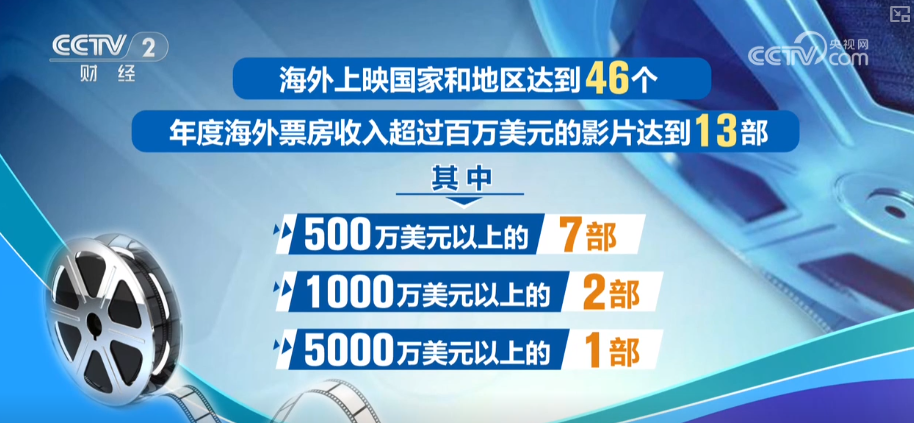
Core Insights - The Chinese film market has seen significant growth since 2025, with overseas box office revenue reaching 1 billion RMB, surpassing the total for 2024 [1] - A total of 46 countries and regions have screened Chinese films in 2025, with 13 films earning over 1 million USD in overseas box office [2] Group 1: Box Office Performance - "Ne Zha" has achieved overseas box office revenue of 69 million USD, making it the highest-grossing Chinese animated film in recent years [4] - The film "Nanjing Photo Studio" has grossed over 5 million USD overseas, reflecting the global resonance of anti-war themes [6] - Multiple films like "Detective Chinatown 1900" and "The Captor" have also performed well overseas, indicating a diversification in genre success [8] Group 2: Cultural Promotion - Numerous Chinese films have been showcased internationally, with 31 film festivals held in over 30 countries in 2025 [10] - The "Follow the Movie to Tour China" initiative aims to convert the popularity of Chinese films into tourism opportunities [12] Group 3: Distribution Strategies - The strategy for overseas distribution has evolved, with films like "Ne Zha" and "Detective Chinatown 1900" achieving near-simultaneous releases in North America and Southeast Asia [15] - Filmmakers are increasingly adopting localized marketing strategies to enhance audience engagement [21] Group 4: Industry Growth and Confidence - The increase in overseas box office revenue reflects the growing competitiveness and influence of Chinese films [35] - The "14th Five-Year Plan" aims to establish China as a film powerhouse by 2035, supported by policies encouraging cultural exports [39] Group 5: Technological Advancements - The use of virtual production technology is revolutionizing filmmaking, significantly reducing costs and enhancing production efficiency [32] - The international appeal of Chinese films is bolstered by improved storytelling and production techniques [30]