白酒价格带分层

Search documents
一天吃透一条产业链:白酒行业(风光不再)
Sou Hu Cai Jing· 2025-11-29 15:06
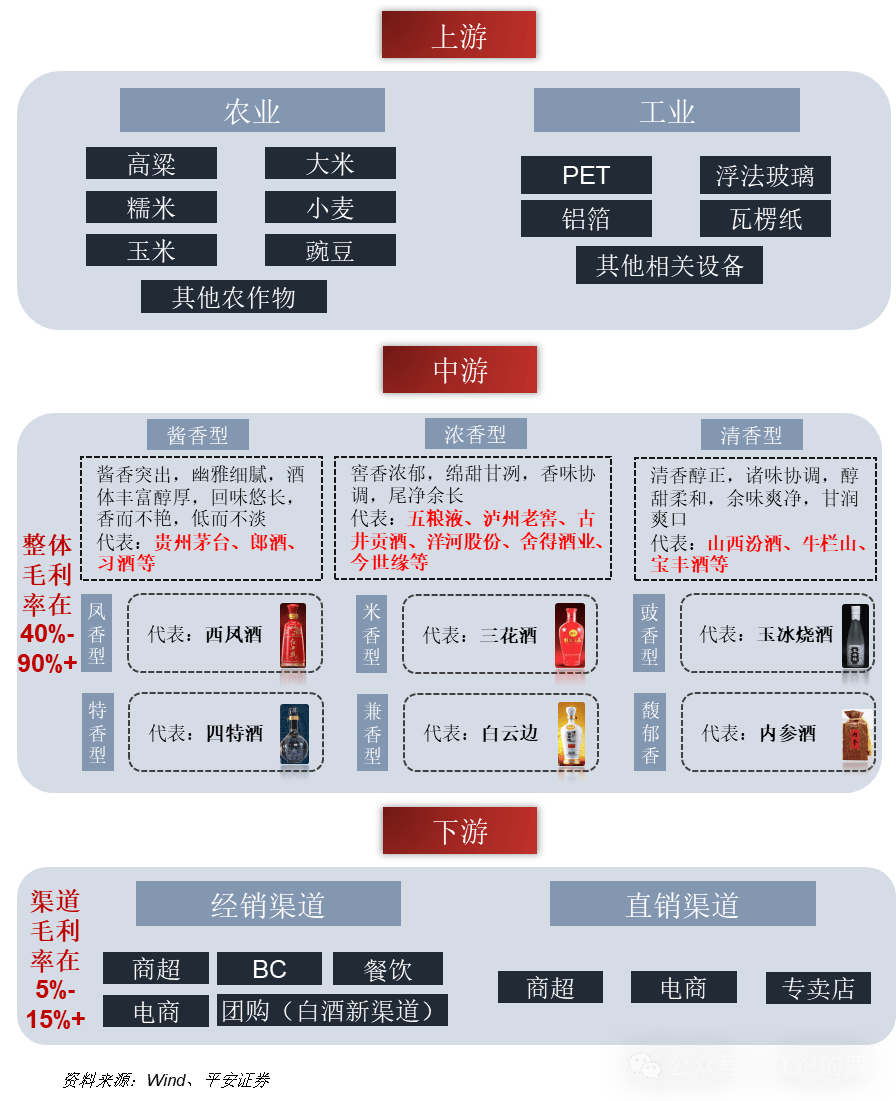
Core Insights - The article discusses the evolution and current state of the Chinese liquor industry, particularly focusing on the baijiu market, which is characterized by various flavor profiles and a significant shift in consumer behavior towards online purchasing and younger demographics [3][5][41]. Industry Overview - Baijiu is a unique traditional distilled liquor in China, primarily made from sorghum, with three main flavor types: strong aroma, sauce aroma, and light aroma [8][10]. - The baijiu market has seen a transformation driven by consumer preferences, particularly among the younger generation, leading to a more integrated approach in sales channels [5][41]. Market Dynamics - The baijiu industry is undergoing supply-side structural reforms, with a focus on reducing production capacity while enhancing efficiency and profitability [19]. - The market size for baijiu is projected to reach 861.8 billion yuan in 2024, reflecting a year-on-year growth of 10.23% [19]. Consumer Trends - The Z generation is becoming the main consumer force, with a notable shift towards rational and personalized consumption, and a decrease in traditional business drinking [5][45]. - Online sales of baijiu are expected to grow, with 2023 seeing approximately 900 billion yuan in online sales, although the online penetration rate remains relatively low at 11.9% [41][45]. Pricing and Competition - The pricing structure of baijiu is evolving, with a noticeable shift towards mid-range products, indicating a change in consumer demand [26][30]. - The industry is experiencing increased concentration, with the top 10 brands' market share rising from 18.8% in 2015 to an expected 57.1% by 2024 [33]. Production and Supply Chain - The production process of baijiu is highly standardized, ensuring consistent quality across products, with major brands like Moutai employing complex manufacturing processes [17]. - Sorghum, the primary raw material for baijiu, has seen a rebound in planting area, increasing from 425,000 hectares in 2015 to 630,000 hectares in 2023 due to rising demand [10][12]. Regional Competition - The regional competition in the baijiu market is characterized by strong local brands in provinces like Shanxi and Jiangsu, while national brands dominate in other areas [39][36].