白银狂潮

Search documents
期货日报:两次“白银狂潮”的异与同
Jin Rong Jie· 2025-12-27 01:54
Core Viewpoint - The price of silver in London has surpassed $79 per ounce, reaching a new historical high, reminiscent of the "Silver Crisis" in 1980 driven by the Hunt brothers. However, the current market dynamics are fundamentally different, supported by macroeconomic and financial factors rather than manipulation by a single entity [1]. Group 1 - The recent surge in silver prices is characterized by significant price increases and active trading in the futures market, similar to the 1980 scenario [1]. - The current upward trend in silver prices is underpinned by fundamental, macroeconomic, and financial support, contrasting with the previous market manipulation [1]. - The evolution of capital markets and the transformation of asset pricing logic can be observed through the comparison of the two "Silver Crises" spanning over forty years [1].
从亨特兄弟到“无形之手”:两次“白银狂潮”的异与同
Qi Huo Ri Bao· 2025-12-27 00:05
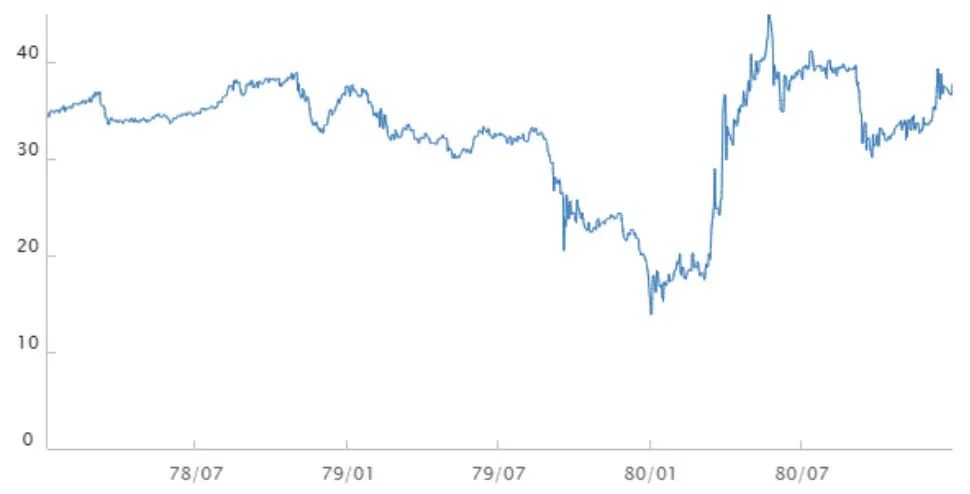
Core Viewpoint - The recent surge in silver prices, surpassing $79 per ounce, is compared to the 1980 silver bubble driven by the Hunt brothers, but the current market dynamics are fundamentally different, supported by macroeconomic and supply-demand factors rather than manipulation [1][3]. Historical Context - The 1980 silver bubble was characterized by the Hunt brothers monopolizing over 50% of global silver stocks, leading to a price increase from $6 to $35.52 per ounce, a 492% rise in just six months [3]. - The macroeconomic environment in 1980, including high inflation rates and geopolitical tensions, contributed to the bubble, which ultimately collapsed due to regulatory interventions [5][3]. Current Market Dynamics - From January 2024 to December 2025, silver prices are projected to rise from $20 to $70 per ounce, a cumulative increase of approximately 250%, driven by strong industrial demand and macroeconomic conditions [7]. - The supply side is constrained due to aging mines in major producing countries, while demand from sectors like photovoltaics and electric vehicles is robust, altering the demand structure for silver [7][8]. Regulatory and Market Structure Differences - The 1980 bubble was marked by concentrated market control, leading to reactive regulatory measures, while the current market features a more decentralized structure, allowing for proactive regulatory approaches to mitigate risks [14]. - The industrial demand for silver has increased to 65%, shifting the pricing logic from financial speculation to industrial utility, enhancing market resilience [14]. Future Outlook - Short-term volatility in the silver market is expected due to high delivery volumes and tight supply conditions, which will support futures prices [14]. - The long-term outlook remains positive for silver, with its price movements likely to be influenced by gold, and potential for higher returns, albeit with increased short-term risks [15].