资产定价逻辑

Search documents
华尔街大胆预测:为对冲劳动力缺口 沃什或容忍2.5%-3.5%的通胀!
智通财经网· 2026-02-15 03:26
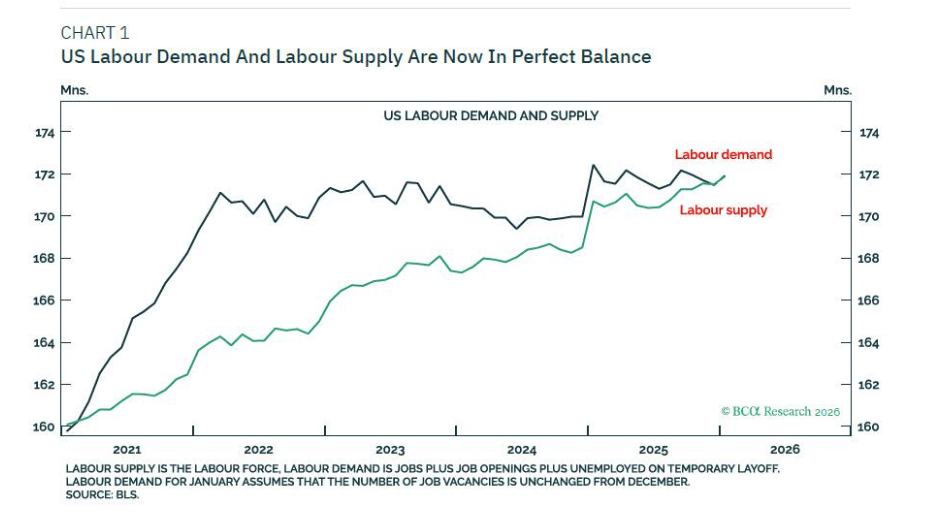
Group 1 - The Federal Reserve's monetary policy framework may undergo a significant shift, with a potential tolerance for inflation rates rising to the 2.5% to 3.5% range under the leadership of Chairman Waller to support a higher operating temperature for the U.S. economy [1][4] - Current labor market data shows a balance between supply and demand, with both at 172 million, and job vacancies and non-temporary unemployment stable at 6.6 million, indicating a "perfect balance" [1][4] - The shift in policy is expected to reshape asset pricing logic, with continued interest rate cuts despite higher inflation, leading to a weaker dollar and a "bear steepening" pressure on the U.S. Treasury yield curve [3][16] Group 2 - The labor market's balance presents a "dual risk" scenario, where any contraction in either demand or supply could lead to a decline in output, necessitating policies that promote simultaneous expansion on both sides [4][16] - Wage inflation remains structurally elevated, with the Employment Cost Index (ECI) rising 3.4% year-over-year, exceeding the 3% threshold aligned with the 2% core PCE inflation target [8][11] - The structural rise in wage inflation is attributed to a persistent change in the labor force composition, with a reduction of nearly 3 million older workers since the pandemic, creating additional structural tension in the labor market [11][12] Group 3 - In the context of the dual risks in the labor market, the Federal Reserve may choose to tolerate structurally elevated wage inflation, effectively raising the inflation target range to 2.5% to 3.5% [16] - The macroeconomic backdrop suggests that equity assets are likely to continue outperforming fixed income products, with a tactical recommendation to overweight the MSCI global consumer discretionary sector relative to the industrial sector, which has underperformed by nearly 20% over the past 65 trading days [3][16] - Market sentiment may see a recovery window due to low real interest rates, potential fiscal stimulus support, and a resilient labor market, leading to a more optimistic pricing outlook for U.S. consumers [18]

OEXN:贵金属剧震 长期配置价值凸显
Xin Lang Cai Jing· 2026-02-11 09:52
Group 1 - The core viewpoint of the article highlights the extreme volatility in the precious metals market at the beginning of 2026, characterized by a historic sell-off followed by a record rebound, which is seen as a natural attribute of commodities in a strong bull market [1][3] - The article emphasizes the fundamental difference in asset pricing logic between commodities and the stock market, noting that commodities exhibit a "positive skew," where price increases are accompanied by rising volatility, providing opportunities for traders to construct asymmetric risk-reward profiles [4][1] - Current technical observations indicate that silver is stabilizing around $81.21 per ounce and gold above $5038, with the recent sharp corrections viewed as a healthy market adjustment that helps to digest early leverage positions [4][2] Group 2 - Despite rumors of institutional fund withdrawals, data shows that related gold mining fund products, such as those under YieldMax, maintained positive net subscriptions during price declines, indicating that institutional investors view short-term volatility as a buying opportunity [5][2] - Long-term, gold's status as a store of value remains irreplaceable, with current gold requirements for purchasing median housing being lower than in the 1960s, underscoring gold's inflation-hedging superiority [5][3] - The article argues that in the context of global debt monetization and ongoing currency devaluation, the "safe haven" logic of precious metals remains robust, and short-term noise should not overshadow the strategic significance of long-term allocations [5][3]

2026年全球资金格局迎来大洗牌,财富流动的新逻辑变了
Sou Hu Cai Jing· 2026-01-18 00:02
Group 1 - The ongoing financial reform is expected to fundamentally change the previous reliance on "printing money" to inflate asset values [1] - Major global financial markets are facing a significant shift, with Japan ending its two-decade-long negative interest rate policy, which may lead to a return of cheap funds [3] - The European economy is under pressure from rising living costs and inflation, complicating monetary policy decisions [3] Group 2 - The liquidity gap is deepening, leading to a change in asset pricing logic; previously low interest rates allowed for speculative investments, but this is no longer effective [6] - Global capital is becoming more discerning, focusing on real production capabilities rather than speculative ventures [6] - Export enterprises are experiencing fluctuations in currency exchange rates, with expectations of RMB appreciation influencing their currency conversion strategies [8] Group 3 - The current investment landscape requires a focus on industries with real capabilities, such as high-end manufacturing and energy security, supported by solid policies and funding [11] - The competition for resources is intensifying, with a shift towards tangible assets and productive sectors [11] - Monitoring exchange rate movements and Federal Reserve communications is crucial for understanding capital flows and positioning for future opportunities [13]
从亨特兄弟到“无形之手”:两次“白银狂潮”的异与同
Qi Huo Ri Bao· 2025-12-27 00:05
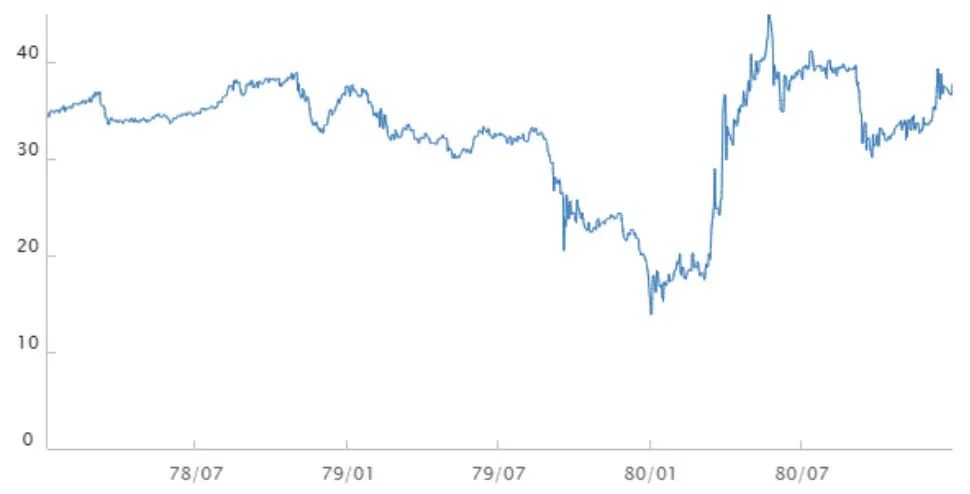
Core Viewpoint - The recent surge in silver prices, surpassing $79 per ounce, is compared to the 1980 silver bubble driven by the Hunt brothers, but the current market dynamics are fundamentally different, supported by macroeconomic and supply-demand factors rather than manipulation [1][3]. Historical Context - The 1980 silver bubble was characterized by the Hunt brothers monopolizing over 50% of global silver stocks, leading to a price increase from $6 to $35.52 per ounce, a 492% rise in just six months [3]. - The macroeconomic environment in 1980, including high inflation rates and geopolitical tensions, contributed to the bubble, which ultimately collapsed due to regulatory interventions [5][3]. Current Market Dynamics - From January 2024 to December 2025, silver prices are projected to rise from $20 to $70 per ounce, a cumulative increase of approximately 250%, driven by strong industrial demand and macroeconomic conditions [7]. - The supply side is constrained due to aging mines in major producing countries, while demand from sectors like photovoltaics and electric vehicles is robust, altering the demand structure for silver [7][8]. Regulatory and Market Structure Differences - The 1980 bubble was marked by concentrated market control, leading to reactive regulatory measures, while the current market features a more decentralized structure, allowing for proactive regulatory approaches to mitigate risks [14]. - The industrial demand for silver has increased to 65%, shifting the pricing logic from financial speculation to industrial utility, enhancing market resilience [14]. Future Outlook - Short-term volatility in the silver market is expected due to high delivery volumes and tight supply conditions, which will support futures prices [14]. - The long-term outlook remains positive for silver, with its price movements likely to be influenced by gold, and potential for higher returns, albeit with increased short-term risks [15].
聚焦关税进展与四季度方向
2025-10-20 14:49
Summary of Conference Call Records Industry or Company Involved - Focus on the impact of tariffs and market strategies for the fourth quarter of 2025 - Discussion on the strategic value of China's rare earth resources Core Points and Arguments Market Conditions and Strategies - Short-term market volatility is heavily influenced by sentiment, with technical support levels being more critical than fundamentals [1][2] - Investors who have reduced positions may consider selectively buying quality structural assets, while those who have not should avoid hasty adjustments based on emotional market fluctuations [1][2] - The U.S.-China tariff negotiations may see short-term progress, but long-term uncertainties are increasing, with high tariffs being detrimental to both sides [1][2][3] - The current market liquidity is abundant, leading to a pursuit of scarce returns, which has resulted in localized inflation [1][5] Asset Performance and Allocation - In Q4, the focus for asset allocation is on gold, dividends, and growth assets, which have all seen a rise this year, breaking traditional asset pricing logic [1][4] - The performance of these asset classes is influenced by various factors, including geopolitical tensions, global decoupling, and central bank gold purchases [1][4] - The U.S. market shows a disparity between strong growth in the tech sector and weakness in other areas, exacerbated by the acceleration of AI investments [1][6] Credit Cycle and Economic Outlook - The applicability of the Merrill Lynch clock framework in China is limited due to significant policy expectations and evident disparities in economic performance [2][7] - Future asset rotation can be analyzed through the intensity of credit expansion in both government and private sectors, with a focus on indirect financing [2][8] - The credit cycles in the U.S. and China may diverge, with the U.S. potentially moving towards recovery while China may experience stagnation or slight slowdown [2][9] Export Dynamics and Trade Relations - China's exports have exceeded expectations, with a year-to-date growth rate of 6.1% in dollar terms, despite a nearly 20% decline in exports to the U.S. [2][12][14] - The structure of China's exports is changing, with an increasing proportion of intermediate goods, which are essential for industrial production [2][12][13] - The strategic value of rare earth resources is highlighted, with China holding a dominant position in both reserves and the entire supply chain [2][21][22] Rare Earth Resources and Strategic Implications - China's rare earth resources account for 34% of global reserves, with a significant share in heavy rare earths [2][21] - Recent export control measures have enhanced China's control over rare earth resources, impacting global supply chains and U.S. companies [2][22] - The demand for high-performance permanent magnet materials is expected to grow, with a projected annual increase of over 10% in the coming years [2][22] Other Important but Possibly Overlooked Content - The current geopolitical landscape and the restructuring of the global dollar monetary system are influencing asset performance and investment strategies [1][4] - The potential for localized inflation due to abundant liquidity and the pursuit of scarce returns is a critical factor for investors to consider [1][5] - The implications of U.S.-China trade relations on agricultural commodities, particularly soybeans, are significant, with price pressures observed due to tariffs [2][17][19]
美元美债危机发酵银价巨震酝酿变盘
Jin Tou Wang· 2025-05-15 02:36
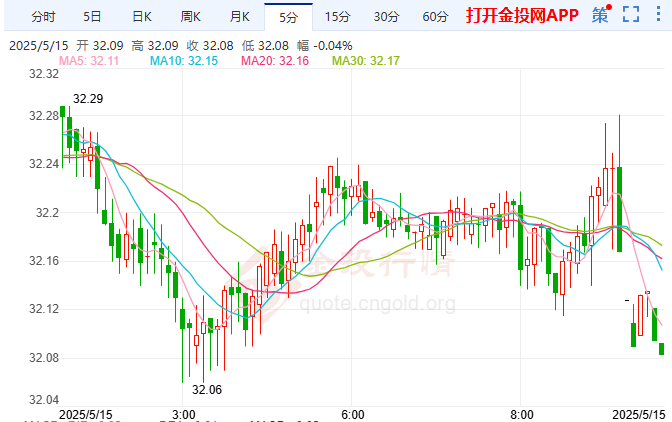
Group 1 - The international silver price is currently trading above $32.06, with a slight decline of 0.37% as of the latest report, indicating a short-term oscillating trend in the market [1] - The silver market experienced significant volatility in April, and May has shown a pattern of rising and falling without reaching historical highs, suggesting a weakening of bullish momentum [4] - The market is expected to face several months of oscillation and adjustment, with a focus on the upward trend line for potential support [4] Group 2 - The US dollar index rebounded after a dip, increasing by 0.08% to 101.04, indicating a strong reversal after an initial drop of 0.7% [3] - The yield on the 10-year US Treasury bond has risen significantly, surpassing the 4.5% psychological threshold, reaching a six-week high of 4.536% [3] - Market expectations for the Federal Reserve's monetary policy have shifted, with the probability of a rate cut in September dropping to 74%, indicating a delay from previous expectations [3]