知识创造

Search documents
李长安:“人机协作”放大创造的价值
Huan Qiu Wang Zi Xun· 2025-11-18 23:10
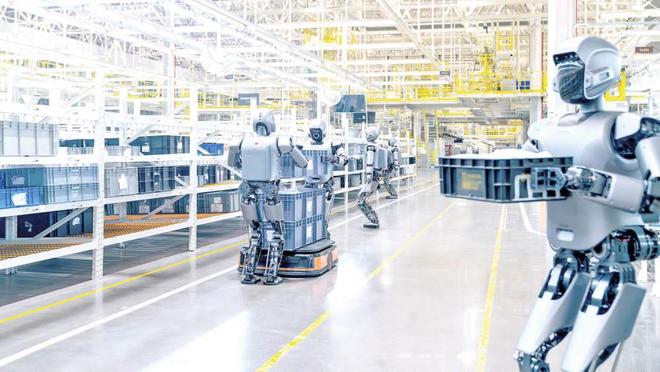
Core Insights - The integration of artificial intelligence (AI) with human capabilities is becoming increasingly prevalent, leading to a new paradigm of human-machine collaboration that emphasizes continuous innovation as a means to maintain human value in the workforce [1][2][4] Group 1: AI and Industry Transformation - The "AI+" strategy is driving a new wave of technological revolution and industrial transformation, with significant impacts in sectors such as healthcare, education, and transportation, thereby enhancing public services and social governance [1] - AI represents a fundamental shift in technology, capable of not only replacing traditional labor but also continuously improving its intelligence through machine learning, which poses challenges for jobs requiring mid-level skills [1][2] Group 2: Human-Machine Collaboration - Human-machine collaboration is seen as a core paradigm for amplifying value creation, where the synergy between human creativity and machine intelligence leads to unprecedented innovation [2][3] - The development of AI tools necessitates a new relationship between humans and machines, redefining the skill sets required for the workforce and emphasizing the importance of strategic thinking and digital literacy [3] Group 3: Societal Impact and Workforce Evolution - The rise of AI provides unprecedented opportunities for individuals, including marginalized groups, to showcase their talents and create value, as technology breaks down geographical and physical barriers [3] - The transition towards a more collaborative work environment is gradual, with many traditional roles evolving rather than disappearing, allowing professionals to focus on higher-level tasks and interpersonal skills [3][4]
连续9年全国第一,广东凭什么稳坐“创新王座”?
2 1 Shi Ji Jing Ji Bao Dao· 2025-09-28 12:56
Core Insights - Guangdong continues to rank first in the national innovation capability for nine consecutive years, showcasing strong performance in enterprise innovation and innovation environment [2][5] - The report indicates a marginal convergence in Guangdong's leading advantage, with a decline in innovation efficiency and growth potential rankings, necessitating a reassessment of its innovation leadership [2][5] Innovation Performance - Guangdong ranks first in enterprise innovation and innovation environment, second in knowledge creation, fourth in knowledge acquisition, and second in innovation performance [2][3] - The province's R&D investment from large-scale industrial enterprises reached 342.66 billion yuan, accounting for 16.34% of the national total, maintaining the top position [3][6] Patent and Product Development - Guangdong leads the nation with 143,141 invention patents granted and 164,853 invention patent applications from large-scale industrial enterprises [3][4] - New product sales revenue in Guangdong reached 5.19 trillion yuan, also the highest in the country, with new products accounting for the third-largest share of operating income [3][4] Manufacturing and Technology - The advanced manufacturing and high-tech manufacturing sectors in Guangdong are projected to increase their value-added shares to 56.7% and 31.6% respectively by 2024 [4] - The province produces 43% of the nation's new energy vehicles, 44% of industrial robots, over 40% of smartphones, and 18% of integrated circuits, indicating a strong industrial cluster [4] Talent and Investment - Guangdong aims to attract over 1 million college graduates by July 2025, with recruitment events planned across major cities [6] - The province's R&D expenditure has reached 510 billion yuan, with a research intensity of 3.6%, leading the nation in several key technology indicators [6] Global Innovation Standing - The "Shenzhen-Hong Kong-Guangzhou" cluster has surpassed the "Tokyo-Yokohama" cluster to become the top global innovation cluster according to the Global Innovation Index [7][8] - This cluster excels in PCT patent applications, scientific publications, and venture capital, indicating a balanced strength across key innovation dimensions [8]