石油供应多元化

Search documents
高市早苗对美访问4天:将扩大美国原油进口
第一财经· 2026-03-18 10:15
Core Viewpoint - Japan is seeking to diversify its oil supply and reduce dependence on Middle Eastern oil due to rising gasoline prices and geopolitical tensions in the region [1] Group 1: Oil Cooperation - During the visit to the U.S., Japan is expected to reach an agreement on oil cooperation, specifically expanding imports of U.S. crude oil [1] - The urgency for Japan to strengthen oil supply diversification is driven by the recent surge in gasoline prices linked to ongoing tensions in the Middle East [1] Group 2: Military and Rare Earth Cooperation - In addition to energy discussions, the visit will cover military security cooperation and joint development of rare earth elements [1] - Japan aims to join the U.S. "Iron Dome" missile defense program and establish a "minimum price system" for rare earth cooperation with the U.S. [1] Group 3: Geopolitical Context - The situation in Iran is anticipated to be a significant topic during Prime Minister Kishi's visit to the U.S. [1]


U.S. gives India waiver to buy Russian oil
Youtube· 2026-03-06 10:38
Group 1 - The US has granted India a conditional 30-day waiver to purchase Russian oil, which is seen as a temporary relief for the depreciating rupee and is expected to positively impact Indian refiners [2][1] - India has not ceased its purchases of Russian oil, maintaining a significant import level despite US pressure, which has reduced the share of Russian oil from 34% in November to around 20% in February [3][2] - The waiver is intended to facilitate the flow of oil into global markets and specifically applies to Russian crude that is already stranded at sea, serving as a short-term measure to alleviate energy supply pressures [2][4] Group 2 - Recent developments indicate that two vessels carrying Russian oil arrived in India, which were initially destined for East Asia, suggesting that India is utilizing Russian oil to compensate for disrupted Middle Eastern supplies [5][4] - The Indian government is actively diversifying its oil purchases globally and has not ruled out buying Russian oil, although it has not provided specific comments on the recent shipments [5][6] - The timing of the arrival of these vessels in relation to the US waiver raises questions about India's future negotiations with Iran regarding oil transport through the Strait of Hormuz [6]
特朗普对俄“最严厉制裁”,这对油价影响多大?
Hua Er Jie Jian Wen· 2025-10-24 06:57
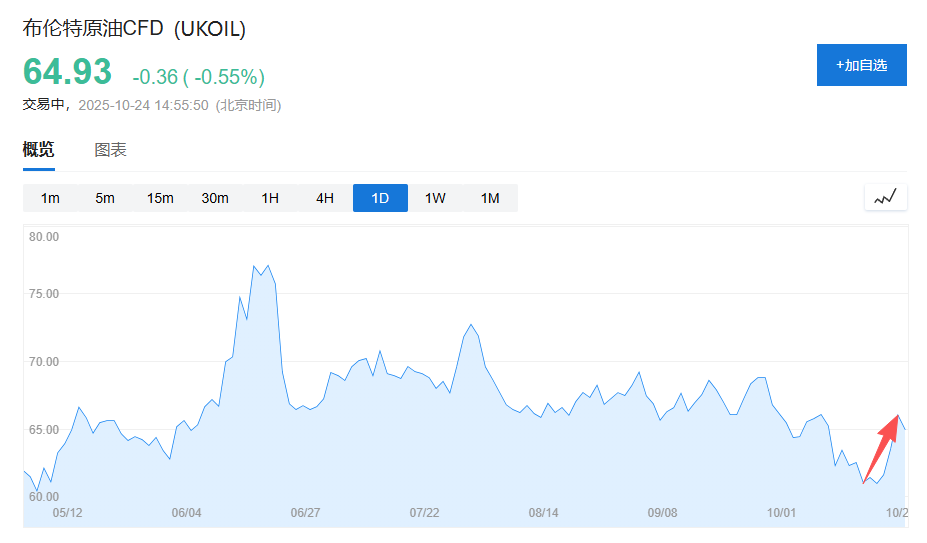
Core Points - The U.S. Treasury announced sanctions against two major Russian oil companies, Rosneft and Lukoil, along with their subsidiaries, impacting entities with 50% or more ownership [1][4] - Following the announcement, oil prices surged over 5%, marking the largest single-day increase in four months, with Brent crude futures surpassing $65 per barrel [1] - The sanctions are seen as a significant disruption to the global oil supply chain, particularly affecting entities reliant on Russian oil [4][5] Group 1: Sanction Details - The sanctions target Rosneft and Lukoil, which account for approximately one-sixth of global crude oil exports [4] - The U.S. Treasury's statement indicates that entities doing business with these companies may face sanctions, but the language leaves room for interpretation [4][8] - The decision to impose sanctions was influenced by President Trump's disappointment with peace talks regarding Ukraine, leading him to choose a moderate sanctioning approach [5][6] Group 2: Market Reactions - The immediate market reaction saw a significant spike in oil prices, raising concerns about potential supply shortages due to the sanctions [1][4] - Analysts suggest that the ambiguity in the sanctions may lead companies to over-compliance, potentially reducing their purchases of Russian oil [8] - India's reliance on Russian oil, which meets about one-third of its demand, poses a dilemma as it navigates the implications of U.S. sanctions while seeking to maintain energy security [7][8] Group 3: Strategic Implications - The sanctions reflect a strategic balance by the Trump administration, retaining options for more severe measures while still aiming for diplomatic solutions [6][7] - The Indian government is exploring ways to diversify its oil supply to mitigate risks associated with the sanctions, while also considering the political implications of U.S. pressure [7][8] - The uncertainty surrounding the enforcement of sanctions creates a challenging environment for global oil traders, who must weigh compliance against potential profit [8]