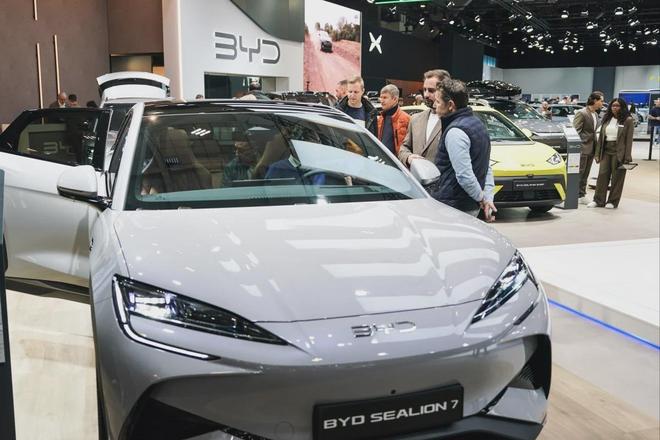
最低价格制度

Search documents
高市早苗对美访问4天:将扩大美国原油进口
第一财经· 2026-03-18 10:15
Core Viewpoint - Japan is seeking to diversify its oil supply and reduce dependence on Middle Eastern oil due to rising gasoline prices and geopolitical tensions in the region [1] Group 1: Oil Cooperation - During the visit to the U.S., Japan is expected to reach an agreement on oil cooperation, specifically expanding imports of U.S. crude oil [1] - The urgency for Japan to strengthen oil supply diversification is driven by the recent surge in gasoline prices linked to ongoing tensions in the Middle East [1] Group 2: Military and Rare Earth Cooperation - In addition to energy discussions, the visit will cover military security cooperation and joint development of rare earth elements [1] - Japan aims to join the U.S. "Iron Dome" missile defense program and establish a "minimum price system" for rare earth cooperation with the U.S. [1] Group 3: Geopolitical Context - The situation in Iran is anticipated to be a significant topic during Prime Minister Kishi's visit to the U.S. [1]


为排除中国稀土,美国提议最低价格制
日经中文网· 2026-02-06 07:32
Group 1 - The U.S. will collaborate with Japan and the EU to establish a mechanism for managing imports of critical minerals from China, including a "minimum price system" to protect domestic markets from low-priced Chinese products [2][4] - The meeting held on February 4, 2023, is an extension of the "Mineral Security Partnership" (MSP) initiated in 2022, aiming to create a trade circle for critical minerals that is not influenced by external factors [4][5] - The U.S. government is considering imposing new tariffs on low-priced imports as a strong option, as previous tariffs alone have not been effective [5] Group 2 - The establishment of a minimum price system is expected to create a stable investment environment for companies, although determining specific categories and setting minimum prices may take time [5][6] - The U.S. Congress has proposed improvements to the reserve and recycling systems for critical minerals and is promoting investments in alternative materials that do not rely on rare earth elements [5][6] - The U.S. government is taking a coordinated approach across various departments to address issues related to critical minerals, with a focus on policy alignment with Japan and Europe [6]
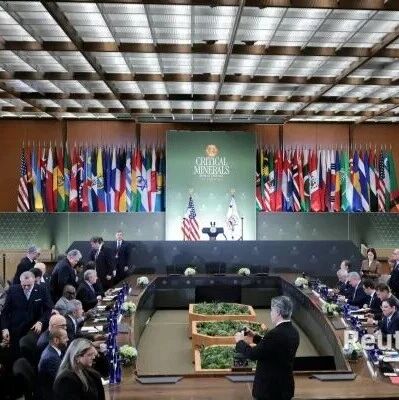
日美欧商讨建立稀土贸易圈,设最低价格
日经中文网· 2026-02-05 02:35
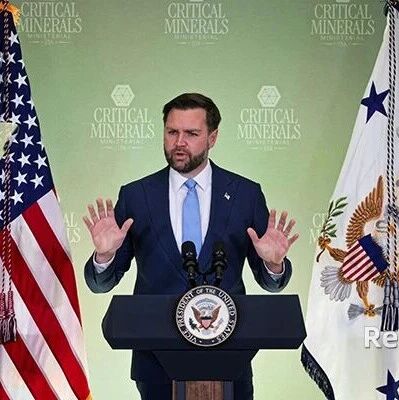
Core Viewpoint - The article discusses the U.S. government's initiative to establish a minimum price system for critical minerals to stabilize supply and reduce dependence on China, particularly in the context of rare earth elements [2][5][7]. Group 1: U.S. Government Initiatives - The U.S. government, under Vice President Vance, proposed a cooperative effort with Japan and EU countries to create a trade circle for critical minerals that is insulated from external influences through a mandatory minimum price system [2]. - A meeting was held at the U.S. State Department with various countries to establish a trade circle aimed at preventing low-priced critical minerals from China from entering the market, allowing time for the development of mining and recycling networks independent of Chinese supply chains [4]. Group 2: Minimum Price System - The core of the proposed measures is the "minimum price system," which aims to reflect the appropriate market value of critical minerals and prevent the influx of low-priced Chinese products [5]. - U.S. Secretary of State Rubio indicated that 55 countries and regions are expected to join this initiative, with the U.S. Trade Representative's Office (USTR) set to negotiate the specifics of the system with participating countries [5][6]. Group 3: Addressing Price Manipulation - The U.S. is focused on the pricing of rare earths due to past experiences where low-priced overseas rare earths undermined efforts to reduce dependence on China [7]. - The U.S. House of Representatives' "China Task Force" criticized China's Price Law, which artificially suppresses rare earth prices, creating structural downward pressure on prices [7]. - Rubio emphasized that the minimum price system is designed to ensure that rare earth prices do not fall below a certain threshold, thereby protecting investments in critical minerals across participating countries [7].
分析师:中国车企在欧将提升利润率,改善盈利状况和品牌声誉
Guan Cha Zhe Wang· 2026-01-15 08:32
Group 1 - The core viewpoint of the articles is that the EU's implementation of a minimum price for Chinese electric vehicles (EVs) will enhance profit margins for Chinese manufacturers, ultimately improving their profitability and brand reputation [1][3] - Deutsche Bank analyst Wang Bin noted that the minimum price policy will technically suppress sales, particularly for low-cost small EVs, but it will positively impact major Chinese EV manufacturers like BYD, which have advantages in technology and production costs [1] - UBS China automotive research head Gong Min stated that the minimum price commitment will help Chinese EV manufacturers in Europe avoid falling into vicious price competition [1] Group 2 - JPMorgan's Asia-Pacific automotive research head Lai Yizhe mentioned that the average profit for Chinese car manufacturers in mainland China is approximately 5,000 RMB, but exporting more vehicles overseas at higher prices could increase profits to around 20,000 RMB [3] - Lai Yizhe believes that under the minimum price system, Chinese EVs can maintain local customer appeal by enhancing smart features and optimizing interior designs without offering discounts, which will improve their reputation in Europe in the long run [3] - China is the largest automotive and EV market globally, with approximately 13 million EVs sold last year, accounting for about 70% of global sales. Currently, 88,000 of the cars exported to the EU are pure electric vehicles, making up 55% of the total [3]