
石油成本

Search documents
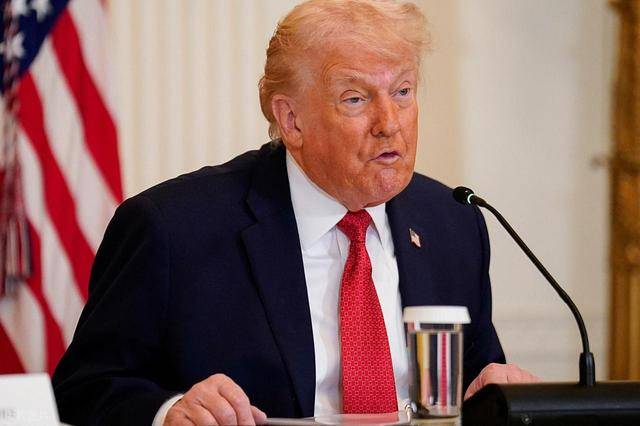
特朗普开口也不管用,中国不买了,委5000万桶石油恐烂在厂里
Sou Hu Cai Jing· 2026-01-22 05:58
Core Insights - The main issue faced by the Trump administration after taking control of Venezuelan oil is not technical or security-related, but rather the inability to sell the oil, leading to a situation where having oil does not equate to having an asset [1][3]. Group 1: Market Dynamics - Venezuela has approximately 50 million barrels of crude oil in inventory, which the U.S. believes can be quickly monetized; however, the market has not responded as expected, with Chinese buyers halting orders and other countries remaining inactive [1][3]. - The initial plan was to control Venezuela to access one of the largest oil reserves globally, which could fund military expenses and provide profits for the U.S. energy sector; however, the reality is that controlling oil fields does not guarantee market control [3][5]. Group 2: Buyer Behavior - China's cessation of oil purchases is a calculated decision based on U.S. demands that all oil revenue be directed to the U.S. Treasury, disrupting the previous "oil-for-debt" settlement method [5][11]. - The primary challenge is that Venezuelan oil is predominantly high-sulfur heavy oil, which constitutes over 90% of its production; this type of oil has higher extraction and processing costs compared to light oil, making it less attractive to buyers [5][7]. Group 3: Competitive Landscape - The demand for heavy oil is limited, and with alternatives like Russian Urals and Canadian oil sands available at lower prices, Venezuela's oil becomes less appealing [7][9]. - Russia has significantly reduced prices for Urals crude to maintain its market share, with some prices dropping to around $30 per barrel, further squeezing Venezuela's heavy oil market [9][11]. Group 4: Investment Challenges - Trump attempted to mobilize U.S. oil companies to invest $100 billion in Venezuela, but no companies responded due to unfavorable economics; the extraction costs for Venezuelan heavy oil range from $40 to $60 per barrel, which is not viable given current international oil prices [13][15]. - U.S. refineries prefer light oil, and processing heavy oil requires significant equipment modifications, making it a less attractive investment during low oil price periods [13][15]. Group 5: Future Outlook - The lack of buyers, combined with increasing inventory, means that the 50 million barrels of oil are unlikely to find a market soon; if not monetized quickly, initial investments may turn into long-term maintenance costs [15][16]. - The ongoing military actions and blockades in the Caribbean have incurred significant costs, and without economic returns, domestic political pressures and local living conditions may worsen [15][16].

贵、贵、贵!这就是我国无法大规模购买“美国石油”的核心因素
Sou Hu Cai Jing· 2025-08-11 00:21
Core Insights - China's oil imports in 2024 are projected to reach 55.34 million tons (approximately 5.53 billion tons), maintaining its position as the world's largest oil importer, with Russia and Saudi Arabia being the top suppliers [2][3][6]. Group 1: Import Data - Russia ranks first in oil exports to China, supplying 10.85 million tons valued at $624.26 million, with a price of $77.75 per barrel [2][3]. - Saudi Arabia is the second-largest supplier, exporting 7.86 million tons worth $478.58 million, with a price of $84.24 per barrel [2][3]. - The United States ranks 11th, exporting only 0.96 million tons valued at $60.19 million, with a price of $84.36 per barrel [2][3]. Group 2: Price Comparison - The average price of Russian oil is approximately $55 per barrel, significantly lower than the U.S. price of around $78 per barrel, highlighting the competitive advantage of Russian oil in the Chinese market [6][10]. - The cost of extracting oil in Russia ranges from $30 to $40 per barrel, while U.S. shale oil extraction costs exceed $60 per barrel, contributing to the price disparity [10][17]. Group 3: Market Dynamics - China's oil refining industry has developed a strong alignment with the characteristics of oil from major suppliers like Russia and Saudi Arabia, making it challenging to switch to U.S. oil without significant investment in infrastructure [11][15]. - The logistical and processing differences between U.S. light crude oil and Middle Eastern heavy crude oil create additional barriers for U.S. oil to gain market share in China [13][14].
