
石油市场

Search documents
Trump waives U.S. shipping law for 60 days to steady oil market
Youtube· 2026-03-18 15:55
Group 1 - The White House has announced a 60-day suspension of the Jones Act to alleviate short-term disruptions in the oil market due to military operations [1] - The Jones Act requires that ships transporting goods between U.S. ports be U.S.-owned and operated, which has been linked to high shipping costs; the suspension aims to lower these costs by allowing international ships [2] - The administration is focused on the impact of this suspension on oil prices, particularly on the East Coast, although the exact effect remains uncertain [2] Group 2 - President Trump has expressed frustration over NATO allies' lack of naval support in the Strait of Hormuz, suggesting that the U.S. might consider abandoning the area [4] - The White House has stated that the U.S. does not rely on the Strait of Hormuz for oil supply, as it is a net oil exporter, but is concerned about global oil prices [5] - The administration is sensitive to rising oil prices and is taking steps to address this issue [6]


美以“首次出现重大分歧”
中国能源报· 2026-03-09 13:43
Core Viewpoint - The article discusses the dissatisfaction of the United States regarding Israel's military actions against Iranian fuel storage facilities, highlighting a significant divergence in their strategies towards Iran [1]. Group 1: U.S.-Israel Relations - The U.S. is reportedly surprised by the scale of the Israeli military's attacks, which exceeded American expectations and could have unintended consequences [1]. - U.S. officials expressed concerns that the attacks on Iranian civilian infrastructure might unify Iranian society in support of its government [1]. - The U.S. administration, particularly President Trump's advisor, indicated a preference for maintaining oil resources rather than seeing them destroyed, as this could lead to higher oil prices [1]. Group 2: Impact on Oil Prices - Following the military actions, international oil prices began to rise, with light crude oil futures nearing $120 per barrel, reflecting an increase of over 30% [1]. - The potential for increased oil prices due to the conflict is a significant concern for the U.S., as it could affect both domestic and global markets [1].

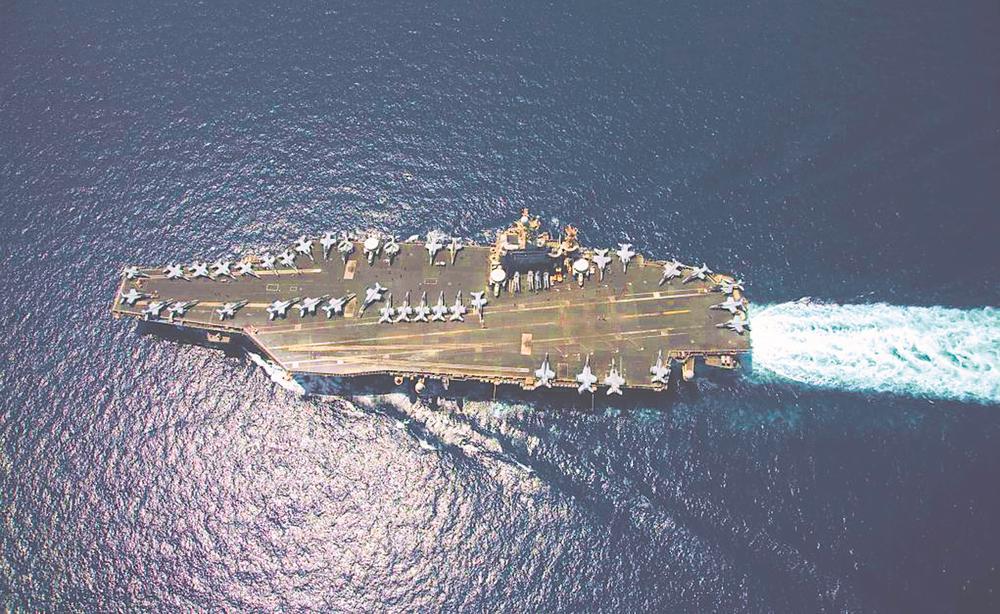
特朗普威胁再派航母,德黑兰强调“永不低头”,美伊谈判进入关键阶段
Huan Qiu Shi Bao· 2026-02-11 22:56
Group 1 - The core viewpoint of the articles revolves around the escalating tensions between the U.S. and Iran, with President Trump considering deploying a second aircraft carrier strike group to the Middle East in preparation for potential military action if negotiations fail [1][2] - Iran's Foreign Minister Zarif emphasizes the country's commitment to resolving issues through diplomacy while also preparing for possible conflict, indicating a dual approach to the ongoing negotiations [1][3] - The U.S. military is reportedly enhancing its readiness in the region, with satellite images suggesting the deployment of Patriot missiles, indicating an increase in conflict risk [2] Group 2 - Israeli Prime Minister Netanyahu's visit to the U.S. is aimed at urging Trump to ensure that any agreement with Iran includes strict conditions on nuclear development and missile production [4] - Analysts express concerns that the U.S. may agree to terms unfavorable to Israel, such as excluding missile issues from negotiations or lifting sanctions in exchange for limited concessions from Iran [4] - Iran's recent diplomatic engagements with Oman and Qatar suggest a strategic effort to communicate its position ahead of further negotiations with the U.S., highlighting the fragile nature of U.S.-Iran relations and its implications for regional security and oil markets [5]
20260203申万期货品种策略日报:原油甲醇-20260203
Shen Yin Wan Guo Qi Huo· 2026-02-03 02:45
Group 1: Report Industry Investment Rating - No relevant content Group 2: Core Views of the Report - SC night session dropped 4.8%. With the easing of tensions between the US and Iran, European and American crude oil futures fell from multi - month highs. The strengthening of the US dollar exchange rate and warmer climate also dampened the oil market sentiment. The situation in Venezuela has also eased. As of the week ending January 16, the average daily US crude oil production was 13.732 million barrels, a decrease of 21,000 barrels from the previous week and an increase of 255,000 barrels from the same period last year [3] - Methanol night session dropped 1.18%. The average operating load of domestic coal (methanol) to olefin plants was 80.06%, a decrease of 0.13 percentage points month - on - month. As of January 29, the methanol inventory in coastal areas was 1.43 million tons, a decrease of 4,700 tons from January 22, a decline of 0.33%, and a year - on - year increase of 42.43%. The estimated import volume of methanol from January 30 to February 15 is 593,000 - 600,000 tons. As of January 29, the overall operating load of domestic methanol plants was 77.56%, a month - on - month increase of 0.15 percentage points and a year - on - year increase of 0.75 percentage points [3] Group 3: Summary by Related Catalogs Futures Market - **Price and Volume Information**: For SC crude oil, the previous day's closing prices of near - month and next - month contracts were 449.0 and 450.2 respectively, with price drops of - 16.6 and - 20.6 and declines of - 3.57% and - 4.38%. For WTI, the previous day's closing prices of near - month and next - month contracts were 65.51 and 65.03, with price increases of 2.01 and 1.89 and increases of 3.17% and 2.99%. For Brent, the previous day's closing prices of near - month and next - month contracts were 68.74 and 67.69, with price increases of 1.04 and 0.93 and increases of 1.54% and 1.39%. The trading volumes of SC near - month, SC next - month, WTI near - month, WTI next - month, Brent near - month, and Brent next - month were 197,282, 89,777, 329,531, 164,734, 167,809, and 497,112 respectively. The positions were 36,200, 29,903, 368,969, 187,862, 242,672, and 673,322 respectively, with position changes of 36,058, - 14,214, 4,711, 4,219, - 63,201, and - 16,797 respectively [2] - **Spread Information**: The current spreads of SC near - month - SC next - month, SC next - month - SC next - next - month, SC near - month - WTI near - month, SC near - month - Brent near - month, WTI near - month - Brent near - month, and WTI near - month - Brent next - month were - 1.2, 450.2, - 5.7, - 28.1, 3.34, and 1.05 respectively, compared with the previous values of - 5.2, 180.8, 24.9, - 4.3, 2.50, and 0.94 [2] Spot Market - **International Market**: The current prices of OPEC basket crude oil, Brent DTD, Russian ESPD, Oman, Dubai, and Cinta were 67.03, 73.03, 65.21, 67.04, 66.62, and 62.30 respectively, compared with the previous values of 67.00, 72.57, 65.42, 66.67, 66.61, and 62.41 [2] - **Domestic Market**: The current prices of Daqing, Shengli, Chinese gasoline wholesale price index, Chinese diesel wholesale price index, FOB naphtha (Singapore), and ex - factory price of aviation kerosene were 66.10, 65.00, 7,423, 6,133, 63.85, and 5,334 respectively, compared with the previous values of 66.00, 64.70, 7,374, 6,095, 63.79, and 5,574 [2]
“最后期限”前 美国伊朗如何出牌
Xin Lang Cai Jing· 2026-01-31 18:30
Core Viewpoint - The article discusses the escalating tensions between the United States and Iran, highlighting the potential military actions by the U.S. and Iran's responses, as well as the implications for regional stability and global oil markets [1][5][10]. Group 1: U.S. Objectives and Strategies - The U.S. has three core objectives regarding Iran: to force Iran to terminate its nuclear program and destroy long-range missiles that threaten U.S. and Israeli interests in the region, to seek regime change to expand U.S. influence in the Middle East, and to control Iran's oil resources to manipulate the global oil market [3][8][9]. - The U.S. is considering various military options against Iran, including limited strikes on key nuclear facilities and the Islamic Revolutionary Guard Corps, as well as potential comprehensive military action, although the latter is deemed less likely due to high political and economic costs [6][7]. Group 2: Iran's Military and Diplomatic Responses - Iran is preparing for military exercises in the Strait of Hormuz, signaling its readiness to respond to U.S. aggression, and has communicated with regional countries to seek diplomatic support [10][12]. - Iran's military capabilities are significant, with potential retaliatory strikes against U.S. military bases and allies in the region if attacked [11]. Group 3: Regional and Global Implications - Any conflict could lead to a regional crisis, drawing in neighboring countries and potentially causing long-term complications for the U.S. [4][11]. - A military confrontation could disrupt global oil supply routes, leading to a sharp increase in oil prices and negatively impacting the world economy, which could, in turn, affect the U.S. economy [5][11]. Group 4: Sanctions and International Relations - The U.S. has implemented new sanctions targeting Iranian officials and entities, with the EU also imposing sanctions and designating the Islamic Revolutionary Guard Corps as a terrorist organization [12][13]. - Russia is engaging with Iran to strengthen bilateral relations, particularly in economic terms, amidst the ongoing tensions with the U.S. [13].
特朗普开口也不管用,中国不买了,委5000万桶石油恐烂在厂里
Sou Hu Cai Jing· 2026-01-22 05:58
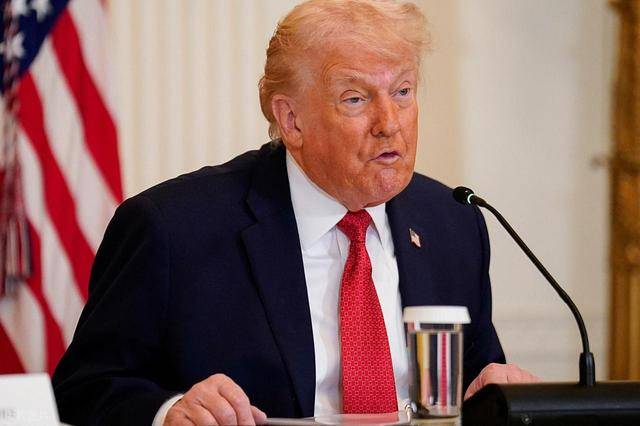
Core Insights - The main issue faced by the Trump administration after taking control of Venezuelan oil is not technical or security-related, but rather the inability to sell the oil, leading to a situation where having oil does not equate to having an asset [1][3]. Group 1: Market Dynamics - Venezuela has approximately 50 million barrels of crude oil in inventory, which the U.S. believes can be quickly monetized; however, the market has not responded as expected, with Chinese buyers halting orders and other countries remaining inactive [1][3]. - The initial plan was to control Venezuela to access one of the largest oil reserves globally, which could fund military expenses and provide profits for the U.S. energy sector; however, the reality is that controlling oil fields does not guarantee market control [3][5]. Group 2: Buyer Behavior - China's cessation of oil purchases is a calculated decision based on U.S. demands that all oil revenue be directed to the U.S. Treasury, disrupting the previous "oil-for-debt" settlement method [5][11]. - The primary challenge is that Venezuelan oil is predominantly high-sulfur heavy oil, which constitutes over 90% of its production; this type of oil has higher extraction and processing costs compared to light oil, making it less attractive to buyers [5][7]. Group 3: Competitive Landscape - The demand for heavy oil is limited, and with alternatives like Russian Urals and Canadian oil sands available at lower prices, Venezuela's oil becomes less appealing [7][9]. - Russia has significantly reduced prices for Urals crude to maintain its market share, with some prices dropping to around $30 per barrel, further squeezing Venezuela's heavy oil market [9][11]. Group 4: Investment Challenges - Trump attempted to mobilize U.S. oil companies to invest $100 billion in Venezuela, but no companies responded due to unfavorable economics; the extraction costs for Venezuelan heavy oil range from $40 to $60 per barrel, which is not viable given current international oil prices [13][15]. - U.S. refineries prefer light oil, and processing heavy oil requires significant equipment modifications, making it a less attractive investment during low oil price periods [13][15]. Group 5: Future Outlook - The lack of buyers, combined with increasing inventory, means that the 50 million barrels of oil are unlikely to find a market soon; if not monetized quickly, initial investments may turn into long-term maintenance costs [15][16]. - The ongoing military actions and blockades in the Caribbean have incurred significant costs, and without economic returns, domestic political pressures and local living conditions may worsen [15][16].
马杜罗被抓往美国受审,对全球石油市场和中国石油供应有何影响?
Sou Hu Cai Jing· 2026-01-06 07:29
Core Viewpoint - The arrest of Venezuelan President Maduro has minimal immediate impact on global oil prices due to Venezuela's current oil production being less than 1% of global output, with 60-90% of its oil exported to China, leading to a global supply surplus. However, in the medium to long term, the potential lifting of sanctions and the return of U.S. companies could restore production, increasing global supply and putting downward pressure on oil prices. The impact on China includes higher export prices and increased replacement costs, while Russia faces economic threats from lower oil prices [1][3][21]. Group 1: Current Oil Production and Market Impact - Venezuela holds the largest oil reserves globally, totaling 303 billion barrels, accounting for 17% of global reserves, but its actual production is significantly lower due to mismanagement and sanctions [8][10]. - Currently, Venezuela's oil production is less than 1% of global output, with an average daily production of around 90,000 to 110,000 barrels, a drastic decline from over 3.5 million barrels per day in the 1970s [12][13]. - The majority of Venezuela's oil, over 60%, is exported to China, which limits its impact on the global oil market [14][17]. Group 2: Future Projections and Geopolitical Implications - The geopolitical changes in Venezuela are unlikely to have a substantial effect on the global oil market, as the country's oil production is severely constrained [21]. - If Venezuela's oil production is restored, it could take 1 to 2 years, potentially increasing global supply and lowering oil prices [21]. - The shift in Venezuela's political landscape may lead to a reorientation of oil exports towards the Americas, reducing supply to China and increasing import costs by 20-30% for China, particularly in diesel and asphalt [21]. - The control of Venezuelan oil resources by the U.S. could impact the internationalization of the Renminbi, as it may strengthen the dollar's dominance in oil transactions [21]. Group 3: Impact on Russia - A change in Venezuela's regime could have severe economic implications for Russia, as lower oil prices could disrupt its state capitalism model, necessitating significant economic adjustments [21].


Manufacturing Mixed Picture, Market Breadth Shakes SPX & Rare Earths Crumble
Youtube· 2025-11-03 16:20
Economic Indicators - The S&P Global Manufacturing PMI came in at 52.5%, indicating expansion, slightly better than the expected 52.2% and the previous month's 52.2% [2] - The ISM Manufacturing PMI, however, fell to 48.7%, below the expected 49.4%, indicating contraction in the manufacturing sector [4] - New orders in manufacturing are also in contraction territory at 49.4%, while employment figures improved slightly to 46, still indicating contraction [4][5] US-China Trade Relations - The White House has decided to hold off on additional tariffs as China resumes some semiconductor exports and increases purchases of US agricultural products, including wheat and soybeans [7][8][9] - This easing of trade tensions has led to a positive market reaction, particularly in the agricultural sector [8][10] Market Reactions - Rare earth and mineral companies are experiencing declines, with MP Materials down approximately 5.3%, as investor enthusiasm wanes amid easing supply concerns [12][14][16] - The broader S&P 500 index is facing selling pressure, with only about 19% of stocks in the green, indicating a challenging market environment [15] Oil Market Dynamics - OPEC+ plans to increase production by 137,000 barrels per day, aligning with market expectations, but will pause production increases between January and March due to concerns over inventory levels [19][21] - Current oil prices are under pressure, with significant inventory levels noted, and a bearish outlook persists unless prices can stabilize above $65 [22][23]

AI Data Centers Need More Power: Could Oil Could Be the Answer?
Youtube· 2025-10-02 08:38
Core Insights - Current oil prices are relatively low compared to historical averages, with oil averaging $60 per barrel in 2009, indicating a significant price drop when adjusted for inflation [1][2] - The low oil prices are leading to a decrease in oil demand, creating uncertainty about the future direction of the market [1] - Oil constitutes about one-third of total energy consumption, and its low prices could lead to a tightening of the oil market if demand rebounds [2] Industry Analysis - The current oil market is characterized by low prices, which may not reflect the true demand dynamics, as there is a notable decline in oil demand [1] - The relationship between oil and gas prices suggests that oil remains an essential component of the energy mix, despite its limited role in power generation [2] - If oil prices remain low, there is potential for a resurgence in oil demand, particularly in a context where there is an increasing need for energy [2]
【环球财经】市场关注美俄领导人会谈前景 国际油价12日下跌
Xin Hua Cai Jing· 2025-08-12 22:41
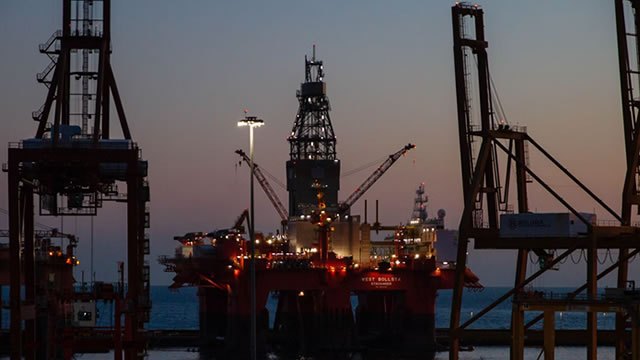
Group 1 - International oil prices experienced fluctuations, with light crude oil futures for September closing at $63.17 per barrel, down $0.79 (1.24%), and Brent crude for October at $66.12 per barrel, down $0.51 (0.77%) [1] - Analysts suggest that the upcoming meeting between the U.S. and Russian leaders on August 15 could significantly impact the oil market, particularly regarding potential sanctions on Russian oil buyers and the situation in Ukraine [1] - OPEC's monthly report maintains the global daily oil demand growth forecast for this year at 1.29 million barrels per day, while increasing the 2026 demand growth forecast by 100,000 barrels per day to 1.38 million barrels per day [1] Group 2 - OPEC projects global economic growth for this year at 3.0%, slightly up from the previous forecast of 2.9%, with the 2026 growth rate remaining unchanged at 3.0% [2] - The report indicates that the daily liquid fuel production from non-OPEC countries is expected to increase by 600,000 barrels, which is a downward revision of 100,000 barrels from previous estimates [2] - A recent survey by S&P Global indicates that U.S. commercial crude oil inventories decreased by 1.8 million barrels week-on-week, with gasoline and distillate inventories also declining by 140,000 barrels and 20,000 barrels, respectively [2]