社交性价比

Search documents
被嘲笑的馄饨酒馆,是失意中年人的相亲乐园
虎嗅APP· 2026-02-08 03:07
Core Viewpoint - The article discusses the emergence and cultural significance of "Wonton Bars" in Northeast China, portraying them as a social space for middle-aged individuals seeking connection and entertainment during economic downturns. The bars serve as a unique blend of dining and nightlife, where the focus is less on food and more on social interaction and emotional release [8][39][72]. Group 1: Cultural Context - "Wonton Bars" have become a popular social venue for middle-aged individuals, particularly in Northeast China, where they can enjoy affordable entertainment and connect with others [39][72]. - The bars are characterized by a lively atmosphere, often featuring karaoke and dancing, with patrons engaging in activities that reflect a sense of nostalgia and a desire for emotional expression [17][20][91]. - The phenomenon has sparked a wave of social media attention, with videos of patrons dancing and singing going viral, leading to both amusement and critique from younger generations [17][42][90]. Group 2: Business Model and Market Dynamics - The "Wonton Bar" concept is rooted in affordability and social interaction, appealing to a demographic that may feel marginalized in traditional nightlife settings [50][72]. - The bars often feature a standardized environment, with similar decor and offerings, creating a recognizable brand across different locations [15][44]. - The success of "Wonton Bars" has inspired similar ventures, indicating a growing trend in the market for casual, low-cost social venues that cater to middle-aged patrons [54][72]. Group 3: Social Commentary - The article highlights the emotional landscape of middle-aged individuals, who often feel overlooked in a youth-centric society, finding solace and camaraderie in these bars [38][90]. - The interactions and experiences shared in "Wonton Bars" serve as a reflection of broader societal issues, including economic challenges and changing social norms [72][91]. - The bars symbolize a space where age-related stigmas are temporarily set aside, allowing patrons to engage in youthful behaviors and connect with others in a meaningful way [91][92].


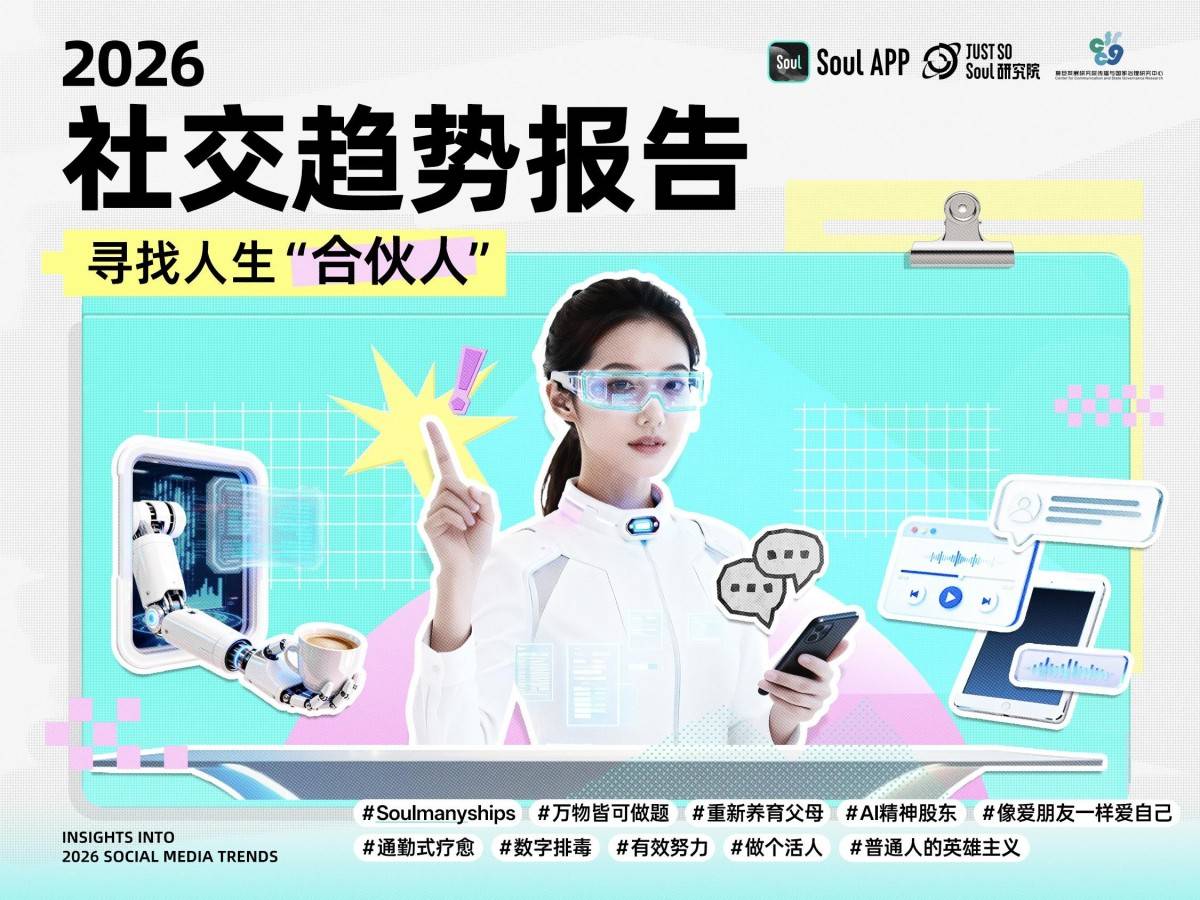
Soul App联合复旦大学发布《2026年社交趋势报告》:寻找人生“合伙人”
Sou Hu Cai Jing· 2025-12-26 10:13
Core Insights - The report highlights a shift in the social lives of young people, moving from grand existential questions to focusing on everyday actions and relationships, emphasizing equality and mutual support in a chaotic world [1][3]. Group 1: Social Trends - Young people are moving beyond traditional dichotomies of "involution" and "lying flat," seeking to be free, sincere, and interesting ordinary individuals, with a focus on building "life partnerships" [3][30]. - The report identifies ten key themes that encapsulate the social attitudes and practices of this generation, including Soulmanyships, AI精神股东, and 普通人的英雄主义, which collectively illustrate their pursuit of a meaningful and authentic life [3][30]. Group 2: Relationship Dynamics - The concept of "Soulmanyships" reflects a trend where young people define relationships based on specific needs and contexts, leading to a modular and lightweight approach to social connections [6][30]. - Young individuals are increasingly using a "social problem-solving" approach, applying formulas and strategies to navigate interpersonal interactions, particularly in romantic contexts [10][30]. Group 3: Family and AI Relationships - There is a trend of "re-parenting" where young people are actively reshaping their relationships with their parents, fostering mutual understanding and support [13][30]. - AI has transitioned from being a mere efficiency tool to a "spiritual partner," with a significant percentage of young people seeking deeper self-understanding through AI interactions [15][30]. Group 4: Self-Care and Mental Health - Young people are redefining self-love, treating themselves with kindness and care, which is reflected in the popularity of self-affirming practices on social media [18][30]. - The emergence of "commuting therapy" signifies a rejection of traditional vacation norms, focusing instead on simple, restorative activities that promote mental well-being [21][30]. Group 5: Digital Detox and Authenticity - A growing number of young individuals are engaging in "digital detox" practices, seeking to reconnect with the real world and reduce the overwhelming nature of constant connectivity [23][30]. - The trend towards "being alive" emphasizes authenticity over curated social media personas, with young people valuing genuine moments and experiences [27][30]. Group 6: Practical Efforts and Everyday Heroism - Young people are embracing a pragmatic approach to self-discipline, focusing on effective efforts rather than performative self-control [25][30]. - The notion of "ordinary people's heroism" reflects a commitment to living meaningfully in everyday situations, emphasizing resilience and personal agency [29][30].