社会主义革命

Search documents
美国霸权的拉美棋局(下):猪湾72小时,古巴挫败美国颠覆阴谋
Huan Qiu Shi Bao· 2026-01-15 22:42
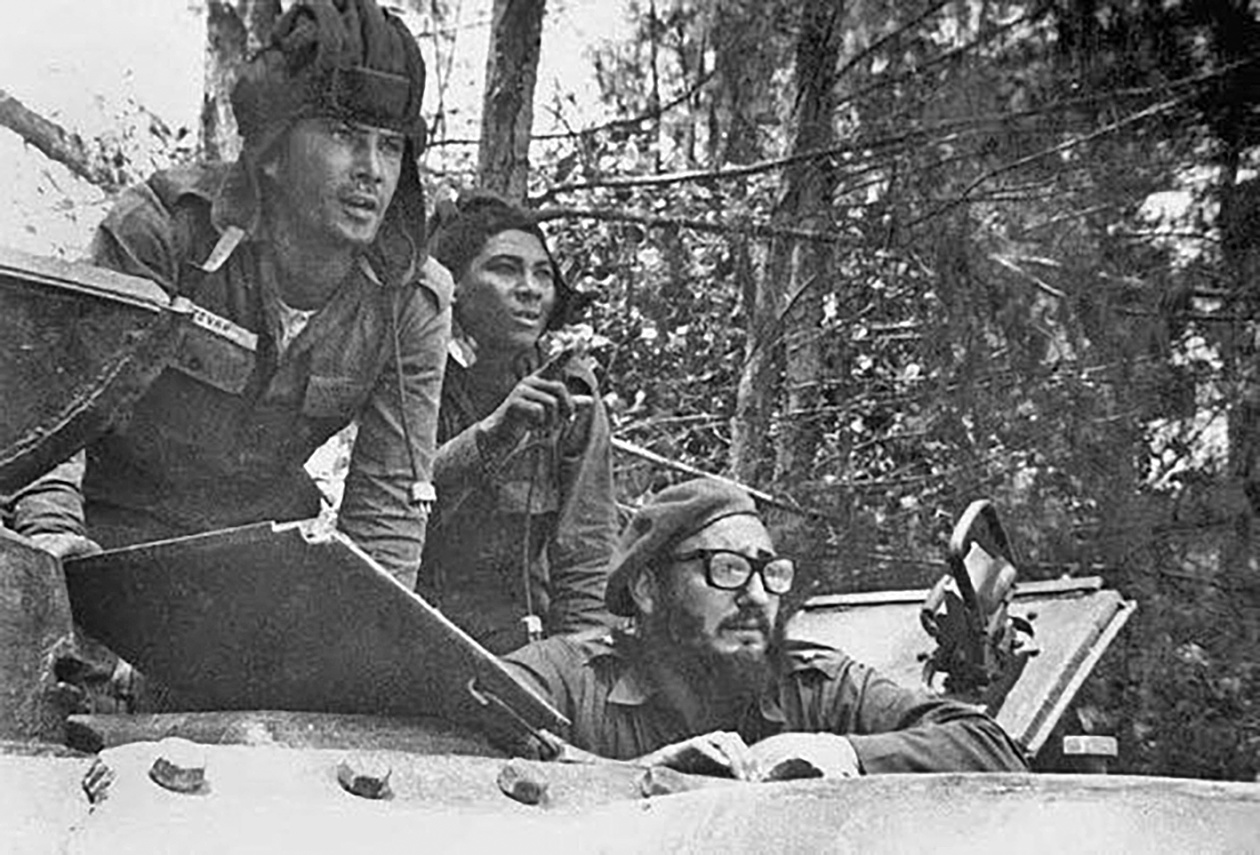
Core Viewpoint - The article discusses the historical context and implications of the U.S. military intervention in Cuba during the "Bay of Pigs" incident, highlighting the failure of the operation and its impact on U.S.-Cuba relations and the broader geopolitical landscape in Latin America [1][9]. Group 1: Historical Background - In 1959, Fidel Castro's revolutionary forces overthrew the U.S.-backed Batista regime in Cuba, leading to a series of reforms that challenged U.S. economic and political interests [2][4]. - The Cuban government implemented land reforms and nationalization policies that directly affected U.S. investments, particularly in the sugar industry, prompting the U.S. to impose trade sanctions and cut off aid [4][5]. Group 2: The Bay of Pigs Invasion - The U.S. planned the invasion of Cuba, training Cuban exiles to overthrow Castro's government, which was executed under President Kennedy's authorization in 1961 [6][8]. - The invasion, known as the "Bay of Pigs" incident, began on April 17, 1961, but quickly failed due to strong resistance from Cuban forces, resulting in the capture of nearly 1,200 invaders [8][9]. Group 3: Aftermath and Consequences - The failure of the invasion solidified Castro's position in Cuba and led to the declaration of Cuba as a socialist state, further straining U.S.-Cuba relations [9][10]. - The incident prompted widespread condemnation of the U.S. internationally, with significant protests in Latin America against U.S. intervention, highlighting the geopolitical ramifications of the failed operation [10].

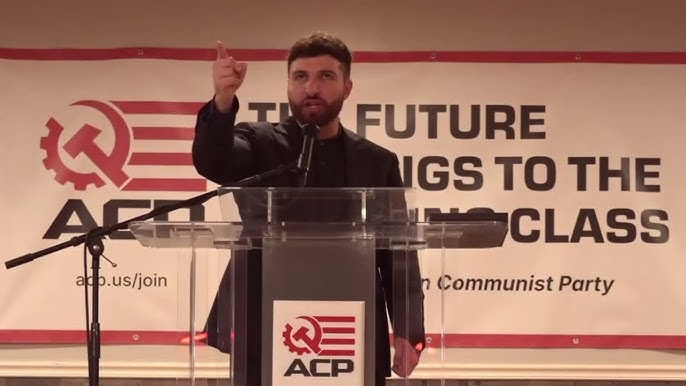
王文&阿尔丁:美利坚共产党能跟中国共产党学到什么?
Guan Cha Zhe Wang· 2025-10-25 06:06
Core Points - The article discusses the contrasting perspectives on the Chinese Communist Party (CCP) and the American Communist Party (ACP), highlighting the ACP's admiration for the CCP's people-centered development approach and its relevance to addressing social issues in the U.S. [1][2][5] - The dialogue between Wang Wen and Haz Al-Din explores the potential for socialist movements in the U.S. and the historical context of socialism in America, emphasizing the need for a new social order based on shared values rather than existing political structures [3][6][10] - The ACP's strategy involves building a foundation for public interest services and community organization in anticipation of potential systemic failures in the U.S. political system [9][12][20] Summary by Sections Section 1: Ideological Perspectives - The ACP views the CCP's development model as a valuable example for addressing the widening wealth gap and social issues in the U.S. [1][2] - Haz Al-Din argues that despite the U.S. being perceived as anti-communist, there is a significant sentiment for socialist principles among the American populace [5][6] Section 2: Current Political Climate - The article highlights the signs of a potential breakdown in the U.S. constitutional order, with increasing social unrest and dissatisfaction among citizens regarding the "American Dream" [6][10] - Haz Al-Din suggests that while a socialist revolution is unlikely under current conditions, extreme scenarios could lead to the ACP playing a crucial role in unifying the country [7][9] Section 3: International Relations and Cooperation - The ACP is actively seeking to establish connections with socialist and communist parties worldwide, particularly with the Russian Communist Party [19][20] - The ACP aims to redefine its understanding of global political dynamics, rejecting simplistic labels for countries like China and Russia, and focusing on the real struggles for national sovereignty and alternative economic models [20][21] Section 4: Learning from the CCP - The ACP has institutionalized the study of CCP history and ideology, recognizing its contributions to the development of Marxism-Leninism [21][22] - Haz Al-Din emphasizes the importance of understanding Xi Jinping's Thought on Socialism with Chinese Characteristics for a comprehensive grasp of contemporary socialist theory [23][24] Section 5: Long-term Goals - The ACP has set a long-term vision for revitalizing the American communist movement, aiming for significant grassroots support by 2036 [26][27] - The party acknowledges the challenges ahead and emphasizes a gradual approach to achieving its objectives, likening the movement to a marathon rather than a sprint [27][29]