
保守主义

Search documents
春节档跌幅近四成,电影市场保守主义不可取
Jing Ji Guan Cha Wang· 2026-02-24 08:09
Group 1 - The 2026 Spring Festival box office reached 57.52 billion yuan with 120 million viewers, showing a significant decline compared to 2025's 95.10 billion yuan and 187 million viewers, marking a drop of 39.54% in box office and 35.83% in attendance [1] - The leading film, "Flying Life 3," grossed 29.27 billion yuan, while the second and third places, "Silent Awakening" and "Bounty Hunter: Wind in the Desert," earned 8.68 billion yuan and 8.06 billion yuan respectively, indicating a further polarization in box office performance [1] - The lack of a blockbuster with both novelty and box office appeal in this year's festival contributed to the decline in audience enthusiasm, contrasting with previous years where films like "Nezha 2" and "Detective Chinatown" drove significant revenue [2][3] Group 2 - The conservative approach in filmmaking, focusing on IP and sequels with insufficient innovation, reflects a broader issue in the industry regarding long-term planning and output stability [3] - The "ticket root economy" has somewhat mitigated the box office decline by integrating cinema with food, travel, and consumption vouchers, although it may dilute the core appeal of films [3] - The phenomenon of the "ticket root economy" suggests a transition in the Chinese film industry from content products to cultural interfaces, posing both opportunities and challenges for the industry [4]
外国媒体眼里的高市历史性胜利
日经中文网· 2026-02-13 08:29
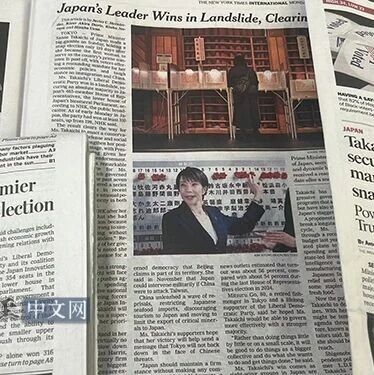
Core Viewpoint - The article highlights the historic victory of Prime Minister Sanna Hayashi in the Japanese House of Representatives election, which has garnered significant attention from international media, particularly in the U.S. and Europe, while also raising concerns about Japan's political shift to the right from Chinese and Russian perspectives [2][4][10]. Group 1: Election Results and Media Reactions - The Liberal Democratic Party (LDP) led by Hayashi secured over two-thirds of the seats in the election, marking a historic win [2][4]. - U.S. media described Hayashi's victory with terms like "avalanche victory" and noted her popularity among voters, attributing it to her decisiveness, communication style, and optimistic attitude [6][8]. - International media, including German outlets, suggested that Hayashi's "Japan First" policy could serve as a model for other countries facing similar political polarization [7]. Group 2: Political Implications and Concerns - Hayashi's victory is seen as a significant shift for the LDP, which had faced challenges due to rising prices and political scandals [6]. - Reports indicate that Hayashi may push for constitutional amendments, including recognizing the Self-Defense Forces as a military, which could face opposition from other political parties and segments of the public [8][9]. - Concerns about Japan's rightward shift were echoed in Chinese and Russian media, with warnings about potential changes to Japan's pacifist constitution and military policies [10][11]. Group 3: Young Voter Support and Social Media Influence - Young voters have shown strong support for Hayashi, with media highlighting her ability to engage with them through social media and relatable communication [8]. - The use of affectionate terms like "Sanae-chan" among young supporters reflects her popularity and connection with the youth demographic [8]. Group 4: Regional and International Relations - ASEAN media expressed concern over the implications of Hayashi's hawkish stance on China, predicting that her victory could exacerbate tensions between Japan and China [12]. - The article notes that the opposition parties in Japan failed to present a significant challenge, partly due to their fragmentation [12].

日本误判形势的结局,历史给过答案
Xin Lang Cai Jing· 2026-02-10 00:46
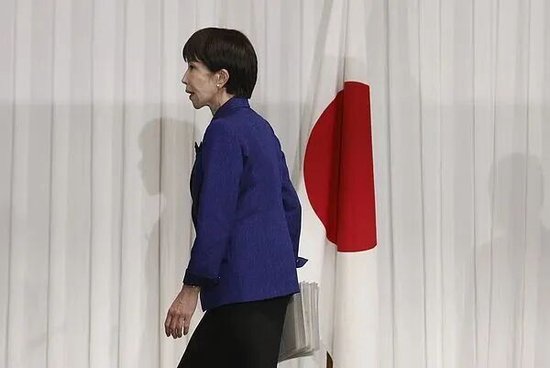
Core Viewpoint - The recent Japanese House of Representatives election resulted in a decisive victory for the ruling coalition led by Prime Minister Sanna Takashi, who is expected to continue her term in the upcoming National Diet election on the 18th of this month. However, this victory does not resolve the underlying governance challenges facing her administration [1][10]. Group 1: Political Landscape - The election has restored a "one strong, many weak" political landscape in Japan, but it does not indicate that the administration has overcome its governance difficulties. The need for Takashi to take risks in the election reflects the numerous constraints she faces, which cannot be resolved by a single election [3][12]. - The ruling coalition's foundation is shaky, with the recent split from long-time partner Komeito and uncertainty about the longevity of the newly formed coalition with the Japan Innovation Party [3][12]. - Takashi's push for constitutional amendments, changes to the "three non-nuclear principles," and a revision of national security documents has raised alarms among other nations, indicating a shift towards a more aggressive right-wing agenda [3][12]. Group 2: Party Dynamics - The election results have intensified the opposition between the ruling party and opposition parties. Takashi's potential push for military expansion and constitutional changes directly conflicts with the opposition's focus on social welfare and pacifism, leading to increased political polarization [4][14]. - Within the ruling party, there are growing tensions as traditional conservative figures become wary of Takashi's expanding influence, while other factions distance themselves from her agenda [5][14]. - The election highlighted a significant debate over Japan's military stance, with rising anti-war sentiments contrasting sharply with Takashi's "new strong nation" narrative, further dividing the political landscape [5][14]. Group 3: Foreign Relations and Security - The election results signal a shift towards "radical conservatism," which may reduce diplomatic dialogue in East Asia and increase geopolitical uncertainties. The deterioration of Japan's relations with China and the potential for a fragmented regional governance structure are concerning outcomes [7][16]. - Takashi's security-first policies, including plans to increase defense spending to 2% of GDP and transform the Self-Defense Forces into a "National Defense Force," could trigger an arms race in East Asia, exacerbating regional security dilemmas [7][16]. - The aggressive domestic and foreign policies under Takashi challenge the post-war international order, raising the risk of regional conflicts and posing a significant threat to East Asian security [7][16]. Group 4: Governance and Accountability - Takashi's approach appears to prioritize personal political survival over national governance and public welfare, revealing a "power prisoner" dynamic influenced by right-wing pressures and electoral demands [9][18]. - The administration's focus on crisis narratives to justify extreme policies may distract from pressing issues such as economic management and public accountability, potentially leading to further governance failures [9][18]. - The historical context of Japan's post-war peace commitments raises questions about the future direction of the country under Takashi's leadership, with potential implications for its international relations and regional stability [9][18].
新浪新闻@前主编 Global丨外媒:解读日本自民党创纪录胜利背后的保守主义浪潮
Xin Lang Cai Jing· 2026-02-09 10:09
Group 1 - The core viewpoint of the article highlights the significant victory of Japan's ruling Liberal Democratic Party (LDP) and the rise of conservative policies under the leadership of Fumio Kishida [1] - The article discusses the implications of this victory for Japan's political landscape, indicating a shift towards more extreme conservative policies [1] - It emphasizes the potential impact of these policies on Japan's domestic and foreign affairs, suggesting a more assertive stance in international relations [1]
沃什的提名:美联储向保守主义的复位与传统原则的回归
付鹏的财经世界· 2026-01-30 23:05
Core Viewpoint - The nomination of Kevin Warsh as the new chairman of the Federal Reserve represents a fundamental reflection and clearing of the past fifteen years of mainstream central banking governance concepts, advocating for a return to conservative liquidity principles and traditional roles of the central bank [2]. Group 1: Historical Context and Central Bank Role - The core mission of central banks is to maintain price stability and promote full employment, acting as guardians of the financial system through interest rate adjustments and monetary supply control [4]. - Historically, the Federal Reserve was seen as the "lender of last resort," focusing on emergency support rather than providing unconditional market assistance [5]. - Over the past decade, the Federal Reserve's role has shifted from crisis responder to a "super participant" in the market, significantly expanding its balance sheet from under $1 trillion pre-crisis to nearly $9 trillion [5][6]. Group 2: Critique of Interventionism - The Federal Reserve's interventionist tendencies have led to a loss of confidence in market self-regulation, creating moral hazard and resource misallocation [6]. - Warsh has criticized the Fed's policies for fostering "zombie firms" that survive on cheap refinancing without contributing to productivity growth, thus crowding out innovative capital [6]. - The Fed's quantitative easing has exacerbated wealth inequality, benefiting the wealthy while ordinary citizens face negative real interest rates [6][8]. Group 3: Return to Traditional Principles - Warsh's approach combines elements of the 1951 Treasury-Fed Agreement and the 1979 Volcker moment, advocating for a return to monetary conservatism and a focus on controlling the money supply rather than merely adjusting interest rates [10]. - The proposed "quantitative tightening" (QT) aims to end the fiscal dominance of the government by reducing the Fed's role as an unlimited buyer of government debt, thereby enforcing market discipline [15]. - Warsh emphasizes that the Fed should focus on its core responsibilities, such as managing inflation expectations and the banking system's solvency, while avoiding involvement in non-core issues like climate change [11][8]. Group 4: Policy Framework of "Tightening Liquidity" - Warsh's policy framework of "QT + rate cuts" represents a fundamental shift in liquidity provision, aiming to restore market discipline while adapting to supply-side changes, particularly the impact of AI on productivity [18][14]. - The combination of QT and rate cuts is designed to support productive investment while constraining speculative behavior, signaling that low-cost capital will be available for productive investments but not for financial speculation [18][19]. - This approach is expected to lead to a steepening yield curve, reflecting real pricing of risks and potentially increasing market volatility as liquidity expansion ends [21]. Group 5: Redefining "Hawkish" and "Dovish" - Warsh's definition of "hawkish" diverges from traditional views, suggesting that true hawks would advocate for rate cuts while firmly supporting QT and avoiding bailouts, thus acknowledging the limits of central bank power [20]. - The anticipated return to traditional principles under Warsh's leadership would challenge the prevailing "big water" liquidity approach, leading to a more stratified liquidity environment where capital flows to productive sectors [21].

明尼阿波利斯枪声背后:美国保守主义谱系与特朗普的执政理念
Xin Lang Cai Jing· 2026-01-27 00:11
Core Viewpoint - The article discusses the resurgence of protests in Minneapolis following immigration enforcement shootings, highlighting the controversial nature of Trump's immigration policies and the broader implications for American political dynamics [2][6]. Group 1: Immigration Policy and Public Response - The shooting of Alex Preti on January 24 and the earlier death of Reign Nicole Good on January 7 by ICE agents sparked nationwide protests against Trump's immigration policies, marking the third major anti-government demonstration since his presidency began [2]. - The protests were characterized by the slogan "No King," reflecting a historical resistance to authority and a critique of Trump's governance style [2]. Group 2: Historical Context of American Conservatism - American conservatism has evolved through various phases, with anti-communism becoming a key pillar during the Cold War, emphasizing free market economics, traditional values, and opposition to communism [3][4]. - William Buckley, a significant figure in modern conservatism, integrated these elements into a cohesive ideology, which faced challenges during the 1960s and 70s due to social upheaval and the civil rights movement [3][4]. Group 3: The Rise of Neoconservatism - The emergence of neoconservatism in the 1970s, characterized by a reaction against liberal welfare policies and radical civil rights stances, marked a shift in conservative thought, leading to a more interventionist foreign policy under George W. Bush [5][6]. - Bush's administration emphasized unilateral military action and government intervention, contrasting with earlier conservative approaches that favored limited government [5]. Group 4: Trump's Unique Position in Conservatism - Trump represents a departure from traditional conservatism, embodying a populist approach that prioritizes domestic interests and challenges established political norms [6][7]. - His administration's policies, including strict immigration enforcement and trade protectionism, reflect a shift towards a more nationalist and pragmatic form of governance, diverging from the idealistic tenets of neoconservatism [7][8]. Group 5: The Impact of Trump's Governance - Trump's presidency has seen an unprecedented expansion of executive power, undermining traditional checks and balances and altering the landscape of American conservatism [9][10]. - The article posits that Trump's influence will leave a lasting mark on American politics, raising questions about the future trajectory of the nation amidst rising populism and nationalism [10].

王文&阿尔丁:美利坚共产党能跟中国共产党学到什么?
Guan Cha Zhe Wang· 2025-10-25 06:06
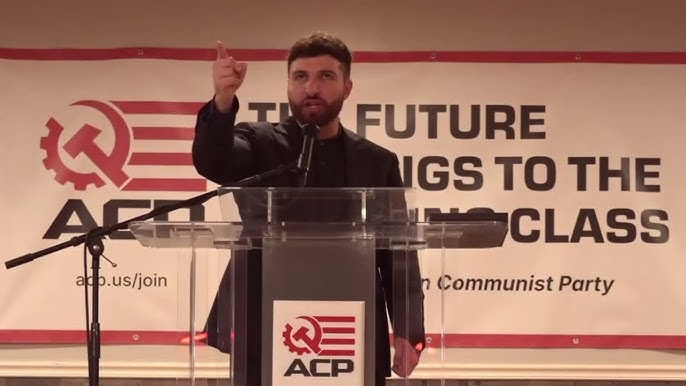
Core Points - The article discusses the contrasting perspectives on the Chinese Communist Party (CCP) and the American Communist Party (ACP), highlighting the ACP's admiration for the CCP's people-centered development approach and its relevance to addressing social issues in the U.S. [1][2][5] - The dialogue between Wang Wen and Haz Al-Din explores the potential for socialist movements in the U.S. and the historical context of socialism in America, emphasizing the need for a new social order based on shared values rather than existing political structures [3][6][10] - The ACP's strategy involves building a foundation for public interest services and community organization in anticipation of potential systemic failures in the U.S. political system [9][12][20] Summary by Sections Section 1: Ideological Perspectives - The ACP views the CCP's development model as a valuable example for addressing the widening wealth gap and social issues in the U.S. [1][2] - Haz Al-Din argues that despite the U.S. being perceived as anti-communist, there is a significant sentiment for socialist principles among the American populace [5][6] Section 2: Current Political Climate - The article highlights the signs of a potential breakdown in the U.S. constitutional order, with increasing social unrest and dissatisfaction among citizens regarding the "American Dream" [6][10] - Haz Al-Din suggests that while a socialist revolution is unlikely under current conditions, extreme scenarios could lead to the ACP playing a crucial role in unifying the country [7][9] Section 3: International Relations and Cooperation - The ACP is actively seeking to establish connections with socialist and communist parties worldwide, particularly with the Russian Communist Party [19][20] - The ACP aims to redefine its understanding of global political dynamics, rejecting simplistic labels for countries like China and Russia, and focusing on the real struggles for national sovereignty and alternative economic models [20][21] Section 4: Learning from the CCP - The ACP has institutionalized the study of CCP history and ideology, recognizing its contributions to the development of Marxism-Leninism [21][22] - Haz Al-Din emphasizes the importance of understanding Xi Jinping's Thought on Socialism with Chinese Characteristics for a comprehensive grasp of contemporary socialist theory [23][24] Section 5: Long-term Goals - The ACP has set a long-term vision for revitalizing the American communist movement, aiming for significant grassroots support by 2036 [26][27] - The party acknowledges the challenges ahead and emphasizes a gradual approach to achieving its objectives, likening the movement to a marathon rather than a sprint [27][29]
三度叩门 终掌相印 64岁高市早苗成日本首位女首相
Yang Shi Xin Wen· 2025-10-21 06:24
Core Points - The article discusses the election of Sanna Takichi as Japan's first female Prime Minister, highlighting her background and political journey [1][2][3] - It outlines the challenges she will face in her new role, including political alliances and public trust issues [14][18][19] Background - Sanna Takichi, born in 1961 in Nara Prefecture, comes from a non-political family background, contrasting with many of her contemporaries [1] - She was known as a "rebellious girl" in her youth and later pursued a political career after studying at the Matsushita Institute of Government and Management [3][5] - Takichi entered politics in 1993 and has held various significant positions within the government, closely aligning with the policies of former Prime Minister Shinzo Abe [5][6] Political Career - Takichi has served in multiple cabinet roles, including Minister of Internal Affairs and Communications and Minister for Economic Security, and is recognized as a staunch supporter of Abe's conservative policies [5][6][11] - She has participated in three previous elections for the presidency of the Liberal Democratic Party (LDP) before finally winning in October 2023 [11] Challenges Ahead - Takichi's government will face a "minority governance" situation, complicating policy implementation due to the lack of a majority in both houses of parliament [19] - She must also address internal party issues related to corruption scandals and regain public trust amid rising dissatisfaction with the government's handling of economic and social issues [19] - Her conservative stance on national security and foreign policy may exacerbate tensions with neighboring countries [19] Public Sentiment - There is growing concern among the Japanese public regarding the frequency of leadership changes, with five prime ministers in the last five years, which may affect national stability [20][21]
刚刚,日本首位女首相诞生
中国基金报· 2025-10-21 05:42
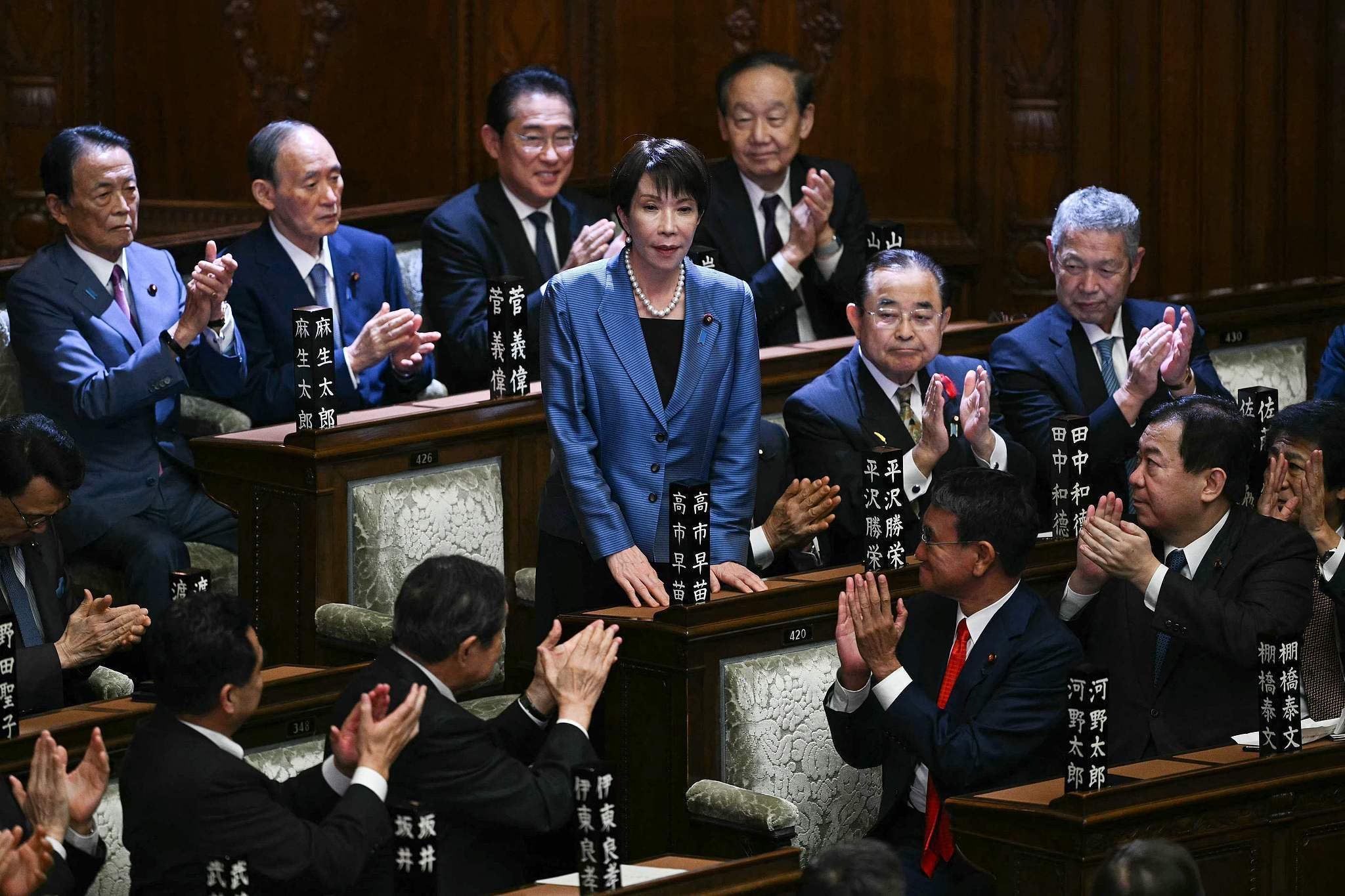
Core Points - The article discusses the election of Sanna Takichi as Japan's first female Prime Minister, highlighting her background and political stance [2][3][4] - Takichi aims to strengthen Japan's economy and has positioned herself as a successor to former Prime Minister Shinzo Abe, promoting "Sanna Economics" based on Abe's policies [3][4] Group 1: Election and Background - Sanna Takichi won the first round of voting in the Japanese House of Representatives Prime Minister nomination election on October 21, becoming the first female president of the Liberal Democratic Party and the first female Prime Minister in Japan's history [2] - Takichi, born in 1961, comes from an ordinary family and has a history of being a "rebellious girl" during her school years [2] - She has held various significant cabinet positions over the past 32 years, including Minister of Economic Security and Minister of Internal Affairs [2] Group 2: Political Ideology and Actions - Takichi is known for her strong conservative stance and has proposed the establishment of a "National Intelligence Agency" to enhance information collection in diplomacy and security [3] - She has called for the introduction of advanced weaponry and an increase in defense spending, aligning with U.S. requests [3] - Takichi has a history of visiting the Yasukuni Shrine, which has drawn criticism for being perceived as too right-wing [4]

谈判可能在进行,但至今依然难言乐观
Hu Xiu· 2025-10-15 00:03
Core Insights - The meeting between the two national leaders is still "on the schedule," but significant differences between the U.S. and China have been exposed, making the outcome uncertain [1] - The U.S. officials' views reflect a fundamental misunderstanding of China's position, particularly regarding technology sanctions and retaliatory measures [2][3] - The differing perspectives on the rare earth agreement indicate a lack of alignment in negotiations, with U.S. officials possibly underestimating the implications of China's policies [4] Group 1: U.S.-China Relations - The U.S. officials believe that China's economic issues will limit its negotiation power, a premise that is increasingly being challenged [5] - The concept of "tit for tat" is evident in China's response to U.S. sanctions, showcasing a more assertive trade negotiation strategy [7][8] - China's recent actions, such as imposing port fees on U.S. ships, reflect a calculated approach to maintain its long-term competitive advantage while avoiding excessive damage to the global economy [11][12] Group 2: Strategic Implications - China's strategy appears to focus on long-term risks rather than short-term uncertainties, indicating a shift in its negotiation tactics [14] - The use of supply chain advantages as a countermeasure against U.S. actions signifies a strategic evolution in China's approach to trade disputes [14] - The ongoing negotiations are characterized by significant distributive issues, where both sides have core demands that are difficult to reconcile, potentially complicating future discussions [17]