科学刷牙

Search documents
晚上睡前刷牙原来竟是错的
Xin Lang Cai Jing· 2026-02-10 19:01
Group 1 - The common belief that brushing teeth before sleep is the best practice is incorrect; brushing 30 minutes after dinner is more beneficial for oral health [2] - Delaying brushing until just before sleep can lead to food residue and bacteria accumulating in the mouth for several hours, negatively impacting oral health [2] - Brushing after dinner and avoiding food intake afterward can help control weight and improve overall health [2] Group 2 - It is recommended to brush teeth three times a day (morning, noon, and night), with at least two times being essential [3] - The ideal time to brush at night is 30 minutes to 1 hour after dinner [3] - Brushing only once a day is insufficient as it allows plaque to become entrenched, making it difficult to remove [5] Group 3 - The process of plaque formation occurs in stages, with significant changes in bacterial attachment and maturity over time [4] - Plaque can mature and become a complex microbial community within 24 hours, leading to dental issues [4] - To effectively interrupt plaque maturation, brushing every 12 hours is necessary [5] Group 4 - Common brushing mistakes include using a horizontal sawing motion, brushing for less than one minute, and neglecting certain areas of the mouth [6][7] - A recommended brushing technique is the "333" principle: brush three times a day, for three minutes each time, and brush 30 minutes after meals [8] Group 5 - Signs that indicate dental issues include tooth sensitivity, black spots on teeth, pain, food trapping, gum bleeding, misalignment, and missing teeth [9][10][11][12] - It is crucial to adopt proper brushing techniques to prevent these dental problems rather than waiting for symptoms to arise [12]


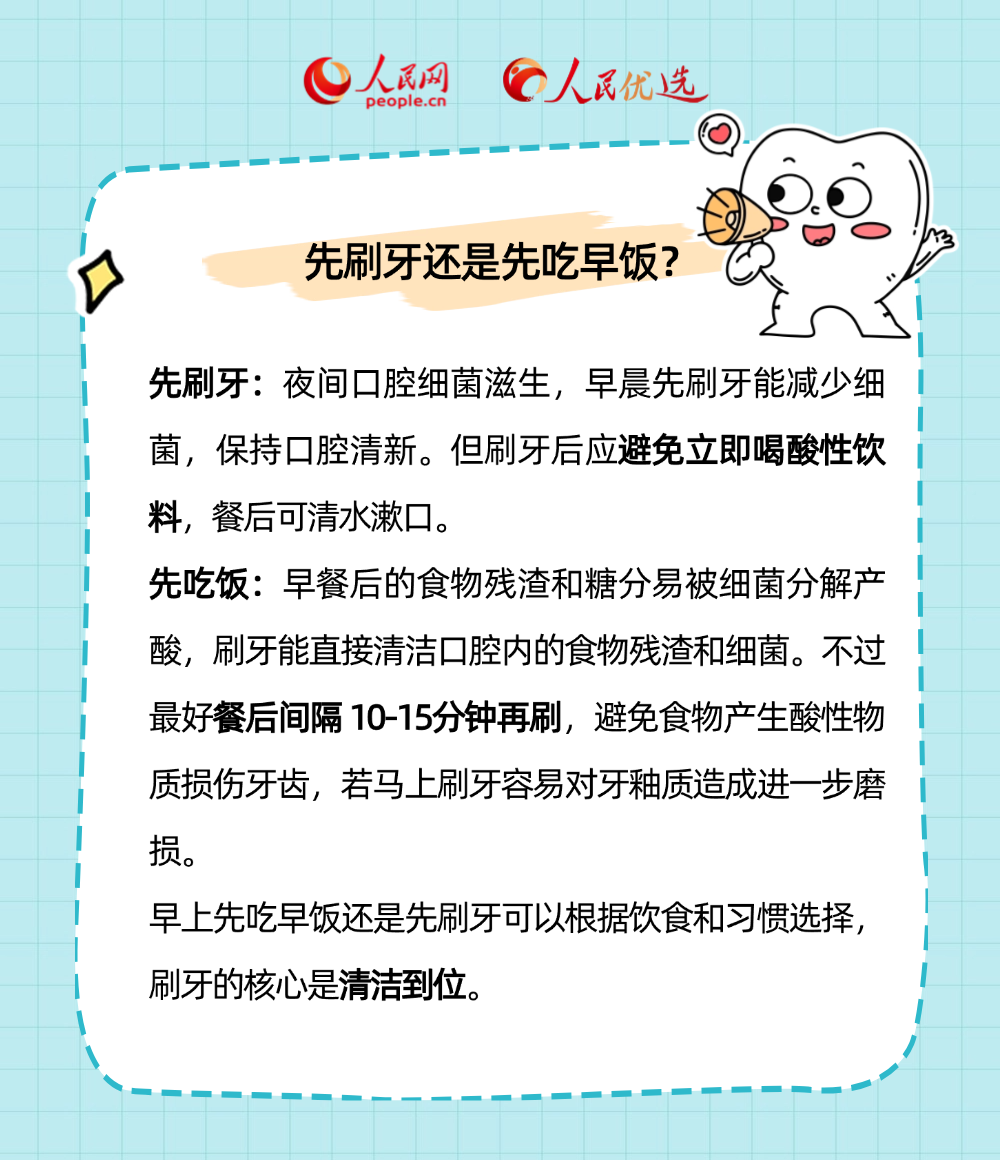
先刷牙还是先吃早饭?了解刷牙那些事儿
Ren Min Wang· 2025-08-11 02:22
Core Viewpoint - The article discusses the health implications of whether to brush teeth before or after breakfast, indicating that both practices are acceptable according to dental health experts [1]. Group 1: Importance of Brushing - The primary goal of brushing teeth is to remove dental plaque, a sticky film of bacteria that adheres to the tooth surface, which can proliferate if not regularly cleaned [3]. - Effective brushing should include cleaning the surfaces of the teeth, including the front, back, between teeth, gum line, and tongue [3]. Group 2: Brushing Techniques - The article recommends the "Bass technique" for brushing, which involves seven steps to ensure thorough cleaning [6]. - Key steps include positioning the toothbrush at a 45-degree angle, using short horizontal movements, and ensuring to clean all surfaces of the teeth and tongue [6]. Group 3: Common Misconceptions - Misconceptions include the belief that "natural and additive-free" toothpaste is always safer, that harder brushing leads to cleaner teeth, and that brushing for a short duration is sufficient [8]. - It is advised to replace toothbrushes every three months to maintain cleaning effectiveness [8]. Group 4: Choosing Toothbrushes and Toothpaste - When selecting a toothbrush, factors such as head size, bristle softness, and individual oral health conditions should be considered [9]. - For toothpaste, fluoride-containing options are recommended for preventing cavities, while those with desensitizing ingredients are suggested for sensitive teeth [10]. Group 5: Recommended Oral Care Routine - A suggested routine includes brushing with a soft-bristled toothbrush and fluoride toothpaste for two minutes after breakfast, followed by flossing [12]. - Regular dental check-ups every six months to a year are recommended to identify potential dental issues early [12].