牙膏

Search documents
深圳小阔科技股份有限公司(H0473) - 申请版本(第一次呈交)
2026-03-26 16:00
香港聯合交易所有限公司與證券及期貨事務監察委員會對本申請版本的內容概不負責,對其準確 性或完整性亦不發表任何意見,並明確表示概不就因本申請版本全部或任何部分內容而產生或因 倚賴該等內容而引致的任何損失承擔任何責任。 Shenzhen Xiaokuo Technology Co., Ltd. 深 圳 小 闊 科 技 股 份 有 限 公 司 (「本公司」) ( 於中華人民共和國註冊成立的股份有限公司) 的申請版本 警告 本 申 請 版 本 乃 根 據 香 港 聯 合 交 易 所 有 限 公 司(「 聯 交 所」)與 證 券 及 期 貨 事 務 監 察 委 員 會 (「證監會」)的要求而刊發,僅用作提供資料予香港公眾人士。 本申請版本為草擬本,其內所載資料並不完整,亦可能會作出重大變動。 閣下閱覽本 文件,即代表 閣下知悉、接納並向本公司、本公司的獨家保薦人、整體協調人、顧問 或包銷團成員表示同意: 倘於適當時候向香港公眾人士提出要約或邀請,有意投資者務請僅依據與香港公司註冊 處處長註冊的本公司招股章程作出投資決定;招股章程的文本將於發售期內向公眾人士 提供。 (a) 本文件僅為向香港公眾人士提供有關本公司的資料, ...
深度 | 3·15观察:“双美”监管的“共振”时刻
FBeauty未来迹· 2026-03-16 12:35
Core Viewpoint - The article highlights the regulatory chaos surrounding "exosomes" in the medical beauty industry, revealing issues such as unauthorized certifications, false advertising, and illegal injections, which pose risks to consumer safety and market integrity [2][3][4]. Regulatory Issues - Multiple companies have been accused of using medical device licenses to produce exosome products, some of which falsely claim to treat conditions like epilepsy and diabetes, but are actually "three-no products" (no approval, no production, no quality guarantee) [2][4]. - The regulatory framework for exosomes is still being developed, with no exosome drugs approved for market as of March 15, 2026, despite the rapid market growth [4][5]. Market Trends - The incident reflects a deeper transformation in the beauty and medical aesthetics industry, where concepts from medical and biotechnology fields are rapidly entering the consumer market, leading to potential risks as technology outpaces regulation [4][5][6]. - The blending of medical beauty and lifestyle beauty is accelerating, with a growing number of medical concepts being marketed as skincare solutions, raising concerns about consumer safety and product efficacy [5][13]. Consumer Trust and Regulatory Changes - The March 15 exposé serves as a wake-up call for the industry, emphasizing the need for regulatory, scientific, and compliance systems to keep pace with evolving technology narratives [5][19]. - As the regulatory landscape tightens, the beauty industry is shifting towards a focus on trust, with consumers becoming more discerning about product claims and safety [5][19][22]. Data Insights - In recent years, the number of non-compliant cosmetic products has decreased significantly, with the number of problematic batches dropping from 601 in 2023 to 324 in 2025, indicating improved regulatory enforcement [15][17]. - Despite the reduction in regulatory issues, consumer complaints regarding false advertising and product quality have surged, suggesting a shift in consumer focus towards trust and transparency [18][19]. E-commerce and Marketing Regulations - New regulations in 2026 clarify the responsibilities of platforms, operators, and influencers in live commerce, aiming to combat false advertising and ensure consumer protection [26][27]. - The introduction of strict guidelines for live commerce and private domain marketing indicates a move towards greater accountability in the beauty industry [26][29]. Medical Aesthetics and Compliance - The medical aesthetics sector is facing increased scrutiny, with regulations prohibiting unlicensed institutions from performing medical procedures and requiring traceability for medical devices [29][30]. - The challenges posed by unregulated "black technology" in medical aesthetics highlight the need for robust regulatory frameworks to ensure consumer safety [30][31].


2025年中国口腔医疗行业市场研究报告-硕远咨询
Sou Hu Cai Jing· 2026-02-20 23:46
Core Insights - The Chinese dental healthcare industry is undergoing a critical transformation towards high-quality development, characterized by a resonance between supply and demand, and rapid growth [1][15]. Industry Overview - The dental healthcare industry focuses on oral health services, encompassing three main segments: diagnosis and treatment, care, and equipment [8]. - The service models include traditional public healthcare, specialized private operations, and emerging "Internet + dental healthcare" remote services, forming a multi-layered service system [12]. Market Dynamics - The industry has entered a mature phase over the past decade, with widespread application of digital and intelligent technologies, and continuous improvement in regulatory standards [14]. - The market size is expected to exceed 100 billion yuan by 2024, with a compound annual growth rate (CAGR) of over 15%, driven by significant growth in the dental treatment segment, particularly in dental implants and orthodontics [1][25]. Competitive Landscape - The industry is witnessing an increasing concentration trend, with leading companies leveraging capital, technology, and brand advantages to secure market positions [2]. - Emerging companies are focusing on digitalization and internet healthcare for innovative development, while foreign enterprises are investing in high-end equipment and services [2][39]. Consumer Demand - There is a notable shift in consumer demand from basic treatment to prevention, health maintenance, and aesthetic restoration, influenced by rising awareness of oral health [2][32]. - Key factors affecting purchasing decisions include brand reputation, medical technology, equipment quality, pricing, and payment methods [2]. Technological Advancements - Technological development is a core driver of the industry, with the widespread use of digital diagnostic equipment, 3D printing, and dental implant technologies [2]. - Information technologies such as telemedicine, big data, and artificial intelligence are enhancing diagnostic accuracy and efficiency, improving patient experiences [2]. Policy Environment - The government has introduced multiple policies to support the industry, including expanding insurance coverage for dental services and encouraging the development of private institutions [18][19]. - Local governments are implementing differentiated support policies, including special funds for infrastructure improvement and talent recruitment [21][22]. Market Growth Factors - The aging population is increasing the prevalence of dental diseases, leading to higher demand for dental restoration and implant services [31]. - Rising health awareness among residents is shifting demand towards preventive care and aesthetic services, driving market growth [32]. Industry Structure - The dental healthcare market comprises various participants, including large chain dental institutions, specialized dental hospitals, private clinics, and dental equipment manufacturers [28]. - The market structure is becoming more diversified and professionalized, with ongoing technological advancements and consumer upgrades [28].

美国四季度GDP仅增1.4%!政府停摆拖累1个百分点,特朗普提前“开火”鲍威尔
美股IPO· 2026-02-20 14:57
Economic Growth - The initial estimate of the US GDP growth for Q4 2025 is 1.4% on an annualized basis, significantly below the expected 2.8% and a sharp decline from the previous quarter's growth of 4.4% [1][3][6] - The overall economic growth for 2025 is recorded at 2.2%, down from 2.8% in 2024, primarily driven by consumer spending and investment increases [16] Government Impact - The government shutdown negatively impacted GDP by approximately 1 percentage point, with federal spending declining by 16.6% on an annualized basis during the quarter [6][8] - Non-defense federal spending saw a significant drop of 24.1%, marking the largest decline since 2020, affecting hundreds of thousands of federal employees and welfare payments [6] Consumer Behavior - Consumer spending, a major driver of GDP growth, contributed 1.6% to the overall GDP, although the growth rate slowed to 2.4% in Q4 from 2.9% in Q3, largely due to reduced spending on durable goods like automobiles [8] - The disparity in consumer confidence is evident, with lower-income groups feeling more anxious about job security and income prospects, leading to cautious spending behavior [17][18] Investment Trends - Business investment increased by 3.7%, driven by spending on information processing equipment, which is likely linked to the ongoing AI investment trend [8] - Major tech companies are projected to invest approximately $650 billion in data centers and related equipment by 2026, indicating a positive outlook for economic growth driven by technology [8] Inflation and Prices - The domestic final sales index rose by 3.7% in Q4, with the personal consumption expenditures (PCE) price index increasing by 2.9%, reflecting persistent inflationary pressures [9][11] - The core PCE price index, excluding food and energy, rose by 2.7%, indicating ongoing inflation concerns that may affect consumer purchasing power [9][11]



2026年第26期:晨会纪要-20260213
Guohai Securities· 2026-02-13 01:09
Group 1: Company Overview - The report focuses on Dengkang Oral Care (001328.SZ), a state-owned enterprise established in 2001, primarily producing oral hygiene products such as toothpaste, toothbrushes, and mouthwash [4] - The company aims to double its revenue and profit during the "14th Five-Year Plan" period, with a compound annual growth rate (CAGR) of 10.6% for revenue and 20.6% for net profit from 2019 to 2024 [4] - Adult toothpaste constitutes approximately 80% of the company's revenue, which is the main driver of recent growth [4] Group 2: Industry Analysis - The toothpaste market in China is the largest segment of the oral care industry, with a market size of approximately 30 billion yuan in 2023 [5] - The market is characterized by intense competition, with established brands dominating offline channels, while new brands are emerging in the e-commerce space [5] - Price sensitivity among consumers is low, and there has been a gradual increase in toothpaste prices since 2013, with a shift towards higher-priced functional products [5] Group 3: Competitive Advantages - Dengkang Oral Care has established competitive barriers through brand strength, research and development capabilities, and distribution channels [6] - The brand "Ling Suan Ling" has maintained vitality and is undergoing a transformation towards professionalization and modernization [6] - The company has a strong offline distribution network and is rapidly expanding its online presence, with e-commerce revenue expected to grow by 52% year-on-year in 2024 [6] Group 4: Growth Potential - There is significant room for product structure optimization, with the company introducing high-end products that enhance its product range [7] - The average factory price of products has increased from 2.63 yuan/100g to 3.30 yuan/100g from 2019 to 2024, reflecting a CAGR of 4.6% [7] - The company has successfully implemented a mature strategy for its flagship products on platforms like Douyin, indicating strong consumer demand and brand recognition [7] Group 5: Market Expansion Opportunities - The company is expanding into the whitening and gum care segments, which have larger market sizes compared to sensitivity products, with potential revenue increases of 3.9 billion yuan and 4.76 billion yuan, respectively [8] - The market for gum care and whitening toothpaste is estimated at 8.523 billion yuan and 7.061 billion yuan, respectively, indicating substantial growth opportunities [8] Group 6: Financial Forecast and Valuation - Revenue projections for Dengkang Oral Care are estimated to reach 1.747 billion yuan, 2.105 billion yuan, and 2.506 billion yuan for 2025-2027, with net profits expected to be 177 million yuan, 221 million yuan, and 271 million yuan for the same period [9] - The price-to-earnings (PE) ratios are projected to be 42X, 33X, and 27X for 2025-2027, reflecting the company's growing brand influence and successful product optimization [9]

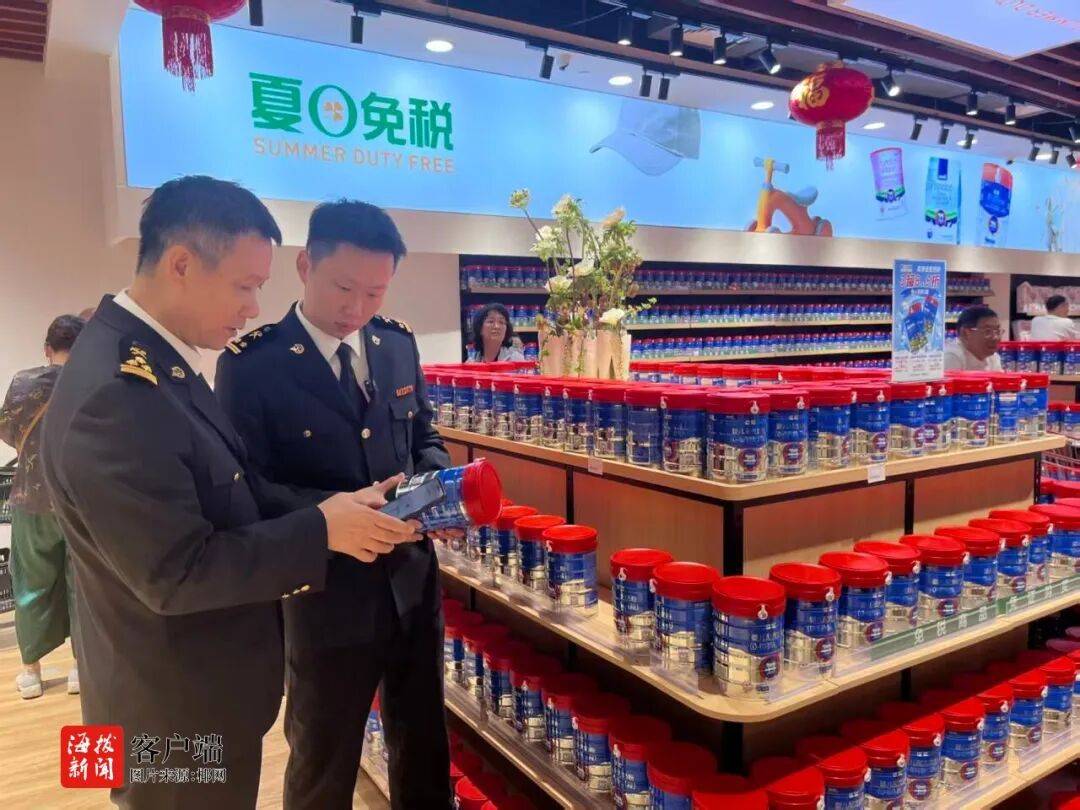
卖火了!洗发水、牙膏、奶粉等等,海南首批“零关税”日用消费品正式进店销售
Sou Hu Cai Jing· 2026-02-11 17:21
Core Viewpoint - The launch of "zero tariff" duty-free stores in Hainan specifically for local residents marks a significant shift in consumer behavior, allowing residents to access quality imported goods conveniently and affordably [2][4]. Group 1: Policy Implementation - Five "zero tariff" duty-free stores opened on February 11, located in key commercial areas of Haikou, Sanya, and Danzhou, attracting significant consumer interest [1]. - The "zero tariff" policy enables local residents to purchase a range of imported daily necessities, including shampoo, toothpaste, and milk powder, directly from stores, indicating a complete integration from policy announcement to market sales [2][4]. - The policy is designed to reduce living costs for residents, transforming the benefits of Hainan's free trade port into tangible savings, with a tax reduction of approximately 20% on the covered goods [4]. Group 2: Consumer Impact - The policy allows residents holding Hainan ID cards, residence permits, or social security cards to enjoy an annual duty-free shopping limit of 10,000 yuan, with no restrictions on purchase frequency [4]. - Local residents expressed excitement about the convenience and savings offered by the new duty-free stores, highlighting a positive consumer sentiment and increased purchasing power [6]. - The new sales format for "zero tariff" imported goods is seen as innovative, with significant market potential, as indicated by local business leaders' confidence in achieving strong sales during the upcoming holiday season [6][9]. Group 3: Regulatory Support - The Haikou Customs has proactively engaged with businesses to ensure smooth implementation of the policy, conducting demand surveys and providing detailed policy explanations to local enterprises [10]. - The customs authority has also focused on optimizing storage management and ensuring compliance throughout the supply chain, enhancing the overall efficiency of the duty-free shopping experience [10][12]. - Continuous efforts will be made to improve regulatory efficiency and service levels, ensuring that the benefits of the "zero tariff" policy are fully realized for both businesses and residents [12].
倍加洁2025年业绩扭亏为盈,股东减持与业务拓展引关注
Jing Ji Guan Cha Wang· 2026-02-11 09:07
Core Viewpoint - The company is expected to turn profitable in 2025, with a projected net profit attributable to shareholders ranging from 0.88 billion to 1.32 billion yuan, driven by improvements in its subsidiaries' operations [1] Group 1: Financial Performance - The company anticipates a significant turnaround in profitability for the year 2025, with a net profit forecasted between 0.88 billion and 1.32 billion yuan, marking a year-on-year recovery [1] - The official annual report has not yet been announced [1] Group 2: Management Changes - On February 5, 2026, the company announced that employee stockholding platforms and some directors and executives plan to reduce their holdings by up to 2.99% of the total share capital, through centralized bidding or block trading [2] Group 3: Business Development - The company is accelerating its toothpaste OEM business and deepening cooperation with sensitive toothpaste brands, while also seeing significant growth in its online channels for its own brand [3] - The investment target, Weimei Zi, is maintaining high growth in Douyin GMV for 2025, and the commercialization of the AKK bacteria products from Shan'en Kang is expected to contribute to performance [3] Group 4: Institutional Perspectives - Some brokerages released reports on February 7, 2026, maintaining an "outperforming the industry" rating and raising the target price to 48 yuan, but noted the need to monitor profitability pressures and the impact of trade frictions [4] Group 5: Stock Performance - As of February 10, 2026, the stock price closed at 40.97 yuan, down 2.06% for the day, with a net outflow of 603,500 yuan in principal funds, but the cumulative increase for the year reached 36.20% [5] - There is an intensifying tug-of-war between bulls and bears, necessitating caution regarding short-term profit-taking pressures [5]

消费市场步入精算时代,品牌新品如何做到叫好又叫座?
Sou Hu Cai Jing· 2026-02-08 15:53
Group 1 - The consumer industry is entering a rational era by 2025, where consumers become more discerning and focus on product quality rather than brand marketing stories [2] - Successful new products must meet unmet consumer needs with high value, including efficacy and emotional value, while also being perceived as cost-effective [2] - Consumer purchasing behavior is stratified by price segments: low-end consumers prioritize cost-effectiveness, high-end consumers focus on perceived value, and mid-range consumers seek a balance of both [2] Group 2 - The demand for higher-level efficacy in products is becoming a common pursuit among consumers, with a shift from basic needs to more specialized benefits [3] - In oral care, consumers are increasingly looking for products that not only clean but also provide whitening and sensitivity relief, with whitening being the top-selling feature [6] - The pet care market is seeing a trend towards "humanization," where pet owners seek products that offer advanced benefits like digestive health and skin care, reflecting a similar trend in human consumer behavior [8] Group 3 - The market is witnessing a growing preference for complex ingredient combinations in health products, moving from simple supplements to multi-ingredient formulations [10] - Brands can efficiently innovate by cross-applying popular ingredients from other industries, which can lead to immediate market success [12][15] - Data-driven insights are essential for brands to identify and capitalize on emerging trends in efficacy and pricing strategies [19] Group 4 - Consumers are becoming increasingly price-sensitive, focusing on perceived value rather than absolute low prices, leading to a more calculated approach to purchasing [19][20] - Brands must adopt a meticulous pricing strategy to align with consumer expectations and avoid pitfalls associated with price wars [28][30] - The clothing cleaning market is experiencing a shift where premium products are growing faster than budget options, indicating a potential opportunity for brands to target higher price segments [30] Group 5 - Brands need to differentiate their products by offering unique, value-driven innovations that address unmet consumer needs, especially in a market where consumer demands are highly segmented [32] - The report emphasizes the importance of precise data analysis to uncover insights that can challenge existing industry perceptions and guide strategic decisions [32]

海南首批日用消费品免税店5天后开业
Di Yi Cai Jing· 2026-02-06 05:29
Group 1 - The first batch of five duty-free stores for daily consumer goods in Hainan is set to open on February 11, allowing residents to benefit from the "zero tariff" policy before the Spring Festival [1] - The stores will be located in three cities: Haikou, Sanya, and Danzhou, with specific placements in various commercial districts [1][2] - The policy aims to enhance the living experience of residents in Hainan by providing access to imported goods at reduced costs [1][3] Group 2 - The "zero tariff" policy allows residents to purchase imported goods without paying import duties, VAT, or consumption tax, with an annual exemption limit of 10,000 RMB per person [3] - A total of 202 types of goods are included in the duty-free list, covering essential items such as imported fruits, seafood, personal care products, and baby supplies [3] - The implementation of this policy is expected to lower living costs for Hainan residents, with potential savings of 1,500 to 2,000 RMB per year on items like infant formula due to the elimination of taxes [3][4] Group 3 - Hainan has established administrative licenses for the operation of "zero tariff" goods, allowing various types of enterprises, including state-owned, private, and foreign-invested companies, to participate [2] - The government emphasizes the need for experienced and capable enterprises to manage the duty-free stores, ensuring compliance with customs regulations and maintaining stable procurement channels [2] - Future plans include evaluating the policy's effectiveness and gradually expanding the coverage of duty-free stores across all cities and counties in Hainan [2]
实打实的省钱!海南岛内居民购买部分进境商品“零关税”
Yang Shi Wang· 2026-02-06 03:09
Core Viewpoint - The new policy implemented on February 5 allows residents of Hainan Free Trade Port to purchase imported goods at designated locations without paying import duties, value-added tax, and consumption tax, making imported products cheaper and more accessible [1][3]. Group 1: Beneficiaries of the Policy - The policy primarily benefits Hainan residents, including those with a Hainan ID, long-term workers with residence permits, and foreign residents with valid residency documents [3]. Group 2: Eligible Products - The policy features a positive list management system with 202 exempted products, including imported fruits like durians and cherries, seafood, personal care items, baby formula, clothing, toys, and pet food [3]. Group 3: Financial Impact - The policy states that the combined taxes on imported goods typically account for 20%-30% of the product price, meaning the zero-duty policy effectively reduces prices by 20%-30%, resulting in significant savings for consumers [6]. Group 4: Purchasing Process - Residents can easily purchase exempted goods at designated duty-free stores using valid identification, with an annual limit of 10,000 yuan for tax-free purchases, allowing for multiple transactions throughout the year [8]. Group 5: Restrictions and Differences from Other Policies - The zero-duty goods are strictly for personal use and cannot be resold; violations may lead to loss of purchasing privileges and potential legal consequences [10]. Additionally, this policy differs from the offshore duty-free policy, which is aimed at tourists and short-term workers, allowing local residents to benefit without needing to leave the island [12].