巴氏刷牙法

Search documents
如何呵护宝宝的牙齿?从关注第一道防线开始
Ren Min Wang· 2025-09-24 08:19
Core Points - Maintaining oral hygiene is the first line of defense for dental health [1] Group 1: Effective Brushing - Start brushing when the first baby tooth erupts, around 6 months old [2] - Parents should assist and supervise brushing until the child is 7-8 years old to ensure cleanliness [2] - Recommended brushing technique is the "Bass method," using a 45-degree angle with gentle pressure at the gum line, with each area brushed about 10 times [2] - Brush twice daily for at least two minutes, and avoid eating or drinking (except water) after brushing at night [2] Group 2: Fluoride Toothpaste - Choosing fluoride toothpaste is essential; most fluoride concentrations range from 0.05% to 0.1%, which are safe and effective [3] - For children under 3 years, use a rice-sized amount of fluoride toothpaste; for ages 3-6, use a pea-sized amount [3] - Parents should instruct children not to swallow toothpaste [3] Group 3: Parental Involvement - Before teeth erupt, gently wipe the baby's gums with a clean, damp cloth [4] - After the first tooth appears, start using a toothbrush [5] - Parents should help brush until the child is at least 7-8 years old [6] - After brushing, children should spit out the foam without rinsing with large amounts of water to allow fluoride to remain on the teeth [6] Group 4: Regular Maintenance - Toothbrushes should be replaced every 2-3 months or immediately when bristles are frayed [7]
先刷牙还是先吃早饭?了解刷牙那些事儿
Ren Min Wang· 2025-08-11 02:22
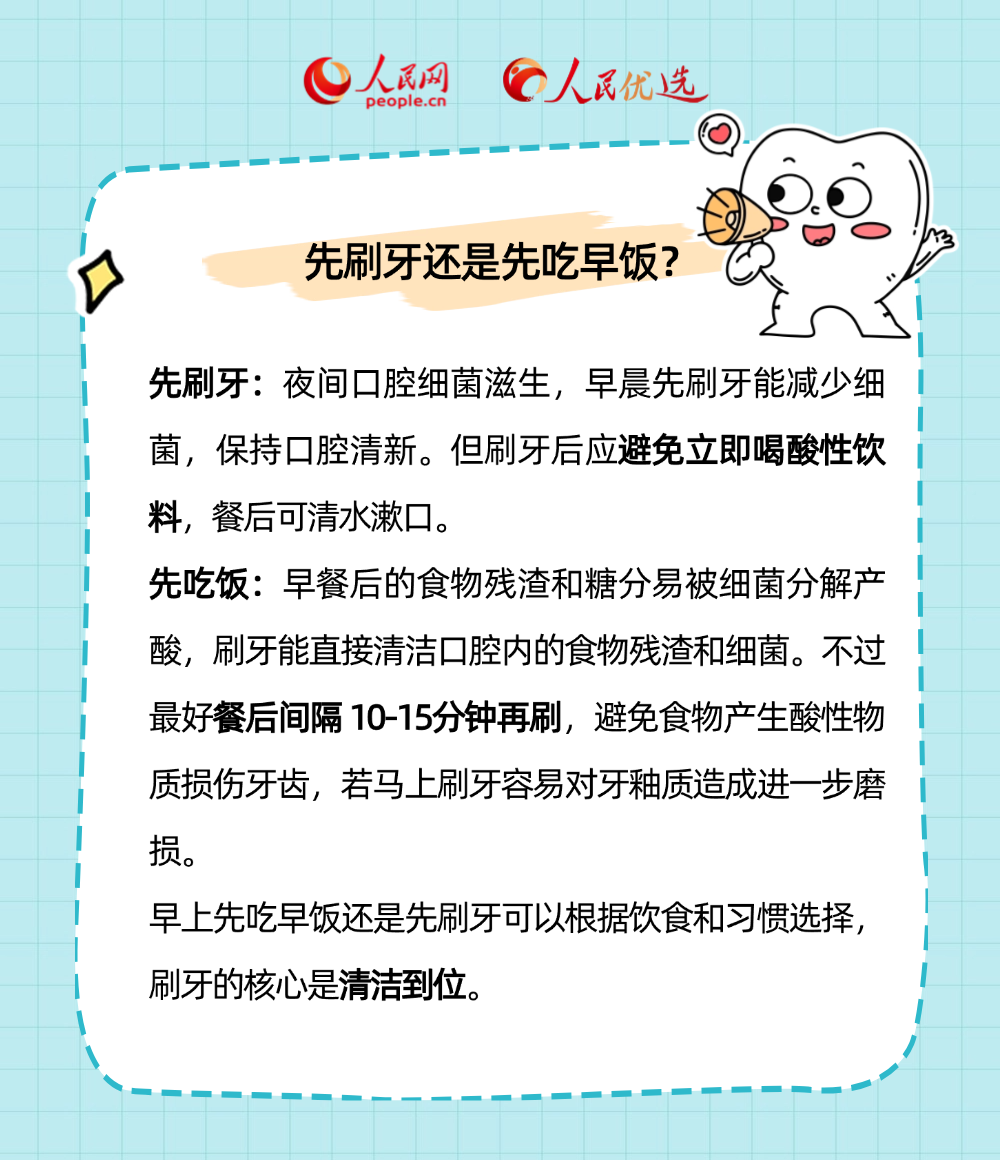
Core Viewpoint - The article discusses the health implications of whether to brush teeth before or after breakfast, indicating that both practices are acceptable according to dental health experts [1]. Group 1: Importance of Brushing - The primary goal of brushing teeth is to remove dental plaque, a sticky film of bacteria that adheres to the tooth surface, which can proliferate if not regularly cleaned [3]. - Effective brushing should include cleaning the surfaces of the teeth, including the front, back, between teeth, gum line, and tongue [3]. Group 2: Brushing Techniques - The article recommends the "Bass technique" for brushing, which involves seven steps to ensure thorough cleaning [6]. - Key steps include positioning the toothbrush at a 45-degree angle, using short horizontal movements, and ensuring to clean all surfaces of the teeth and tongue [6]. Group 3: Common Misconceptions - Misconceptions include the belief that "natural and additive-free" toothpaste is always safer, that harder brushing leads to cleaner teeth, and that brushing for a short duration is sufficient [8]. - It is advised to replace toothbrushes every three months to maintain cleaning effectiveness [8]. Group 4: Choosing Toothbrushes and Toothpaste - When selecting a toothbrush, factors such as head size, bristle softness, and individual oral health conditions should be considered [9]. - For toothpaste, fluoride-containing options are recommended for preventing cavities, while those with desensitizing ingredients are suggested for sensitive teeth [10]. Group 5: Recommended Oral Care Routine - A suggested routine includes brushing with a soft-bristled toothbrush and fluoride toothpaste for two minutes after breakfast, followed by flossing [12]. - Regular dental check-ups every six months to a year are recommended to identify potential dental issues early [12].

36氪研究院 | 2025年中国扫振电动牙刷行业研究报告
3 6 Ke· 2025-06-18 09:29
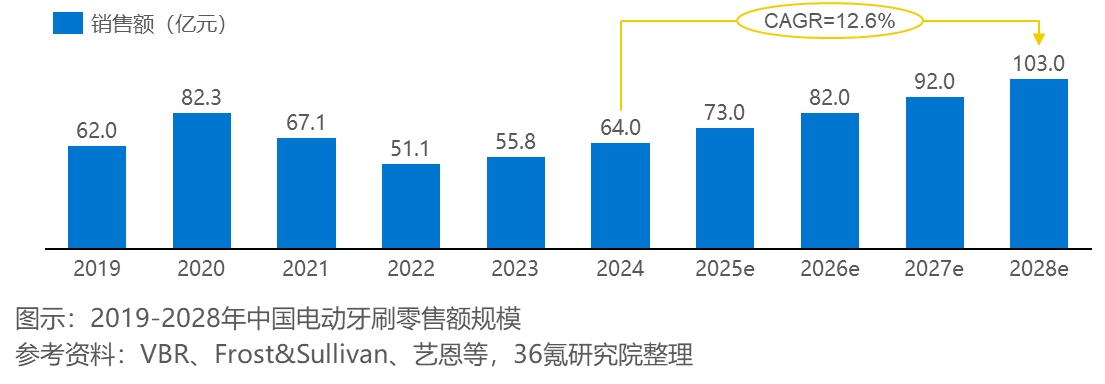
Core Insights - The electric toothbrush industry is undergoing a significant transformation driven by the emergence of "sweeping vibration" technology, which enhances cleaning efficiency and user experience, marking a shift towards "scientific brushing" [1][3][47]. Market Analysis - The electric toothbrush market has transitioned from a high-growth phase (2019-2020) to a period of adjustment (2021-2023), with retail sales declining approximately 32% in 2023 compared to 2020 [2][39]. - The introduction of sweeping vibration technology at the end of 2023 has revitalized the market, leading to a projected retail sales figure of 6.4 billion yuan in 2024, with expectations to exceed 10 billion yuan by 2028, reflecting a compound annual growth rate (CAGR) of 12.6% [2][39]. Technology and Innovation - Sweeping vibration technology, characterized by "servo motor + unlimited positioning + calculated vibration," allows for precise simulation of the Bass brushing method, significantly improving cleaning effectiveness and user convenience [1][65]. - The penetration rate of sweeping vibration electric toothbrushes surged from 2% to 16% within a year of its introduction, indicating strong market demand and growth potential [3][40]. Competitive Landscape - The electric toothbrush market is highly competitive, with both international and domestic brands vying for market share. New entrants are leveraging technological advancements to differentiate themselves [3][40]. - Brands like Laifen have successfully utilized sweeping vibration technology to gain a competitive edge, rapidly climbing into the core tier of the industry [3][40]. Consumer Insights - Increasing consumer awareness of oral health is driving the demand for electric toothbrushes, which are increasingly viewed as essential rather than optional products [2][39]. - A significant portion of consumers (54.65%) express dissatisfaction with the high cost of replacement brush heads, prompting brands like Laifen to adopt a "hardware low-margin + consumables affordable" strategy to enhance user value [8][17]. Future Trends - The sweeping vibration technology is expected to lead the industry towards more standardized technical specifications, improving product quality and market structure [47][48]. - The market is anticipated to see a rise in the number of products featuring sweeping vibration technology, with over 160 models expected by the end of 2024, although many may lack clear technical specifications [47][48].