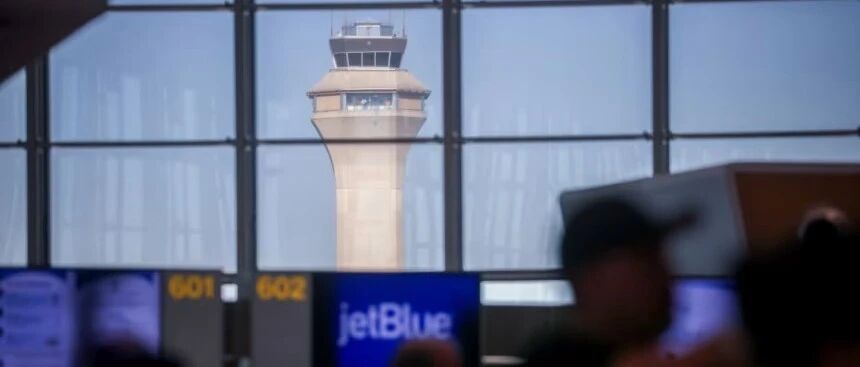
空中交通管制员短缺

Search documents
明年1月美国政府恐再次面临停摆
第一财经· 2025-11-13 07:10
Group 1 - The U.S. government has been reopened after a 43-day shutdown, with President Trump signing a funding bill that will provide continuous appropriations until January 30, 2026 [3][4] - The shutdown had significant impacts, including interruptions to food assistance programs and unpaid work for federal employees, leading to a near collapse of the air traffic control system [4] - The issue of healthcare, particularly the extension of subsidies under the Affordable Care Act (ACA), was a major point of contention that contributed to the shutdown [6][7] Group 2 - Experts predict that even with the government reopening, normal commercial air travel in the U.S. will not resume immediately, requiring several weeks for full recovery [8][9] - The Federal Aviation Administration (FAA) had to slow down flight numbers due to funding interruptions, exacerbating an existing shortage of air traffic controllers [9]

罕见!美国单日航班延误过万,美交通部长:情况只会更糟
Huan Qiu Shi Bao· 2025-11-10 22:51
Core Points - The U.S. aviation industry is facing unprecedented chaos due to a federal government shutdown, with over 2,700 flight cancellations and more than 10,000 delays reported in a single day [1][3] - The situation is expected to worsen until air traffic controllers receive their salaries, as stated by U.S. Transportation Secretary Sean Duffy [1][3] Group 1: Flight Operations - Since the government shutdown began on October 1, the number of air traffic controllers taking leave has increased, exacerbating flight delays [3] - The Federal Aviation Administration (FAA) has decided to gradually reduce air traffic volume, requiring airlines to cut domestic flights by 4% starting last Friday, increasing to 6% this week, and reaching 10% by Friday [3] - The number of canceled flights on Sunday exceeded 2,700, significantly higher than the 1,500 cancellations on the 7th and around 1,000 on the 8th [3] Group 2: Impact on Travelers - The widespread flight delays and cancellations are causing significant inconvenience for travelers ahead of the Thanksgiving holiday, a peak travel period in the U.S. [3] - Travelers are adjusting their plans, considering alternatives such as renting cars or taking trains, and some are even contemplating staying home [3][4] Group 3: Cargo and Economic Implications - The reduction in flight volume is also putting pressure on air cargo operations, as nearly half of U.S. air freight is transported in passenger aircraft holds [4] - Significant flight disruptions may lead to increased transportation costs, which could ultimately be passed on to consumers [4] Group 4: Government Response - The U.S. Senate has reportedly reached an agreement to end the federal government shutdown, but it remains unclear whether travel disruptions will continue after the government reopens [4] - The FAA has indicated that any decisions regarding the cancellation of flight volume reductions will depend on "safety data" [4]
美政府停摆第七天,超3000趟航班出现延误或取消
凤凰网财经· 2025-10-08 12:57
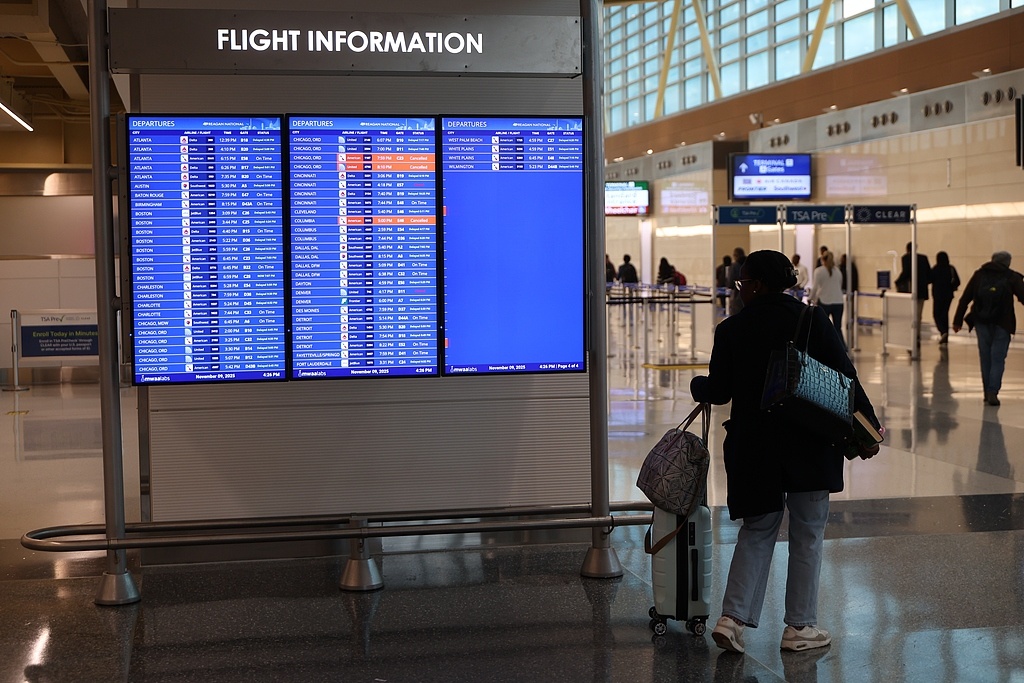
Core Viewpoint - The ongoing U.S. federal government shutdown has led to significant disruptions in air travel, with a shortage of air traffic controllers causing thousands of flight delays and cancellations across major airports [2][4][5]. Group 1: Impact of Government Shutdown - The shutdown has entered its seventh day, resulting in over 3,000 flight delays or cancellations due to air traffic controller shortages [2]. - Major airports such as Newark, Phoenix, Denver, and Los Angeles are experiencing staffing issues, with some airports lacking air traffic controllers for extended periods [2][4]. - The average delay for flights at Nashville airport exceeded 2 hours, while Dallas and Chicago airports reported average delays of 30 and 40 minutes, respectively [2]. Group 2: Staffing and Operational Challenges - The Federal Aviation Administration (FAA) reported a 50% reduction in air traffic controller staffing in some regions due to increased sick leave during the shutdown [5]. - The National Air Traffic Controllers Association (NATCA) highlighted the critical shortage of safety personnel and emphasized the urgent need for accelerated training and recruitment of controllers [6]. - The ongoing shortage of air traffic controllers has persisted for over a decade, with a current gap of nearly 3,000 positions [5][6]. Group 3: Recruitment and Training Issues - Training a qualified air traffic controller can take from 16 months to several years, with about one-third of candidates failing to complete the rigorous training [6][7]. - The FAA typically avoids hiring candidates over 31 years old to ensure they can complete 25 years of service before reaching the mandatory retirement age of 56 [6][7]. - Less than 10% of applicants meet the stringent requirements to enter the training program, which includes being a U.S. citizen under 31, passing medical and background checks, and demonstrating proficiency in English [7]. Group 4: Compensation and Job Challenges - Air traffic controllers earn an average annual salary of $144,580, providing stable income despite the demanding nature of the job [7]. - Controllers often face long working hours to cover shifts, leading to mental health challenges and unpredictable work schedules [7].