空空中转模式

Search documents
中原腾飞的航空引擎
He Nan Ri Bao· 2025-12-21 23:48
Core Viewpoint - Zhengzhou Airport has achieved a significant milestone by surpassing an annual cargo and mail throughput of 1 million tons, marking a new record since its operation began, and highlighting its role as a crucial air cargo hub in China's Belt and Road Initiative [6][22]. Group 1: Achievements and Milestones - Zhengzhou Airport's annual cargo and mail throughput has exceeded 1 million tons, a historic achievement that underscores its growing importance in the national logistics network [6][22]. - The airport's cargo volume has seen substantial growth, with international cargo volume ranking fifth in the country, and a notable increase in specific sectors such as fresh cold chain and cross-border e-commerce [8][11]. - The airport has established a dedicated green channel for fresh cold chain imports, achieving a 208.7% year-on-year increase in fresh cold chain import volume from January to November [11]. Group 2: Strategic Developments - The "Air Silk Road" initiative, established in collaboration with Luxembourg, has been pivotal in expanding Zhengzhou's logistics network, connecting it with major global markets [7][8]. - The strategic acquisition of a 35% stake in Luxembourg's largest all-cargo airline has positioned Zhengzhou as a key logistics hub in the Asia-Pacific region [7]. - The introduction of new cargo routes and partnerships with airlines such as Mexico's Ossen Airlines and Maersk Airlines is set to enhance Zhengzhou's global connectivity [8]. Group 3: Future Plans and Vision - The provincial government aims to further develop Zhengzhou as a dual-hub logistics center, enhancing its role in the Belt and Road Initiative and expanding its international cargo network [16][18]. - Future plans include optimizing the aviation industry, enhancing the low-altitude economy, and integrating various transport modes to improve logistics efficiency [17][18]. - The focus will be on building a comprehensive aviation logistics center and fostering collaboration with international partners to strengthen Zhengzhou's position in global logistics [16][18].

活力中国调研行丨这座国际机场,凭什么这么“快”?
Sou Hu Cai Jing· 2025-08-29 04:15
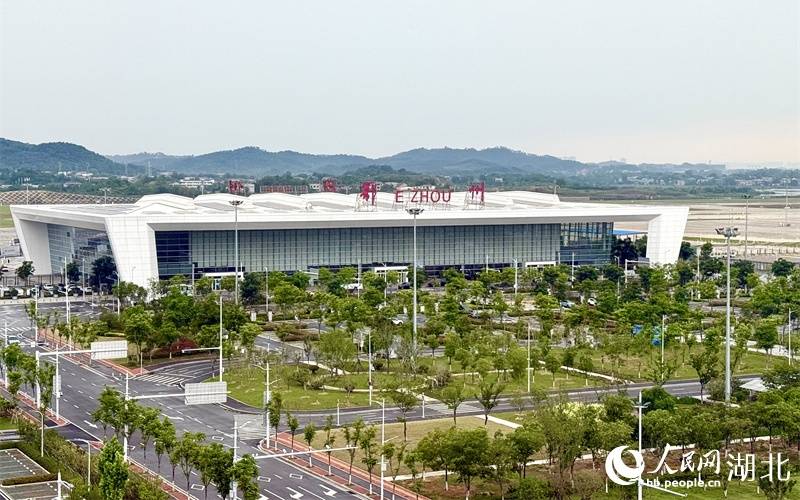
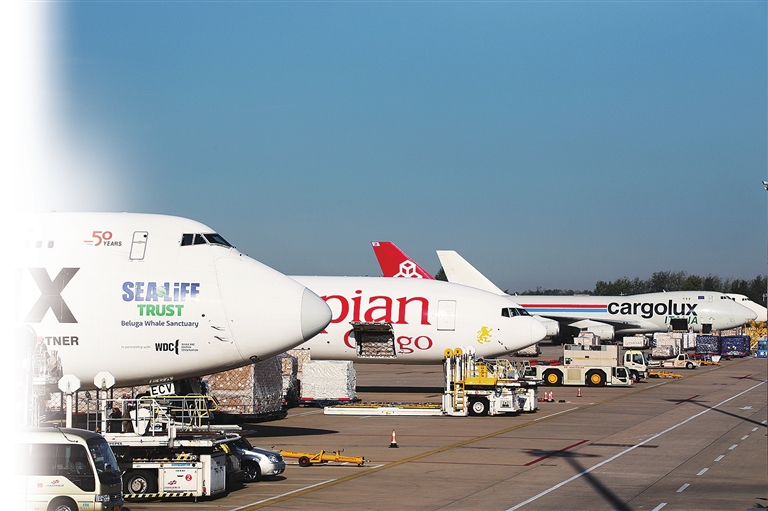
Core Insights - Ezhou Huahu International Airport has emerged as the world's fourth and Asia's first specialized cargo hub airport, significantly enhancing Hubei Province's international trade capabilities [2] Group 1: Airport Operations and Performance - In three years of operation, Huahu Airport has executed over 60,000 cargo flights and handled more than 2 million tons of cargo, establishing 59 domestic and 45 international cargo routes [2] - The airport has introduced an "air-to-air transfer" model, reducing international cargo transfer times to 5 hours, improving efficiency by 60% compared to traditional methods [4] - In the first half of this year, the airport's international cargo throughput reached 249,000 tons, a 261% increase compared to the same period in 2024 [4] Group 2: Technological Innovations - The airport utilizes advanced technology, including a 75,000 square meter sorting center with a 52-kilometer long automated sorting line, achieving a sorting speed of 2.7 meters per second [4] - Customs procedures have been optimized with 14 intelligent inspection lines, reducing overall clearance time by 50%, allowing for processing of 280,000 packages per hour [5] Group 3: Sustainable Energy Initiatives - The airport's operations are supported by a green energy framework, including a 2.6 MW distributed photovoltaic project and an 8,800 kWp solar project, contributing to a stable power supply and the establishment of a "zero-carbon park" [6] Group 4: Economic Impact and Development - The airport's efficiency has spurred regional industrial upgrades, with the establishment of the China (Ezhou) Cross-Border E-Commerce Industrial Park, which focuses on cross-border e-commerce, smart logistics, and digital trade [7][10] - Since its opening on April 30, the industrial park has registered 258 enterprises, with 62 key companies already operational, aiming to create a cross-border trade ecosystem that connects central China to the global market [10]