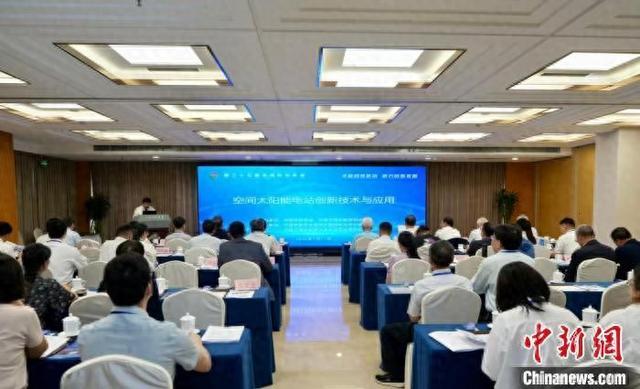
空间太阳能电站

Search documents
中信证券:商业航天开启新时代 空间算力也进一步打开行业天花板
Xin Lang Cai Jing· 2025-12-09 01:00
Core Insights - OpenAI is seeking to establish, invest in, or acquire a rocket company to compete with Elon Musk in the space computing sector [1][2] - The commercial space sector is entering a new era with significant opportunities for growth, driven by advancements in satellite technology and reduced launch costs [1][7] Group 1: OpenAI's Strategic Moves - OpenAI CEO Sam Altman is in discussions with Stoke Space, a company focused on reusable rocket technology, which recently raised $510 million in Series D funding [2][8] - Stoke Space has a total funding nearing $1 billion, indicating strong investor confidence in the space computing market [2][8] Group 2: Industry Trends and Developments - Major tech companies are increasingly investing in space computing, with predictions of GW-scale data centers being established in space within the next 10 to 20 years [3][9] - SpaceX is reportedly valued at $800 billion, surpassing OpenAI as the most valuable private company in the U.S., highlighting the growing recognition of space computing's commercial potential [3][9] Group 3: Advantages of Space Computing - Space data centers can achieve a Power Usage Effectiveness (PUE) close to 1, significantly lower than the typical PUE of 1.4 for ground data centers, leading to reduced energy costs [4][10] - Space solar power stations can generate over 8,000 hours of electricity annually, further decreasing operational costs for space data centers [4][10] Group 4: Satellite Functionality and AI Integration - Satellites are evolving from single-function platforms to multifunctional systems that support AI applications, enhancing their role in data processing and communication [5][11] - The increasing complexity of satellite operations is driving demand for AI technologies, positioning satellites as critical platforms for AI deployment [5][11] Group 5: Investment Opportunities - The commercial space sector is poised for rapid growth, with significant market potential in space computing, solar energy, laser communication, satellite manufacturing, and rocket launches [7][12] - Key areas for investment include solar cells for power consumption, laser modules for data transmission, satellite manufacturing for computational platforms, and ground terminals for user access [7][12]

新知|UFO?中国造出会“飞”的发电站!
Qi Lu Wan Bao· 2025-09-20 12:12
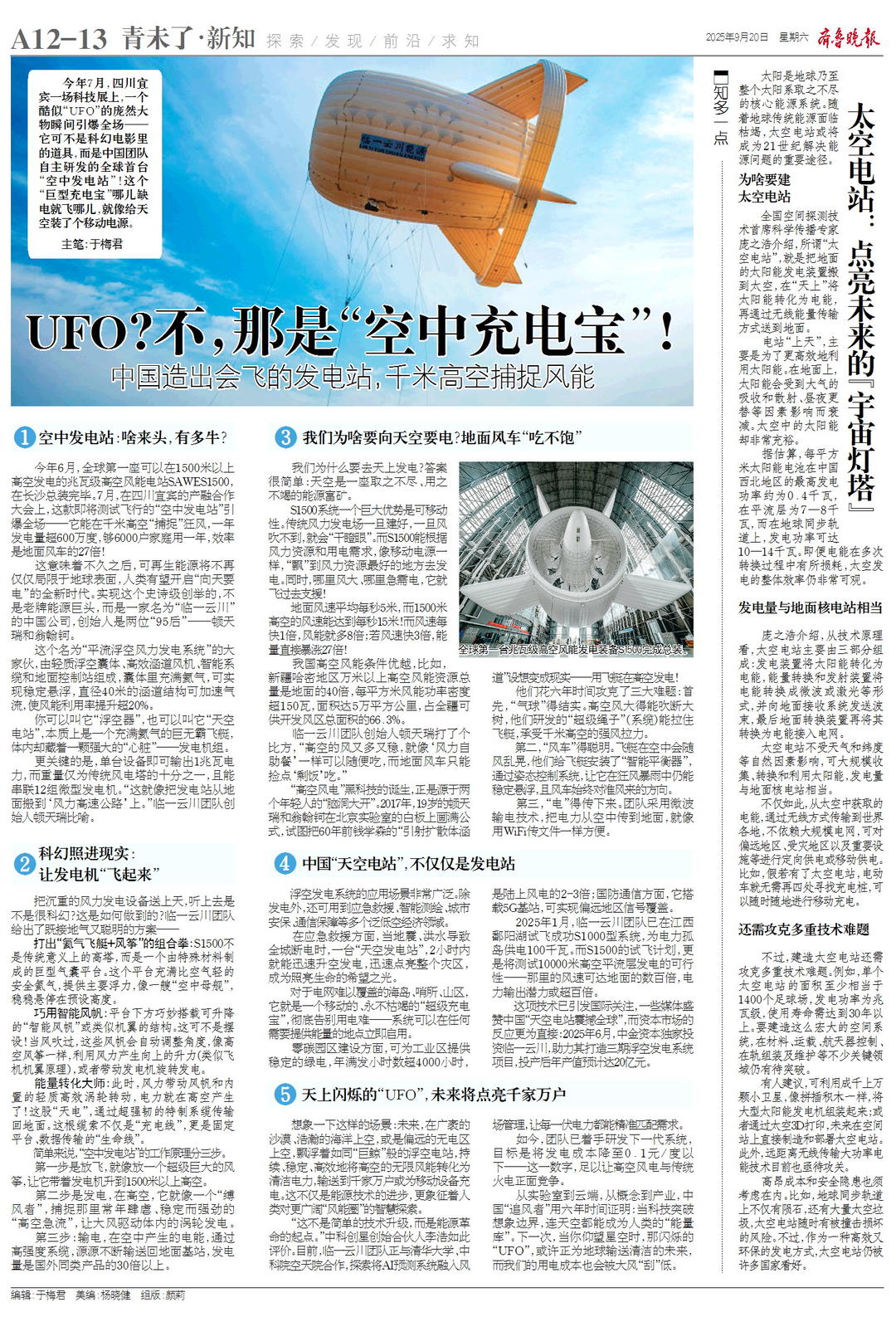
Core Viewpoint - The article highlights the development of the world's first airborne power station, a significant innovation in renewable energy, capable of generating electricity at altitudes above 1500 meters, thus opening a new era of harnessing high-altitude wind energy [9][10][12]. Group 1: Technology Overview - The airborne power station, named SAWES1500, can generate over 6 million kilowatt-hours of electricity annually, sufficient for 6,000 households, and operates with an efficiency 27 times greater than ground-based wind turbines [10][12]. - The system consists of a lightweight floating balloon filled with helium, a high-efficiency ducted fan, smart tethering, and a ground control station, allowing it to capture strong winds at high altitudes [12][14]. - The airborne power station can output 1 megawatt of power while weighing only one-tenth of traditional wind towers, and it can connect up to 12 micro-generators [12][14]. Group 2: Operational Mechanism - The operational process involves three steps: launching the device like a giant kite, generating electricity by capturing high-altitude winds, and transmitting the generated power back to the ground through a strong tether [15][17]. - The airborne power station can move to optimal wind locations, unlike traditional wind farms, which are fixed and may not always have access to strong winds [17][19]. Group 3: Market Potential and Applications - The airborne power station has vast applications beyond electricity generation, including emergency rescue, smart mapping, urban security, and communication support [21][22]. - The technology has attracted international attention, with significant investment from capital markets, indicating strong market potential and future growth [24][26]. - The team aims to reduce the cost of electricity generation to below 0.1 yuan per kilowatt-hour, making high-altitude wind energy competitive with traditional fossil fuels [28].

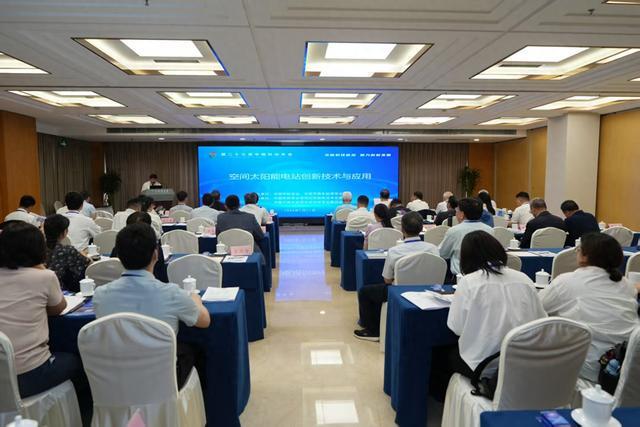
空间太阳能电站创新技术与应用专题论坛在京举行
Huan Qiu Wang Zi Xun· 2025-07-14 08:37
Core Insights - The forum on space solar power stations was held in Beijing, focusing on key innovative technologies and applications in the field [1] - Experts from various disciplines discussed technological routes, new production capabilities, and innovative models to promote collaboration among researchers and support national industrial upgrades [1] Group 1: Key Presentations - Li Ming presented on the technological innovations and applications of space solar power stations, outlining China's preliminary plans and key technological achievements [3] - Huang Kama discussed significant advancements in microwave wireless energy transmission technology and its applications, including multi-target microwave charging solutions [3] - Ding Jianning provided an overview of the current status and future trends of photovoltaic technology, highlighting breakthroughs in new battery technologies and flexible components [3] - Liu Rongqiang summarized the composition and deployment principles of large space structures, discussing future development trends in construction technology [3] - Liu Zhigang addressed the demand for ultra-high power and high-voltage space power systems, presenting key technologies and research outcomes in this area [3] Group 2: High-Level Paper Discussions - Young scholars presented on topics such as optimization of microwave energy transmission systems, dynamics of large space structures, and efficient solar cells for space applications [4]

中国科协年会举办“空间太阳能电站”“国家水网建设”两场专题论坛
Huan Qiu Wang Zi Xun· 2025-07-13 03:41
Group 1: Space Solar Power Station Innovations - The "Space Solar Power Station Innovation Technology and Application" forum focuses on key innovative technologies in the field of space solar power stations, aiming to facilitate national industrial upgrades [3][4] - Reports presented include advancements in microwave wireless energy transmission, developments in photovoltaic technology, and construction techniques for large space structures [3][4] - Experts emphasize the forum's role in transitioning China's space solar power station from theoretical concepts to engineering practices, supporting the country's energy transformation and achieving carbon neutrality goals [5] Group 2: National Water Network Construction Innovations - The "National Water Network Construction Innovation Technology" forum addresses key technological breakthroughs and frontiers in water network construction, aiming to provide innovative ideas and technical support for building a modern high-quality water security system [7] - The forum features discussions on digital twin technology, the South-to-North Water Diversion Project, and critical scientific issues related to the national water network [7]