
空间重构

Search documents
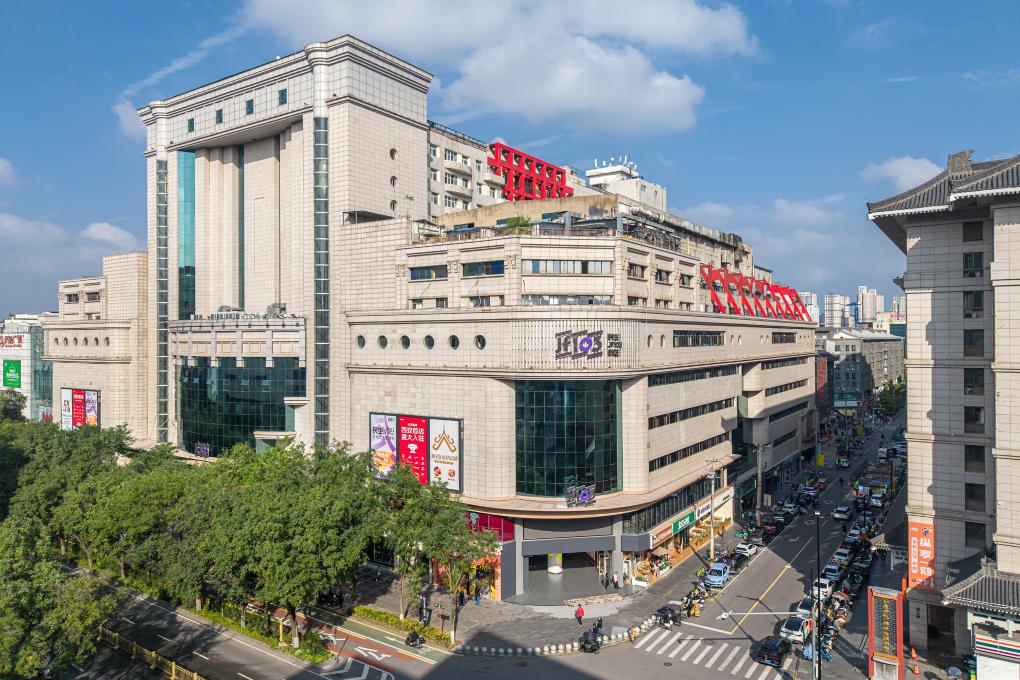
从“空置率近七成”到“出租率超八成”——西安解放路商圈焕新记
Xin Hua She· 2025-10-18 09:12
Core Insights - The transformation of the Jiefang Road business district in Xi'an has led to a significant recovery, with the occupancy rate exceeding 80% after years of decline and a vacancy rate that once approached 70% [1][3][7] Group 1: Business Recovery - After seven consecutive years of losses, the Minsheng Department Store on Jiefang Road has finally turned a profit this year [1] - The store's manager noted that the business faced severe challenges, including an inability to pay employee salaries at one point [1] - The revitalization efforts began in 2022, aligning with the overall transformation of the business district [3] Group 2: Structural Changes - The renovated Minsheng Department Store has adopted a mixed-use model, with commercial spaces on the first four floors and office spaces on the fifth to seventh floors, while the upper floors are designated for hotel-style apartments [3][6] - The Jiefang Road business district, once a bustling hub, saw a decline in popularity due to aging infrastructure and changing consumer behaviors, leading to a high vacancy rate in its 1.18 million square meters of commercial space [3][4] Group 3: Strategic Initiatives - The local government has implemented a series of measures to revitalize the area, including "building activation, enterprise attraction, industry introduction, support enhancement, and talent return" [4] - The district has successfully revitalized 714,000 square meters of space, with over 200 enterprises now operating in the area, creating more than 21,000 new jobs [7] - The focus has shifted from merely attracting businesses to fostering an ecosystem that supports sustainable growth [7] Group 4: Economic Impact - The revitalization has attracted numerous startups and small to medium-sized enterprises, benefiting from the area's convenient living conditions [6] - The introduction of leading companies has created a ripple effect, enhancing the overall business environment and economic activity in the district [6][7] - The transformation of the Jiefang Road business district serves as a model for urban renewal, demonstrating that older urban areas can thrive with the right strategies in place [10]

汕尾陆河“出圈”:一场县域振兴的系统性破局
Nan Fang Nong Cun Bao· 2025-10-09 07:34
Core Viewpoint - The article highlights the successful transformation of Luhua, a small city in Guangdong, into a vibrant cultural and tourism hub, showcasing a model for county-level revitalization through innovative space reconstruction and cultural activation [4][44]. Group 1: Tourism and Economic Impact - During the National Day and Mid-Autumn Festival, Luhua attracted 768,200 visitors, generating 306 million yuan in tourism revenue, both showing over 35% year-on-year growth [4][5]. - The city transformed previously idle land into cultural and economic spaces, creating ten themed parks and a transportation hub that received an average of 76,300 visitors daily [6][10]. Group 2: Cultural Activation - Luhua hosted 47 cultural events during the holiday, including music festivals and local heritage showcases, making culture a dynamic part of community life [15][20]. - The "Cultural Enrichment" initiative allowed local heritage to thrive, integrating traditional performances into everyday activities and fostering community participation [18][19]. Group 3: Governance and Collaboration - The successful implementation of tourism activities was attributed to a collaborative governance model involving local government, departments, and community participation, ensuring safety and satisfaction [22][24]. - Luhua's development benefited from multi-level support, including provincial assistance and partnerships with organizations like China Railway Group, creating a comprehensive support system [29][35]. Group 4: Sustainable Development Model - The article emphasizes the "Cultural + Tourism" economic model, where cultural events drive economic activity, leading to increased sales of local products and services [37][39]. - Luhua's approach illustrates a shift from short-term tourism events to long-term economic sustainability, with a focus on building a brand around "lawn culture" [41][42]. Group 5: Replicable Success - Luhua's revitalization serves as a replicable model for other counties, demonstrating that small cities can achieve significant growth through resource optimization, cultural empowerment, and innovative mechanisms [47][49].
