
第六代战斗机

Search documents
外媒:德航空业警告称,若法方拿下欧洲第六代战斗机计划主导权,德国战机制造业恐面临终结
Huan Qiu Wang· 2025-11-30 02:49
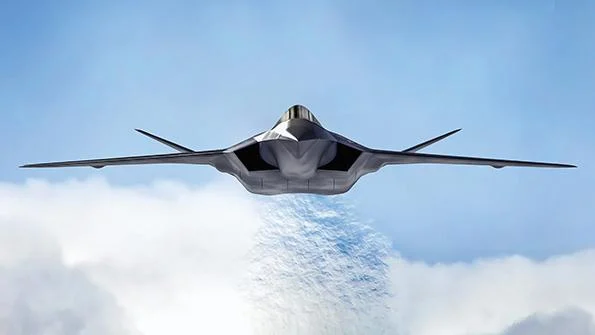
Group 1 - The core issue revolves around the conflict between Germany and France regarding the leadership role in the Future Combat Air System (FCAS) project, which could jeopardize Germany's aircraft manufacturing industry if France's demands are met [1][3] - The FCAS project, estimated at around €100 billion, involves collaboration between France, Germany, and Spain, with Dassault Aviation seeking to dominate the fighter jet segment, while Airbus is responsible for drones and AI cloud technology [3] - Germany's aerospace industry association warns that allowing France to be the sole decision-maker in the fighter jet development would lead to Germany's industrial dependency on France, potentially using German taxpayer funds to consolidate European aerospace under French control [3] Group 2 - The project has been delayed by a year due to the strong stance taken by Dassault, which has expressed a willingness to proceed independently rather than continue collaboration with Airbus [3] - German Defense Minister Pistorius indicated that a decision on the future direction of the project must be made in the coming weeks, with a commitment to reach a conclusion by the end of the year [3]

激浊扬清,周观军工第122期:军贸有望引领军工产能价值重估
Changjiang Securities· 2025-06-08 14:31
Investment Rating - The report maintains a "Positive" investment rating for the defense and military industry [5]. Core Insights - The military trade is expected to lead to a revaluation of military industrial capacity and value [1]. - The report highlights the increasing demand for Chinese military equipment due to recent international conflicts, particularly the India-Pakistan conflict, which has showcased the performance of Chinese aircraft [25][29]. - The report emphasizes the transition of China's military trade into a new era characterized by high-quality self-developed equipment, moving away from reliance on imported Soviet-style equipment [46]. Summary by Sections Section 1: Military Trade Opportunities - Indonesia is considering the procurement of Chinese J-10 fighter jets, driven by performance in the India-Pakistan conflict and cost-effectiveness compared to Western counterparts [14]. - Pakistan is also looking to acquire various advanced Chinese military equipment, including J-35 fighter jets and HQ-19 air defense systems, following successful military engagements [19][25]. Section 2: Next-Generation Aircraft - The U.S. has announced the development of the F-47 next-generation fighter jet, which may create competitive pressure for Chinese manufacturers like AVIC [61]. - The report discusses the potential of the J-35 to become a military trade hit, comparable to the F-35, due to its lower cost and advanced capabilities [41]. Section 3: Military Equipment Production and Safety - The report highlights the urgent need for upgrades in the production safety of energetic materials, citing frequent accidents in the industry [96]. - The complexity and risks associated with the production of explosives and ammunition are noted as significant challenges, particularly in the context of increasing demand during conflicts [100][105]. Section 4: Industry Growth and Investment Opportunities - The military trade sector is expected to benefit from increased demand and pricing, with primary manufacturers likely to see significant profit improvements [52]. - The report suggests focusing on companies with popular or potentially popular military models, such as AVIC subsidiaries and missile manufacturers [55].


日英意六代机模型亮相日本防务展
news flash· 2025-05-24 07:50
Core Viewpoint - The "Global Combat Air Program" (GCAP), a collaborative initiative by Japan, the UK, and Italy, unveiled its next-generation fighter jet model at the 2025 Tokyo Military and Police Defense Exhibition, aiming to surpass the capabilities of the US F-22 and F-35 stealth fighters [1] Group 1: Program Overview - GCAP is positioned as Japan's next-generation fighter jet program, classified as a "sixth-generation fighter" focusing on high-performance sensors, stealth, and networked operations [1] - The model displayed measures 2 meters in length and 1.5 meters in width, approximately one-tenth the size of the actual aircraft [1] Group 2: Design Changes - Significant design changes have been made compared to the initial concept model, including larger wings and a transition from a "lambda wing" to a "delta wing" configuration [1] - The design shift indicates a greater emphasis on enhancing range, speed, and payload capacity over agility in aerial combat [1]