算法伦理

Search documents
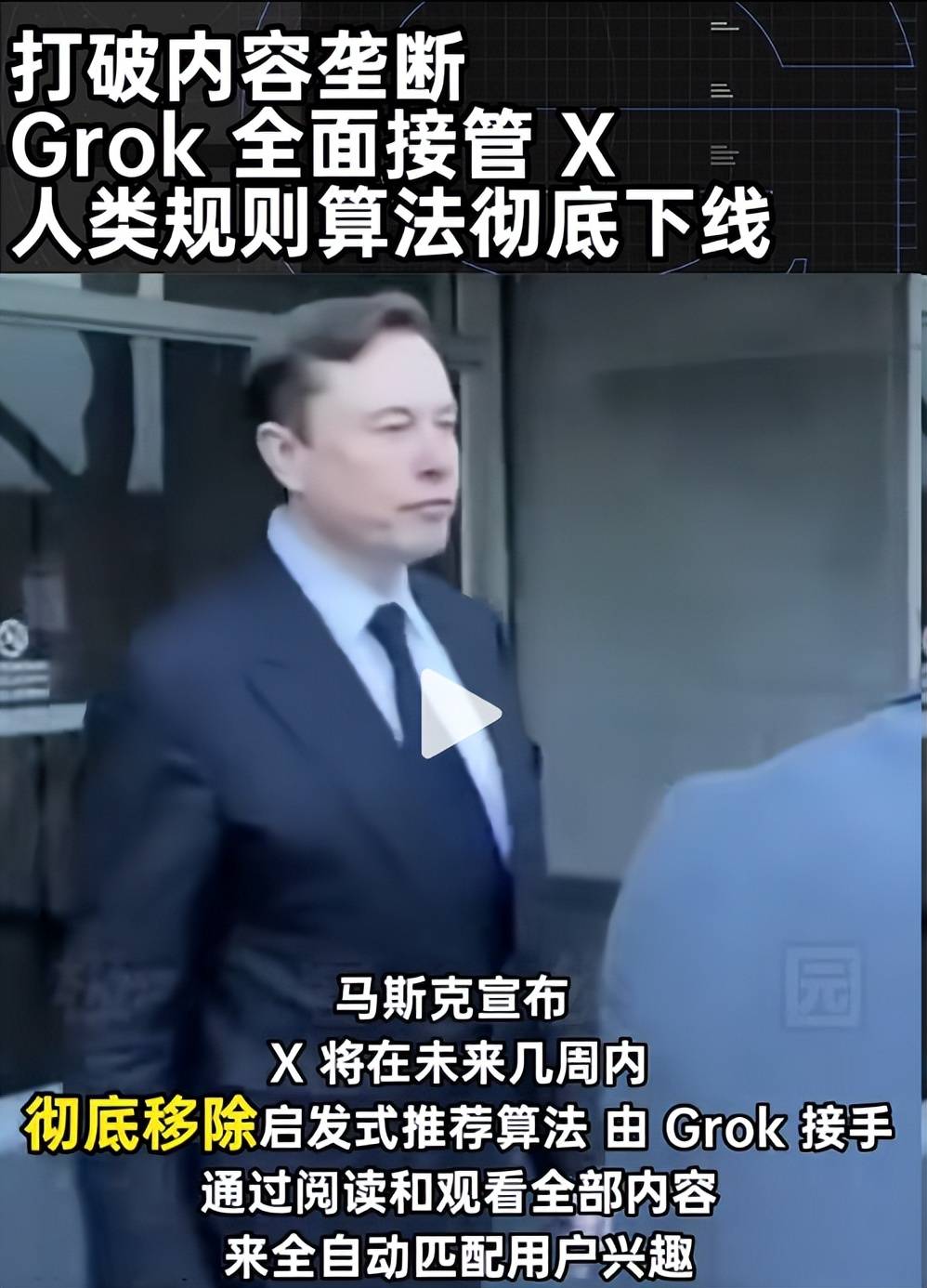
马斯克官宣:X 将彻底移除启发式推荐算法,由 Grok 全面接管
Sou Hu Cai Jing· 2025-12-11 11:05
Group 1 - The core of the news revolves around Elon Musk's announcement that the X platform will replace its heuristic recommendation algorithm with Grok, an AI model designed to enhance content distribution and user engagement [1][3][5] - The heuristic recommendation algorithm has been criticized for creating a content monopoly, where 10% of creators capture 75% of the platform's traffic, leaving ordinary users' content largely unseen [3][10] - Grok is characterized by its ability to process all data on the platform, autonomously learning user preferences without human-set rules, aiming to provide a more personalized content experience [5][21] Group 2 - The transition to Grok will occur in three phases: testing with 10% of users, expanding to 50% while optimizing privacy, and a full rollout to replace the heuristic algorithm [7][8] - The heuristic algorithm has led to a "traffic stratification monopoly," where content visibility is controlled by a few engineers, resulting in a lack of exposure for niche creators [10][12] - Users have expressed frustration with the algorithm's tendency to create "information cocoons," limiting exposure to diverse viewpoints and leading to increased polarization [14][16] Group 3 - Grok's advantages include full data processing capabilities, dynamic interest matching, and reduced human intervention, which aims to eliminate biases in content recommendations [21][24] - However, challenges such as privacy risks, the "black box" nature of AI recommendations, and the potential for a new form of monopoly under AI governance have been raised [26][27] - The industry is witnessing a ripple effect, with major platforms like Meta and Google exploring similar AI recommendation models, indicating a shift towards a competitive landscape focused on transparency and user rights [28][29] Group 4 - The ethical implications of AI algorithms are being reconsidered, with discussions centering on how to ensure AI operates fairly and transparently, as highlighted by a recent UNESCO seminar [30][32] - Musk has established an "AI Algorithm Oversight Committee" to monitor Grok's recommendations and gather user feedback, emphasizing the need for continuous improvement rather than perfection [30][32] - The ultimate goal is to return content distribution to its essence, allowing users to see what they genuinely want and enabling creators to focus on content quality rather than algorithm manipulation [32][33]

专访最高法副院长贺小荣:加大数据权益司法保护力度,促推人工智能为民、向善、守法
21世纪经济报道· 2025-03-07 05:21
Core Viewpoint - The article emphasizes the importance of algorithm regulation in the context of new employment forms, highlighting the need to protect workers' rights while promoting the healthy development of the platform economy [1][4][5]. Group 1: New Employment Forms - New employment forms have become a significant employment reservoir, with 84 million workers engaged in these roles, accounting for 21% of the total workforce in China [4][5]. - The Supreme People's Court is actively working to establish legal frameworks that recognize and protect the rights of workers in new employment forms, ensuring a balance between labor rights and platform economic growth [4][5][6]. Group 2: Algorithm Regulation - Algorithms are identified as a key technology in managing new employment, with their control level being a crucial factor in determining the legal relationship between platforms and workers [7][9]. - The Supreme People's Court has issued guidelines to ensure that algorithms used in labor management do not violate workers' rights, emphasizing the need for transparency and fairness in algorithmic decision-making [8][9]. Group 3: Legal Challenges and Solutions - The complexity of labor relations in new employment forms poses challenges in accurately determining the existence of labor relationships, which significantly impacts workers' rights [6][9]. - The court has introduced guiding cases to clarify the standards for recognizing labor relationships in new employment forms, aiming to unify the adjudication standards and protect workers' rights [5][6]. Group 4: Data Rights and Protection - The article discusses the increasing importance of data rights and judicial protection in the context of digital economy and artificial intelligence, highlighting the need for clear legal frameworks to address disputes arising from these technologies [12][13]. - The Supreme People's Court is committed to enhancing judicial protection of civil rights in the digital economy while supporting the development of new industries [13][14].