
粮食主权

Search documents
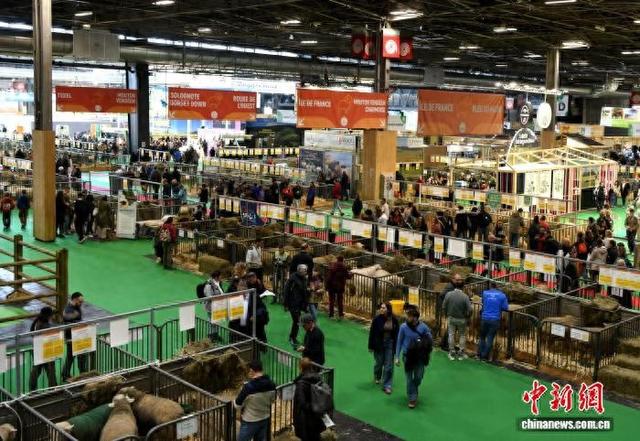
2026年法国国际农业博览会启幕
Xin Lang Cai Jing· 2026-02-22 01:29
Core Insights - The 2026 International Agricultural Show in France opened in Paris on February 21, 2026, highlighting the importance of agriculture to the French economy and society [1][3]. Group 1: Event Overview - The event is set to run until March 1, 2026, and is expected to attract 600,000 visitors [5]. - This year's show features a notable absence of cattle due to a skin disease outbreak that affected the cattle industry in France, leading to significant losses [3]. Group 2: Government and Industry Response - French President Macron emphasized the importance of farmers in maintaining the strength of the nation and reiterated the government's commitment to safeguarding farmers' incomes and food sovereignty [3]. - The government has implemented measures to control the disease, including culling infected herds and providing millions of euros in compensation to affected farmers [3]. Group 3: International Participation - Côte d'Ivoire is the guest country at this year's show, showcasing its specialty agricultural products such as coffee [5]. - The Chinese pavilion continues to attract attention, offering traditional Chinese cuisine and featuring smart robots, which have drawn crowds [5].

法国发布国家战略推动健康饮食
Xin Hua She· 2026-02-12 06:37
Core Viewpoint - The French government has launched the "National Food, Nutrition and Climate Strategy," aiming to ensure that all French citizens have access to healthier, more sustainable, and localized diets by 2030, while also enhancing the resilience of the agricultural system and food sovereignty [1] Group 1 - The strategy includes 14 specific actions to achieve its goals [1] - The initiative focuses on promoting local food sources and improving nutritional quality [1] - The plan aims to strengthen the agricultural system's resilience and ensure food sovereignty for France [1]
农业中心:塞内加尔工业化的重要杠杆
Shang Wu Bu Wang Zhan· 2025-10-23 19:23
Core Insights - Senegal has launched the National Agricultural Center Development Plan (PNDAS) as part of its economic transformation strategy, aiming to create a comprehensive agricultural industry cluster and reduce import dependency while generating local employment opportunities [1] Group 1: Agricultural Clusters and Regional Development - Five agricultural clusters have been identified as key development areas: Central, Northern, Southern, Western, and Eastern regions, each playing a catalytic role in the agricultural value chain [2] - The plan is structured around four pillars: economic competitiveness, sustainable development, social equity, and governance innovation [2] - Each cluster has specific priorities and funding sources, with the Northern center allocated 189 billion West African francs, the Central center 108 billion, the Southern center 57 billion, and the Western center 56 billion [2] Group 2: Employment and Economic Impact - The project is supported by the African Development Bank, Islamic Development Bank, Belgian Development Cooperation, and the government, aiming to enhance value addition, substitute imports, and create job opportunities for youth and women [2] - It is estimated that the Southern and Central centers will create 350,000 direct and indirect jobs by July 2025 [2] Group 3: Industrial Policy and Processing - The agricultural centers are seen as engines for agricultural food development, promoting producers' entry into processing and reducing post-harvest losses [3] - The government emphasizes the importance of industrial clusters as a core part of its industrial policy, with a significant example being the value increase of cashews from 700 to 15,000 West African francs through processing [3] Group 4: Infrastructure and Inclusivity - The plan includes the construction of 25 industrial bases in the Southern and Central agricultural centers between 2025 and 2029, with a focus on ensuring land security and attractiveness [4] - Senegal's agricultural processing rate is below 15%, indicating substantial development potential, with 50% of jobs in the Southern center reserved for women and 60% for youth [5] Group 5: Vision for Economic Sovereignty - Under the leadership of President Faye and Prime Minister Sonko, the country aims to industrialize as a core economic policy, shifting from mere planting and selling to processing, value addition, and export [6] - The success of the agricultural centers is expected to reshape Senegal's agricultural and industrial development model, ensuring food sovereignty and economic autonomy [6]